
Woman: The Maker of Life and Peace
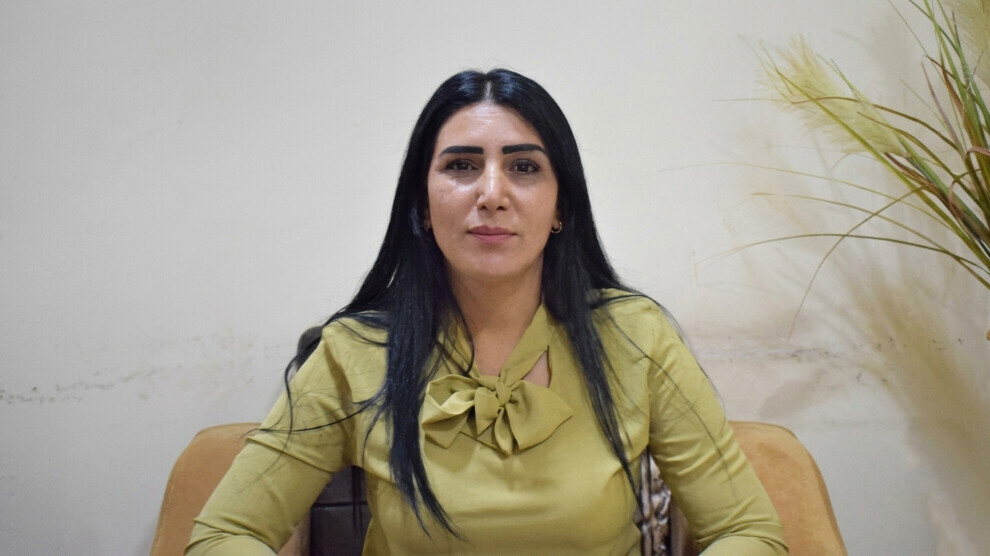
An Article by Afaf Haski, Member of the Coordination Body of the Women's Council in North and East Syria
Since the dawn of history, woman has not been merely half of society—she has been the maker of the other half. It was she who ripened the first grain of wheat over the fire of wisdom, built with her own hands the first oven so that the house became a home, uttered the first letter so that sound became language, and gave the first pulse so that the body became life.
The Kurdish woman, like her Syrian sister in all her components, has never been on the margins of existence but at its beating heart—giving life and protecting it, planting peace when others fail to produce gunpowder and wars.
This introduction is not a celebration of a traditional role but a foundation for a new understanding. The woman who creates life is the most capable of defending it and the most worthy of leading the march of her own liberation.
From this profound understanding, the Women's Protection Units (YPJ) were not merely the establishment of a military force but a declaration of a deep intellectual revolution against the patriarchal mentality that has dominated history and society—a mentality built on the triad of control, ownership, and exclusion, seeking to define women within narrow frameworks that deprive them of their true role as an active force in life.
In Jazira, Kobani, Raqqa, and Al-Baghouz, and in every inch liberated by the hands of fighters, the women of these units proved that courage is not a masculine trait but a human value, and that the defense of society is not exclusive to one gender over another.
Women took up arms against ISIS, the most dangerous terrorist organization of our time, and were on the front lines of liberating vast areas of Syria. They did not merely expel the darkness of ISIS; through their sacrifices, they presented a new model of the relationship between women and society—a relationship based on partnership and responsibility. They established the truth that women are not only victims of war but makers of peace and leaders of liberation.
Today, as we stand on the threshold of a new phase in Syria's history, we see systematic attempts to reproduce the old mentality in new forms. The most dangerous of these is when the issue of building the new Syrian army is raised, and voices are heard attempting to reduce women's role and marginalize the unique experience led by the Women's Protection Units.
The discussion of a national military institution with no place for women, or one that marginalizes the role of fighters who have proven their competence in the darkest conditions, is not merely an organizational opinion. It is an extension of an exclusionary system that does not recognize sacrifices or the new reality forged by pure blood.
Women's right to join the army is not a favor, nor a revocable gift, but a natural, human, legal, and national duty. An army, as an institution for protecting society and the homeland, must reflect the composition of that society—otherwise, it loses an essential part of its spirit and capability.
Excluding the experience of the Women's Protection Units from the equation of the new Syrian army means weakening the military institution itself, as it loses immense energy and accumulated experience in the war on terrorism. More importantly, it loses the moral compass that women have always represented among the ranks of fighters—a compass that constantly reminds us that the goal is protecting humanity, not dominating it.
Confronting the patriarchal mentality does not mean a struggle against men; it means liberating the human being—whether man or woman—from concepts of domination and enslavement.
As for traditions, we must have the courage to distinguish between what is alive and what is dead within them. Traditions that respect humanity and enshrine noble values are part of our identity, but those that constrain women and prevent them from defending their homeland and participating in shaping its decisions are traditions whose spirit has died before the sacrifices of thousands of martyred women.
The peace we seek is not merely the absence of war but the presence of justice. Justice cannot be achieved in a society where women are excluded from decision-making centers or prevented from participating in its protection.
Today, we face a historic responsibility. Either we remain faithful to the sacrifices of thousands of martyred women who, with their blood, shaped the contours of this path—liberating cities and villages from the tyranny of terrorism and restoring to the Syrian people their hope for a free and dignified life—or we allow the reproduction of the very mentality that sought to marginalize them and obscure their legacy.
Bowing to the spirits of the martyred women is not enough; it must translate into a stance, into action, into insistence that women remain in their natural place as full partners in the defense and construction of Syria's new future.
The greatest victory women achieved was not only in liberating land but in liberating consciousness. The greatest battle we fight today is to establish this consciousness as an irreversible truth.
Let us continue this path with unbreakable ambition, unshakable faith, and a will that sees in women's freedom the freedom of life itself, and in their full presence in the army, civil institutions, and every facet of the homeland, a guarantee of a democratic, civil Syria triumphant over darkness.