
Violence Against Women in Libya… A System of Justification That Precedes Protection
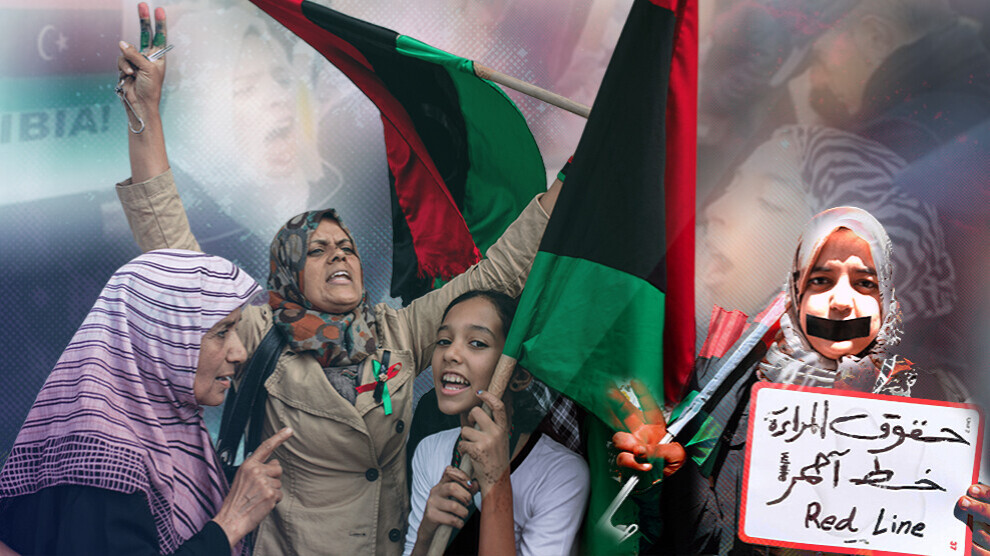
An Article by Libyan Journalist Radia Abdel Salam
From detention inside homes to killing in public places, from pressure to preserve marriage to objection to protective legislation, the facts reveal a crisis that goes beyond individual crimes to a social and legal environment in which women’s protection remains contested.
The danger of violence against women lies not only in its multiplicity of forms, but in the conditions that allow its continuation: a familial authority that turns into a means of coercion, customs that place the family's reputation above the woman's safety, a discourse that searches for justifications for the perpetrator, and a legislative framework that does not provide, according to what these facts raise, integrated and effective protection.
In Libya, these factors intersect in disparate cases, from the detention of a girl inside her family's home in Derna, to the killing of women in the streets, the death of Sara Attia Al-Tabargi after her body was set on fire, and the discovery of a young woman's body in a "Zalla" case. These facts do not prove the existence of a single path or identical motives, but they raise a fundamental question: What makes a woman's safety negotiable inside the family, and what guarantees her protection outside it?
The Family Is Not a Guarantee of Protection
The incident of a girl being detained inside an apartment in the Sheiha area of Derna, according to circulating information about her release by Ministry of Interior elements, reveals the closed face of domestic violence. The account indicated that she was shackled with a chain with the participation of her four brothers and their mother, in an incident that transfers violence from the circle of assault to the deprivation of freedom inside the home.
The importance of the case lies in the fact that it challenges the perception that treats the family as an inherently safe space. Kinship does not prevent violence, and the authority of family members, in an environment dominated by unequal power relations, may turn into a means of controlling the girl's movement and decisions.
A similar problem appears in the accounts related to the death of Sara Attia Al-Tabargi, a mother of two children, after a week of suffering following her body being set on fire. Circulating information linked her suffering to domestic violence and the pressures she faced regarding the continuation of the marriage.
While it is necessary to distinguish between the two cases, one issue emerges related to the woman's right to reject harm and seek protection, without the family turning into a party that imposes on her the continuation of a harmful relationship or deprives her of her freedom.
Violence Exceeds the Walls of Homes
Violence does not remain confined to the private sphere; it may appear publicly in the street, take the form of killing, or remain unresolved for years. In July 2026, the circulation of a video clip of a woman being flogged in a public place in Sabha city, in implementation of a judicial ruling according to circulating information, sparked a discussion about corporal punishment and human dignity. Addressing this incident requires distinguishing between documenting the implementation of a judicial ruling and evaluating the legal basis of the punishment and the extent of its compatibility with human rights obligations.
Also, femicide crimes, including the killing of Khansa Al-Mujahid in November 2025, and the armed attack that claimed the lives of two women in Tajoura in August 2026 according to the information received, brought back into focus the exposure of women to violence in the public sphere as well.
Other cases, such as the disappearance of MP Siham Sergiwa, remain present in the discussion about the fate of women who are subjected to serious violations, and the need to reveal the truth and hold those responsible accountable.
The Woman's Body Under the Authority of Others
The body of a young woman was found inside a vehicle trunk near the road linking Zalla and Waddan, following a report of her disappearance. According to a security statement published on 12 October, a suspect handed himself in after search and investigation operations, and confessed to the incident according to the statement, with measures taken in preparation for completing legal investigations.
As for the circulating details regarding the suspect's relationship to the victim or the possible motive for the crime, including an account linking the incident to the result of a pregnancy hormone test, they need independent verification. A preliminary medical result must not be turned into evidence of the woman's behavior or used to justify assaulting her.
A medical test does not issue a moral judgment, suspicion does not justify punishment, and kinship does not grant any person the authority to decide a woman's fate. If it is proven that suspicions related to her personal life were part of the background of the assault, the case will raise a deeper question about a culture that places the woman's body under the family's surveillance, and deals with her choices as a collective matter rather than an individual right.
Journalistic responsibility here is not limited to conveying circulating accounts; it includes protecting the victim from being socially retried, and not presenting accusations or unproven personal details as facts.
Justifying the Perpetrator and Excluding the Victim
Following crimes of violence against women, accounts sometimes appear invoking anger, mental illness, magic, or honor to explain the actions of the perpetrators. References to religiosity or good reputation may be added to them, as if a person's image in society negates the possibility of committing a crime or mitigates their responsibility for it.
The problem does not lie in searching for the motives of the assault, but in turning interpretations into excuses that precede the investigation. Anger does not justify killing, religiosity does not grant immunity from accountability, and mental illness must not be used as an automatic explanation for violence without specialized assessment and evidence.
The discourse of honor acquires particular danger when it turns the woman's behavior or reputation into the axis of the case, and marginalizes the assault she was subjected to. Instead of the question being about evidence, responsibility, and justice, the discussion becomes about the extent of the victim's compliance with the expectations of the family and society.
By this mechanism, the victim is not only erased from the narrative, but the standards that allow control over her are reproduced. The crime turns into an isolated individual incident, while the power relations and social pressures that may contribute to normalizing violence remain outside the circle of accountability.
Legislation Between the Need for Protection and Social Objections
The discussion of violence cannot be separated from the legal environment that is supposed to prevent it and hold its perpetrators accountable. In this context, the controversy over the draft law on combating violence against women presented to the House of Representatives raises a question about the ability of Libyan legislation to provide clear and comprehensive protection for women.
Reports and circulating positions have cited objections to the draft, including statements attributed to Libya's Mufti Al-Sadiq Al-Ghariani describing the law as an imposed Western concept, and expressing reservations about some of its texts. The issue of the memorandum of understanding related to the Convention on the Elimination of All Forms of Discrimination Against Women (CEDAW) was also raised, and what was reported about a judicial ruling issued on 14 September 2022 regarding it.
The legal details related to the ruling, the nature of the memorandum and the effects of the decision, and the current legislative status of the draft law need to be reviewed in official texts and reliable judicial sources. A distinction should also be made between religious or political objections to a draft law and the legally binding status in effect.
However, the essence of the human rights issue remains clear: declaring the rejection of violence against women is not enough if it is not accompanied by a legal framework that provides practical means for prevention, protection, reporting, and accountability.
As for society, it cannot be a partner in protection if it continues to blame the victim, pressure her to remain in a harmful relationship, search for excuses for the perpetrator, or deal with women's rights as a threat to family values.
From the detention of a girl inside her family's home, to pressure on a woman to continue in a harmful marriage, from assaults in the public sphere to femicide crimes, the facts vary but the human rights questions intersect: Who possesses the authority to make decisions about a woman's life? Who protects her if the source of danger becomes inside her family? And what is the value of social condemnation if it does not turn into legal protection and actual accountability?