
UN of a Widening Gap Between Gaza Women's Needs and the Humanitarian Response
UN figures revealed the scale of women's and girls' losses in Gaza since the war began, amid ongoing humanitarian repercussions, declining basic services, and warnings that women's organizations cannot meet growing needs.
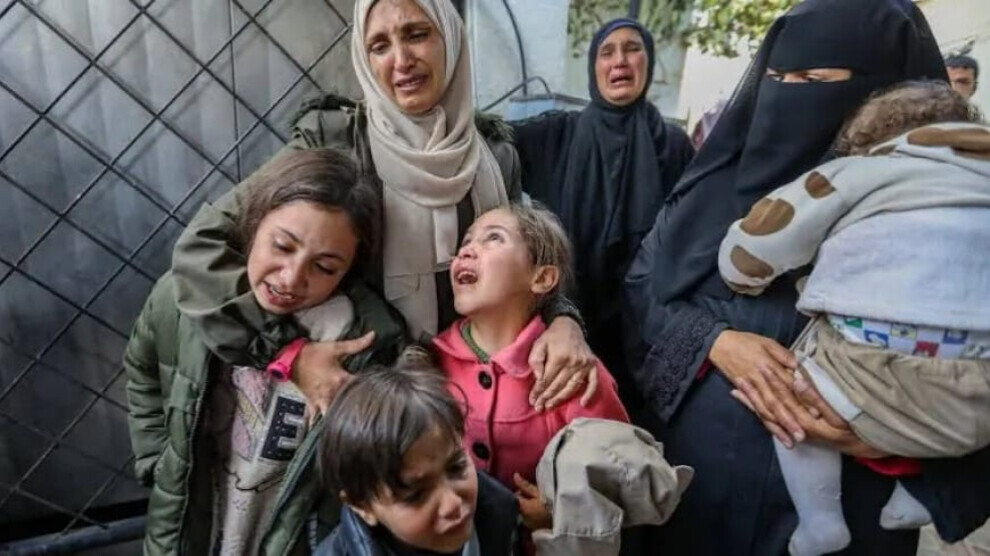
NEWS CENTER– Women and girls in the Gaza Strip face escalating humanitarian repercussions due to the war ongoing since October 2023, amid rising numbers of victims, widening waves of displacement, and deteriorating living conditions, simultaneously with the decline in the ability of women's organizations to respond to growing needs.
UN Women announced that more than 38,000 women and girls have been killed, while about 11,700 others have been seriously injured in the Gaza Strip since October 2023, warning of the worsening humanitarian conditions and the increasing needs of women and girls, amid the continuation of security risks and the decline in the ability of women's organizations to provide basic services.
The organization explained in its statement that the toll of dead and injured is equivalent to about one woman and girl out of every 21 women and girls in the Strip, who has lost her life or is living with permanent disabilities as a result of the war. It noted that most of the victims fell during the first two years of the war, while 277 women and girls were killed during the past year, despite the ceasefire agreement entering into force in October 2025.
Regarding the conditions of displaced women, the organization reported that more than 150 evacuation orders were issued across the Strip since the beginning of the war, forcing about one million women and girls to leave their homes, in a displacement wave that affected the vast majority of women and girls.
It added that many of them live in tents or among the rubble, in conditions lacking privacy and the necessities of life, while they bear the burdens of caring for children, the sick, the injured, and the elderly, alongside securing food and doing household work, amid an acute shortage of essential supplies.
The organization warned of the deterioration of reproductive health conditions, as women are forced to face pregnancy and childbirth in unsafe and unhealthy environments. It noted that about four thousand abortion cases were recorded during the first half of 2026, an increase equivalent to three times the cases recorded during the second half of 2025.
It also noted that the number of widows and women supporting their families has doubled since October 2023, which has increased the economic and social burdens placed on their shoulders, amid declining livelihood opportunities and the difficulty of securing their families' basic needs.
The organization confirmed that women and girls still face great difficulties in obtaining food, shelter, safe water, and hygiene supplies, simultaneously with the continuation of security risks and hostilities.
Decline in Humanitarian Response
In a related context, the results of a survey conducted by UN Women, covering women's organizations and organizations concerned with women's rights working in the humanitarian response in Gaza and the West Bank, revealed a widening gap between growing needs and the ability of institutions to provide services.
The results showed that 13 organizations out of 14 monitored a rise in the needs of women and girls since 2025, while all organizations covered by the survey reported an increase in rates of gender-based violence, poverty, and psychological disorders, while 13 organizations recorded a rise in child marriage rates.
The organization called for the full implementation of the ceasefire agreement, respect for international law, ensuring accountability for violations, and protecting women, girls, and other civilians, as well as ensuring the unobstructed access of humanitarian aid to those in need. It stressed the necessity of placing the needs of women and girls at the heart of humanitarian response and recovery efforts.