
Tunisians Protest Injustice and Authoritarianism in Women-Led March
Women led a large protest march in Tunis against deteriorating living conditions, demanding the release of political prisoners, an end to arbitrary practices, and improved basic services.
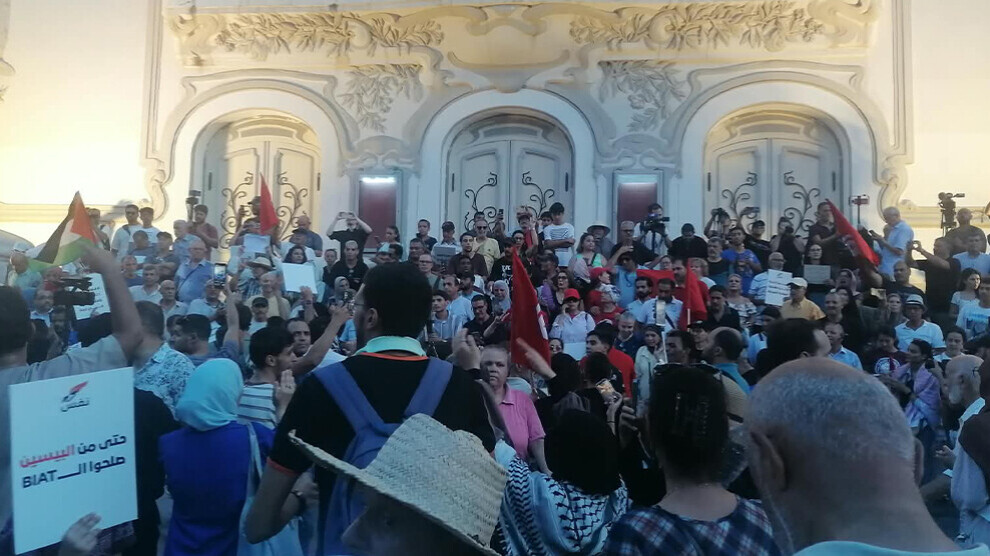
Tunis_Participants in the march affirmed the need to improve living conditions in Tunisia amid worsening social and economic crises, address repeated water and electricity cuts, and demand an end to arbitrary practices targeting activists.
Despite security restrictions and the closure of entrances for citizens to Habib Bourguiba Street, a march was organized that attracted large numbers of activists in response to the Republican Party's call to join the "Nafs" (Breath) movement.
Women in the Forefront
The march was distinguished by women activists from civil society leading the ranks of protesters, including human rights and feminist activist Sana Ben Achour, known for her long history of struggle against authoritarianism under successive regimes that have ruled Tunisia, as well as feminist activist Najet Ararari from the Equality Front.
Participants in the march carried a banner reading: "Enough of chaos, enough of injustice, enough of failure." Protesters also raised slogans including "No policy, no planning... Our country is in a dead end." They demanded the release of political prisoners from jails and called on President Kais Saied to step down, as the country can no longer bear disappointments and failure at all levels.
Injustice and Torment
Basma Ben Aissa wore a shirt bearing the image and name of human rights activist Shaima Issa, covered her head with a Palestinian keffiyeh, and raised a banner reading "No to injustice and authoritarianism"—an image embodying a woman rising up in defense of freedom. She told our agency: "I am Shaima Issa's aunt, and I am participating in the march today to put an end to the injustice, torment, and unjust sentence of twenty years imprisonment against her on charges of conspiracy and terrorism."
She asked: "How can Shaima Issa be charged with these offenses? She is a teacher, a poet, a painter who loves Tunisia... Isn't her blood Tunisian?" She affirmed that Shaima Issa is a free woman, and that on every prison visit, she raises the family's spirits and tries to give them some of her patience—but twenty years is a very harsh sentence for a free Tunisian woman like her.
Why Have Women's Rights Regressed?
In a related context, Afifa Mourad questioned the reasons for the deteriorating situation in Tunisia: Why have women's rights regressed after they had been in an advanced position even on a global level? She added that her participation in the march came because Tunisia suffers from a deterioration in basic services—water and electricity cuts—and because living conditions have become unbearable.
She also addressed the imprisonment of political activist Abir Moussi, saying she "has been behind bars unjustly for three years," calling for her release and the release of other female and male detainees in prisons.
For her part, participant Leila Aidoudi said that "Tunisians are no longer living"—an expression that summed up her description of the dire situation. "There is no water, no electricity, soaring living costs, and imprisoned detainees." She stressed the need for the country's situation to change, because everything has deteriorated—health, education, and everything has regressed socially and economically.