
The Tunis Book Fair… children's gateway to reading and pleasure
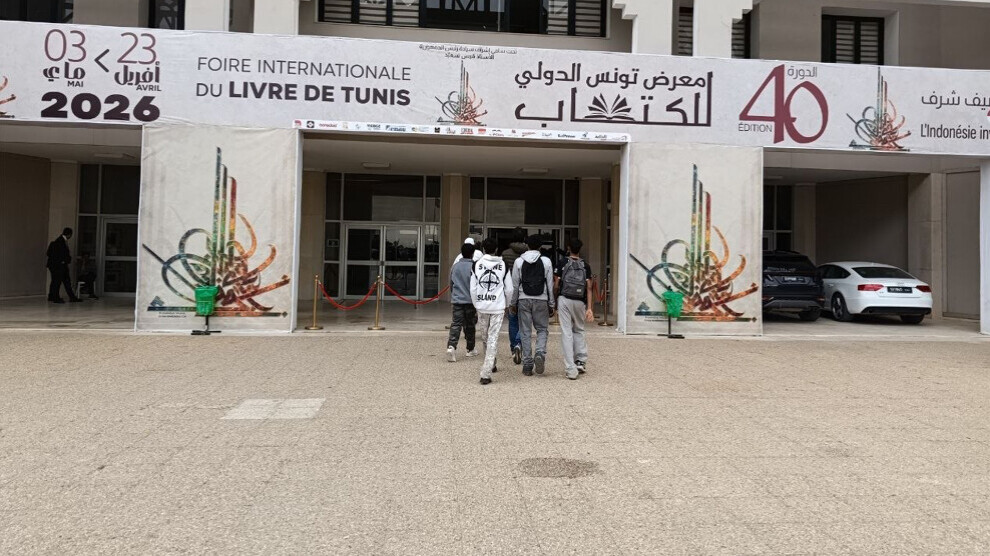
The Tunis International Book Fair attracts large numbers of children and young people daily to help them realize the value of books and buy as many stories and games as possible.
By Naziha Bousaidy
Tunis – No one disagrees about the pivotal role that books play in the lives of young people. Books are an essential tool for refining knowledge, developing skills, and enhancing mental abilities. They also help accustom children to thinking, reflection, concentration, and patience, and enrich their linguistic and cognitive resources. A child who does not get used to reading from a young age may later find it difficult to acquire these benefits.
Based on this awareness, a number of teachers, educators, owners of childhood institutions, along with parents, have made a point of taking children to the International Book Fair, which started on April 23 and continues until May 3, so that they can experience the world of books firsthand and learn about their value through interacting with vendors and observing the density of visitors.
The fair management also allocated an integrated space for children and young people, containing books, stories, various references, and especially supplementary books that students need. The organizers did not neglect the entertainment side, providing various games that allow children to spend enjoyable time that combines learning and fun, in an experience that makes the book a natural part of their day.
Kindergarten children
The marks of joy were clearly drawn on children's faces as they left the fair. They discovered a vast world of books, stories, and games they had never imagined. They felt great happiness after buying some of these books or games, and perhaps for the first time, they realized that there are many stories written specifically for them, beyond those they were used to reading with their mothers.
They also noticed educational games that develop thinking and open up horizons of imagination, unlike mobile phone games that strain the eyes and weaken concentration. The experience was like a new gateway to a wider world, combining pleasure and knowledge, making the book a beloved companion that cannot be replaced.
Samia Ben Abdelrahman, a member of the Aïn Zaghouan Sud Academy, while organizing the children's rows in preparation for leaving the fair, said: "Today we visited the book fair with the academy's children so that they could get to know this cultural space up close and buy stories and intellectual games suitable for their age. They also received gifts from the fair."
She added: "My fellow teachers and I wanted children to realize from a young age that books are far better than phones, and to grow up loving reading." She affirmed that the children were very happy with this visit, noting that the sellers allowed them to look at the pictures and books, despite the noise and slight mess they caused in the book arrangement.
School children
The International Book Fair was also a valuable opportunity for middle school students to visit it, especially since their age and educational level allow them to discover different types of books in multiple languages, such as short stories, novels, and scientific references. However, addiction to mobile phones has deprived many of them of enjoying this cognitive wealth and benefiting from the pleasure of reading and expanding their horizons.
Such visits remain an important occasion to reconnect young people with books and revive a relationship that may fade in light of screens dominating their daily lives. Amira Bchini, an Arabic language teacher at a middle school, said: "Today we made a point of taking students participating in drawing and literature workshops in the class to visit the International Book Fair, so that they could discover this cultural space and become attached to reading and books. We wanted them to touch the books, buy what suits them from stories and references, and experience the world of reading directly."
She added: "Through this visit, we aspire to instill a love of reading and writing in their souls, and to encourage them to stay away a little from excessive use of mobile phones."
She explained: "The educator educates, teaches, and guides, especially in this era when technology surrounds the student from every side and distances them from books. Therefore, our role becomes twofold in reconnecting them with reading." She concluded: "We try as much as possible to bring them closer to books, and also to reconnect them with their families, so that they can discuss the importance of reading with them and make it part of their daily lives."
Aymen Bejaoui, an eighth‑grade student, said: "We came today to visit the book fair to get to know the different types of books and buy them, and to discover new knowledge and skills." He added: "I advise my fellow students to read and read literary and cultural books, because they enrich vocabulary, develop knowledge, and help learn new languages and skills."
Regarding his reading preferences, he explained: "I prefer scientific stories; for me, they are the most important and useful." He concluded with advice to his peers: "I call on students not to overuse mobile phones; they can use applications that limit usage time. I also advise them to take care of their homework and exam preparations, alongside reading books and literary novels."
Nawres Hamdi, a middle school student, said: "I came to the book fair with my teacher to discover this cultural space and get to know new books that we did not know before." She added: "Reading is very important; it fills free time and helps develop writing skills."
About her personal experience, she said: "Thanks to reading, I started writing poetry and reflections, and my sister helps me improve what I write and always encourages me to continue."
Mothers have an important role
Souassan Safar, a mother of a five‑and‑a‑half‑year‑old girl preparing to start school next year, said: "The family has a big role in making children love reading, especially the mother, who is the first role model in this field."
She added: "The book fair is an important opportunity to browse various titles, especially supplementary books, as all publishing houses gather there, allowing parents to choose what suits their children, and even buy complete sets at discounted prices."
She explained that choosing a story must take into account "the child's educational level, the quality of writing, the quality of pictures, and how much the child accepts it." She gave her daughter as an example: "My daughter is not very active, so I make sure to choose stories and games that suit her needs. The fair provides wide options, and sometimes introduces you to important things for your child that you had never thought of."
Difficulties, but...
Karima Sahli, marketing manager at Dar Al‑Maarif Sousse, said that the turnout for children's books and stories during this session was average compared to previous sessions, but she expressed hope for more children and parents to come in the coming days.
She added that "phones and tablets have contributed to a decline in demand for printed books," but stressed that "the book remains the original." She noted that many parents have become more aware of the dangers of excessive phone use, especially among children aged three to six.
She affirmed that it is better for a child to become attached to books from an early age, saying: "Without a generation that reads, we cannot preserve the country." She stressed that "the educator is required to restore the importance of reading time" in the classroom, because it is essential in bringing the child back to the world of books and developing their linguistic and intellectual skills.
She concluded by noting that "publishing houses face many difficulties, especially in marketing," but they continue their work despite that, preserving their cultural mission by providing good texts and attractive images that encourage children to read, while emphasizing the importance of the role of parents and educators in this path.