
Official Media Marginalizes Women in Syria… While Alternative Media Become a Window to Amplify their Voices
In Syria’s critical phase, official media marginalizes women’s voices, pushing them social media as an alternative space to express their views and concerns.
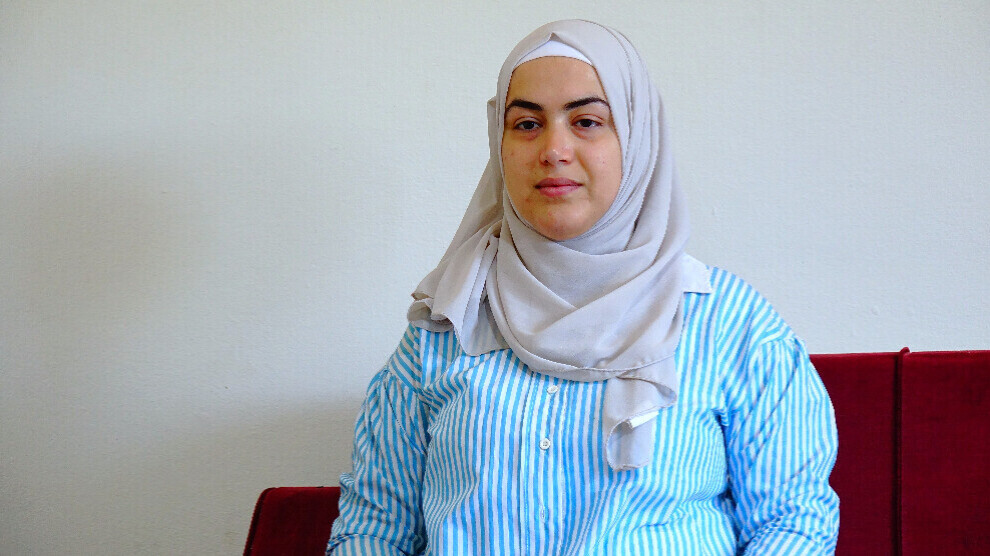
SURKIL SHEIKHO
Qamishlo-After many years of war and humanitarian, political, and social crises that continue to cast their shadows over Syria within what can be described as a “silent and hidden war,” Syrian women face great difficulties in making their voices heard and participating effectively in shaping their country’s future.
Despite the pioneering and important roles Syrian women have played on the ground and in managing community affairs and their families, their genuine representation and independent voices still face many obstacles and are often suppressed.
Samia Kurdi, Editor-in-Chief of Afaq (Horizons) Magazine, pointed out that Hay'at Tahrir al-Sham jihadists—which remained on international terrorist lists for years—have been governing Syria for approximately a year and a half, without their leaders being held accountable or tried before international courts. "This reality has also been reflected in the media sector, as Syria lacks a space that allows citizens, especially women, to freely express their opinions or discuss their issues on media screens without fear of violence, death, or kidnapping."
Unifying the media discourse to support women's issues in Syria, and moving the women's file from superficial and temporary treatments to adopting a comprehensive national and humanitarian strategy, is an important step, according to her affirmation.
Samia Kurdi also said that Syrian women have faced great difficulties in recent years due to displacement, poverty, and the economic crisis gripping the country. "Despite all these challenges, women have maintained their self-confidence and have sought to achieve important steps in the fields of education, work, and humanitarian initiatives. However, after the political changes Syria witnessed, especially following the fall of the defunct Ba'ath regime, the country entered a new phase of transformation."
Patriarchal Mentality and Power Practices Limit Women's Participation
The hopes of Syrian women have collided with the prevailing patriarchal mentality, as she affirms: "In reality, women hoped that this phase would be their phase, where they could prove themselves more, overcome the obstacles that have long hindered their freedom, and achieve greater progress. But the reality is that the patriarchal mentality and male dominance still control the country—indeed, they have become more present."
She added that the constitutional declaration also contained aspects of discrimination against women. "Societies built on a patriarchal mentality are undemocratic, unjust, and lacking in participation. Conversely, societies built by women and men together are more democratic, more participatory, and more pluralistic. From this perspective, we strive for a better future. The Autonomous Administration model has been one of the most advanced global models, and the women's revolution has attracted wide international attention and drawn the eyes of women around the world, because women have become rights-holders and decision-makers."
She drew attention to the role of media in raising women's issues. "Media discourse in Syria must be neutral and shed light on women's issues. Media plays an essential role in highlighting women's suffering and enabling them to make their voices heard. Especially since we are going through a highly sensitive phase, media should also highlight women's achievements and guarantee them freedom of expression without pressure. It is also necessary to avoid using terms that diminish their humanity, personal identity, or existence."
Samia Kurdi added that media constitutes the fourth estate in every country, and therefore it is capable of influencing public opinion. "Every young woman must believe in herself, possess strong will, and take confident steps. Syria's new future will only be built when women are at the forefront of every free and democratic project, because women have a vision for the future."
She believes that amplifying women's voices in Syria during this phase is of utmost importance. "In this critical phase of Syria's history, women's voices must be raised, regardless of their views, approaches, or dialogues. Their voices must be heard now, because Syria is still going through a phase of reconstruction and reshaping its future."
The Absence of Safe Space in Official Media
She does not deny that today's reality is completely different, as "women's voices are being marginalized" and they are subjected to various forms of violence. "Women in Syria face increasing challenges in making their voices heard and participating in public debate, coinciding with a political phase that is redrawing the contours of the country's future."
She explained that due to the limited presence of women's issues in official media, many women are turning to digital platforms as a space to express their opinions, raise their issues, and demand their rights.
Regarding the responsibilities incumbent upon feminist media and Syrian media in general, Samia Kurdi said: "We, as journalists, must raise women's voices, follow up on their issues, and convey them to public opinion, so that we can reach a democratic, pluralistic, and decentralized Syria, because Syria's future will be built by women's hands."
To confront traditional media that speaks in the name of authority, the Editor-in-Chief of Afaq Women’s Magazine, Samia Kurdi, affirms that women should turn to alternative media represented by social media platforms. “Despite the injustice and violations they face, whether in public life or behind prison walls, and since official media does not give women sufficient space to Express their opinions, walls, and since official media does not give women sufficient space to Express their opinions, they must resort to social media platforms to discuss their issues, convey their messages to everyone, and break free from the restrictions imposed on them. Within every woman there is great strength, and a woman who believes in herself is capable of achieving what seems impossible.”