
Kurdish Women: Attacks on the Images of Female Martyrs Will Not Break Our Will
Kurdish women condemned the targeting of the images of female martyrs in Hasakah governorate, considering it a targeting of the free woman's will and the revolution's gains, and a threat to civil peace and shared life.
RONIDA HAJI
AL-HASAKAH– The targeting of images of male and female martyrs during the demonstration witnessed in the Ghweiran neighborhood in Hasakah governorate, yesterday, Tuesday, 13 October, sparked the anger of Kurdish women, who warned against attempts to stir up discord between the region's components, as well as obstructing the path of democratic integration.
"There Are Forces That Do Not Want Democratic Integration to Succeed"
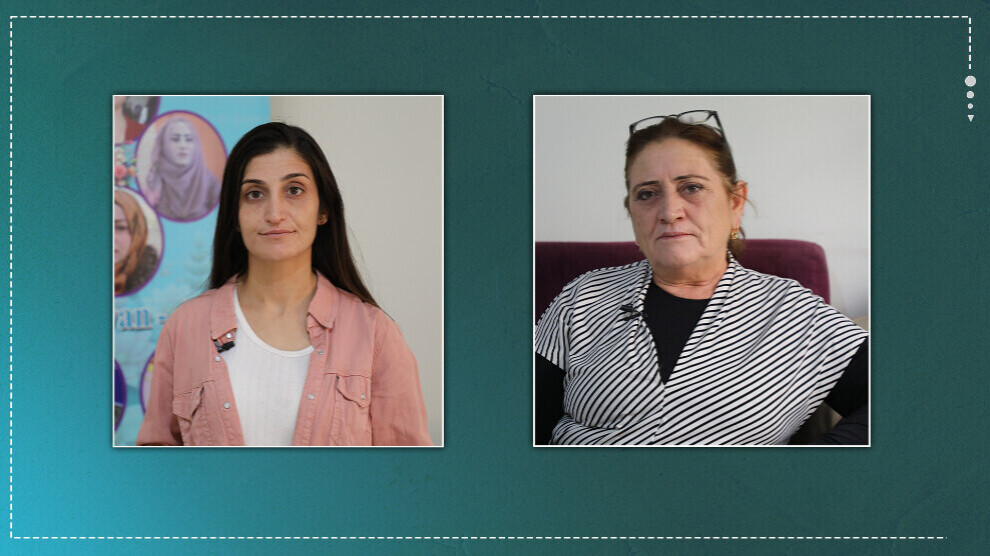
Yusra Elias condemned the attack that targeted the images of the martyrs, saying that some foreign policies seek to stir up discord between the region's components. "We have been living together for more than 14 years on the basis of the philosophy of the democratic nation whose journey women have led," she added. "This is a sensitive phase, because we are passing through the phase of democratic integration, and there are parties that do not want this path to reach its end."
She explained that some policies seek to divert the people's attention from their rights and ignite a civil war between the components. "We want a democratic society built on the basis of justice and equality, not to slide into war and destruction. But they attack our values, and target in an unethical manner the will of the free woman. We must build our region and protect it, not destroy it. This attack targets the gains of the revolution, and therefore we must be vigilant, maintain our unity, and respect our common values."
Warnings Against Fueling Internal Conflicts
Speaking about the events witnessed in Hasakah, Ahlain Ali said that the goal of these practices is to undermine the system of shared life and the brotherhood of peoples. "We have been working for more than 14 years on the basis of the brotherhood of peoples and shared life, and women were at the forefront of this revolution."
She believes that some forces seek to undermine the gains of the revolution and empty them of their content, noting that attempts to push Syria toward war are not limited to external parties, but also include figures within the new government who do not want the integration path to succeed, and seek to fuel internal conflicts.
She stressed that the Syrian interim government bears the responsibility of maintaining stability and confronting practices that threaten civil peace. "We believe in democratic thought and approach and in shared life, and we have worked during the period of the Autonomous Administration to entrench coexistence, accept all components, and respect their specificities. Today, the rejection of the Syrian Democratic Forces and the institutions of the Autonomous Administration, which have become part of the institutions of the Syrian state, is a rejection of the path of democratic integration."
She stressed the sensitivity of the current phase, calling on all components of the region to exercise awareness and vigilance, maintain their unity, and not allow policies aimed at fueling internal conflict to threaten shared coexistence and stability.
"Female Martyrs Are a Legacy for All Women"
Ahlain Ali confirmed that female martyrs constitute an important model for women. "Female martyrs are a legacy for all women. They are models of the free woman who opened the path to freedom through her struggle and resistance. Their resistance has become an example of women's strength and will, and we see this strength today in women's organization and their presence in all areas of life. Female martyrs are our will and the path we walk on."
Ahlain Ali called on the Syrian interim government to bear its responsibilities toward persons who assault the symbols and memory of the martyrs, and to hold those responsible for these acts accountable. "Thanks to the sacrifices of our martyrs, Syria was liberated from the thought and authority of the Baath. We do not want the events of 2004 to be repeated. We must respect one another, accept one another, and live together on this land. This is not the time for destruction, but the time for building, unity, and protecting shared life."