
"Journey of Freedom" Book Documents the YPJ Experience
Author Sheelan Ahmed addresses the struggle of the Women's Protection Units (YPJ) in her book "Journey of Freedom," with the aim of highlighting their journey over 14 years.
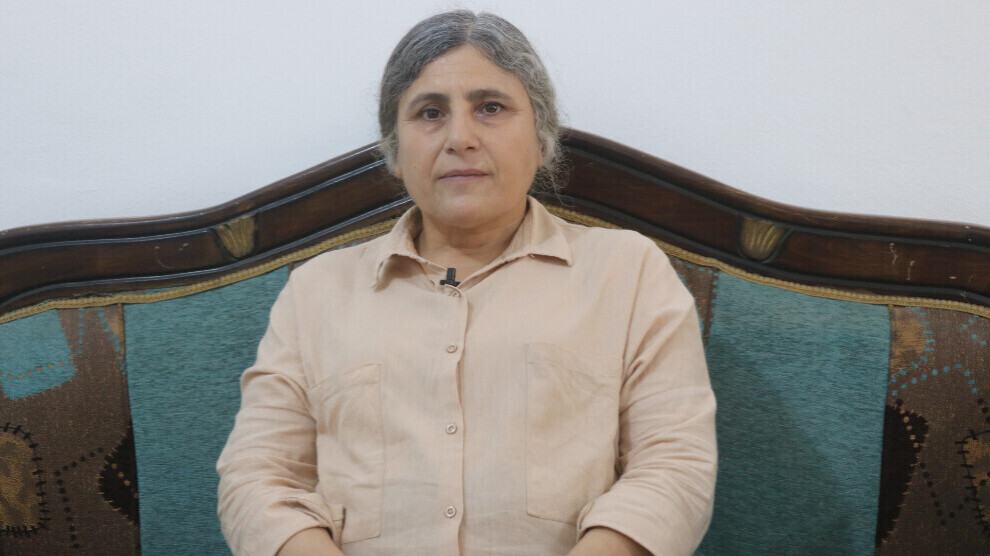
NAGHAM JAJAN
Al-Hasakah — In an era where culture and politics intertwine, books emerge as important tools for preserving memory and transmitting human experiences from one generation to another. Books are no longer merely texts for reading but have also become spaces for expressing fundamental issues, especially those of resistance, identity, and women's rights.
Sheelan Ahmed's book, authored by a daughter of the city of Amuda in Rojava, adds a new dimension to the debate on women's role in struggle, presenting the experience of the Women's Protection Units (YPJ) as a model connecting ideology with resistance on the ground through the book "Journey of Freedom."
She says that the content of her book "Journey of Freedom," which she recently signed, is based on lived history. "In my view, the Rojava Revolution consisted of two parts: a hidden part, and a part that began to emerge openly after 2014. Our aim with this book is for it to be a historical document—history that was actually lived. It also documents the foundations upon which this revolution was built. The book clarifies how work was conducted from April 4, 2011, and many details that have not been made public."
Sheelan Ahmed, who worked in the Kurdistan Students' Union (YXK) and participated in military work until 2014 before moving to social and civil work in 2015, affirmed that her goal is for "future generations to benefit from this book and to know what history was lived." She explains: "The events that emerged during this revolution—activities and battles such as Kobani, Afrin, and other combat fronts—we wanted to document all of them. There are many partners in this history; many comrades were martyred in the battles of Tel Hamis and Tel Brak, and their sacrifices have not been adequately mentioned in the media. This book will be an archive of history, to remain a reference for future generations."
She added: "As one of those who participated in the founding of the YPJ in work and struggle, our goal was for everyone to know on what basis these forces were established, and how many great sacrifices were made in this revolution. Therefore, women's efforts have been documented in this book. Those who led the Rojava Revolution were leaders and fighters, and that is why this was a women's revolution."
Sheelan Ahmed stated that she is open to all criticism and opinions about the book. "If there is success in documentation or there are shortcomings, that is for the reader to decide. They can share their views and criticisms with us. For us, the most important thing is to write what was lived and to document it for future generations."