
Integrating Shingal Forces Is a Historic Step to Guarantee Yazidi Rights
"Untold Palestine" and the Journalists' Syndicate launched "Archive of Life" to document Gaza war victims' stories through families' voices, turning silent numbers into stories preserving memories and unfinished dreams against oblivion.
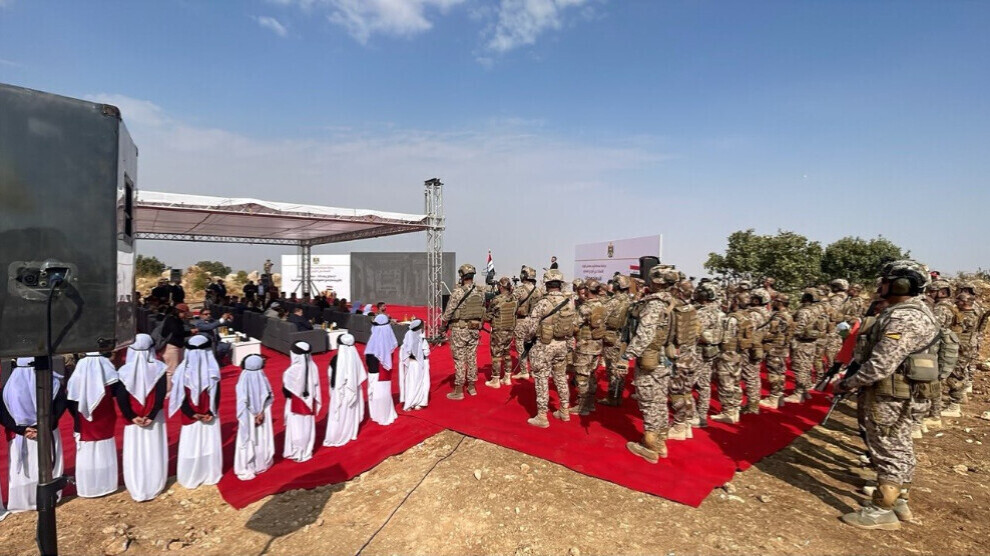
Shingal – The decision to integrate the combat units in Shingal into the Iraqi federal military institution represents a historic and pivotal step. After the attack launched by ISIS in August 2014, which forced the Yazidi community to voluntarily take up arms and defend itself to protect its land and existence, this agreement comes today to rearrange the security landscape in Shingal.
The war, which extended for more than a quarter of a century, targeted the Middle East region in general, and specifically the areas inhabited by the Kurdish people, alongside other peoples, societies, and religious groups. The goal of this war was to eliminate the beliefs that have preserved the remnants of human history to this day. As a result, many communities faced the risk of genocide.
In 2014, ISIS terrorism besieged Shingal and launched attacks aimed at committing a large-scale massacre. However, the resistance of the Yazidi people, with the support of fighters from the "People's Defense Forces" (HPG), the "Free Women's Units" (YJA Star), and fighters who came from Rojava, thwarted these brutal attacks. In the aftermath, the Shingal region developed into a self-reliant entity capable of organizing and strengthening its own defense forces.
The "Peace and Democratic Society" process, which emerged from the initiative of leader Abdullah Öcalan, centered on the concept of integration and the strategic necessity of ensuring the continued existence of society. The scope and influence of this process extended to include vast areas. In this context, the vision that had been developed in Shingal for some time, which focuses on integration, moved forward.
The Issued Statement
In this framework, the leadership of the Shingal Resistance Units issued a statement today, Monday, 26 October, in which it confirmed the importance of integrating the units into the Iraqi military institution, stressing that this integration not only reflects a justified transition from a phase imposed by war to a phase of state institutionalization, but is also considered a real safety valve to ensure the tragedy is not repeated and to entrench stability.
The statement said: "Based on our belief in the unity and sovereignty of Iraq, and our keenness to entrench security and stability in Shingal, we announce the reaching of an agreement with the Iraqi federal government regarding the termination of the independent military affiliation of our forces, the Shingal Resistance Units and the Shingal Women's Units, and their integration into the federal security system and the restriction of weapons to the hands of the state, in accordance with legal and institutional frameworks and the agreed understandings, which establishes a new phase of national partnership and shared responsibility."
The statement noted that "this agreement comes in the context of Shingal's history and what our Yazidi people experienced of genocide in August 2014 at the hands of ISIS, when they faced killing, enslavement, displacement, and the risk of annihilation. At a time when about a third of Iraq's area, including Nineveh Governorate, fell under the control of the terrorist organization, Mount Shingal remained steadfast with its heroes and sons from the Yazidi resistance, who defended their people, land, and dignity, and embodied with their will the meaning of resistance and survival in the face of genocide."
At that fateful moment, the Shingal Resistance Units and the Shingal Women's Units were born from the womb of suffering and the will to survive, in defense of a people that was subjected to genocide, a land that was threatened with uprooting, and a dignity that refused to be broken. The statement added: "Our male and female fighters fought the battles of defense and liberation, and we offered hundreds of martyrs and wounded in defense of our people and our land. We were the first to raise the Iraqi flag in Shingal after the defeat of ISIS, affirming that the region is an integral part of Iraq, and that our defense of our people was never separate from our national responsibility."
It noted that "the strength of the state is not measured by its ability to extend its authority only, but by its ability to embrace its children, recognize their sacrifices, and guarantee their rights. Hence, the success of the agreement requires serious implementation of the understandings, addressing the effects of the genocide, revealing the fate of the missing, doing justice to the families of the victims, preparing the conditions for the return of the displaced and the reconstruction of Shingal, and ensuring the tragedy is not repeated. We also emphasize the importance of strengthening the role of civil institutions and local administration in Shingal, and entrenching democracy in a way that ensures the participation of all its components and makes it an inclusive tent for its children."
The leadership of the Shingal Resistance Units confirmed, through the statement, that "our sacrifices were not for weapons for their own sake, but for the human being, the land, dignity, and life. We have performed our duty in the arenas of confrontation, and today we continue our responsibility in a new phase, keeping before our eyes the unity and sovereignty of Iraq, the security of Shingal and the dignity of its people, and building a safe and just future for all its children."