
Rufayda Al-Aslamia... the first nurse in Islamic history and an enduring legacy
Rufayda Al-Aslamia, first known nurse in Islamic history, an expert in surgery and social services, treated battle wounded and established Islam's first mobile healthcare unit during Prophet Muhammad's time.
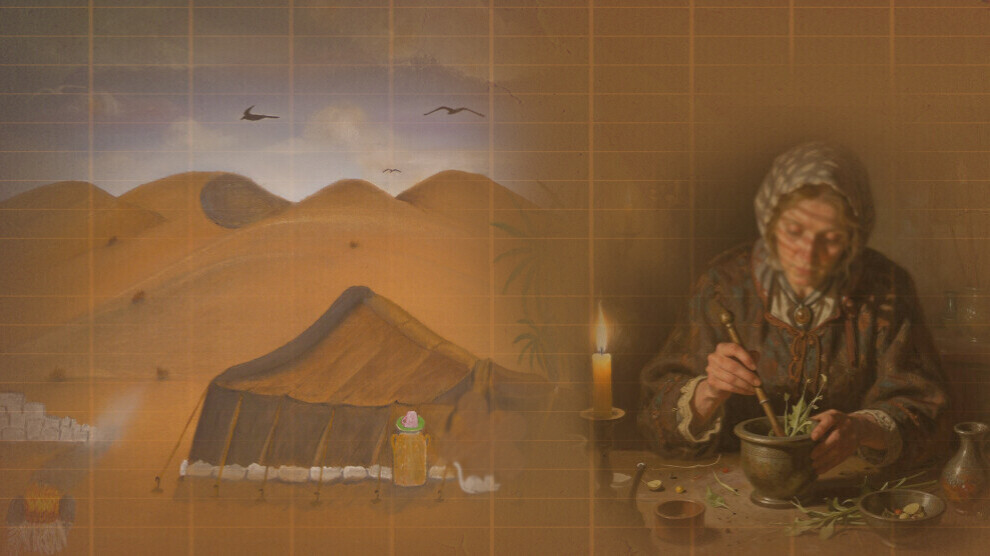
News Center _ Rufayda Al-Aslamia is considered the first documented nurse in Islamic history. She emeged as one of the most important female figures in the field of healthcare in the seventh century CE. She lived in Medina and contributed with hre skill and experience to establishing a nes approach to medical care within the emerging Islamic society.
Rufayda Al-Aslamia was born around 620 CE in Medina (Hejaz) and belonged to the Banu Aslam tribe. She was distinguished by organizing a treatment tent, teaching women the basics of nursing and healthcare, in addition to her humanitarian role in serving the sick and needy. During battles, she treated the wounded and supervised the first mobile healthcare unit, and she also trained a group of women to work in nursing.
Her life and education
She received her practical medical education from her father, the physician Saad Al-Aslami. From childhood, she trained in cleaning wounds, preparing herbal medicines, and assisting women during childbirth. After the Prophet Muhammad's migration to Medina, she embraced Islam and joined the Ansar women. During that period, she devoted great attention to social responsibilities and the worship of serving the sick and needy.
After the battles of Uhud, the Trench, and Khaybar, she set up a tent resembling a field hospital, where she treated wounded soldiers. She took care of Saad ibn Muadh when he was seriously injured in the Battle of the Trench. In peacetime as well, she provided free treatment to the sick, poor, and orphans in a small clinic near the Prophet's Mosque.
Health education and her contributions
She established a group of volunteer female nurses and provided them with organized training in topics such as hygiene, wound treatment, herbal medicine, and how to deal humanely with patients. She was also the first to create a mobile healthcare unit that operated near battlefields, organizing first aid points. She focused on principles of hygiene, patient privacy, and fairness in providing treatment. This approach helped lay the foundations of Islamic medical ethics.
Her legacy
Her contributions became a source of inspiration for the establishment of Islamic hospitals that appeared in subsequent centuries, known as "bimaristans." In the modern era, many awards and nursing colleges bear her name. Among the most notable is the Royal College of Surgeons in Ireland – Rufayda Al-Aslamia Nursing Award in Bahrain.
Today, Rufayda Al-Aslamia is remembered as a pioneer in Islamic medicine, a symbol of women's empowerment in health professions, and a model of social awareness and humanitarian service.