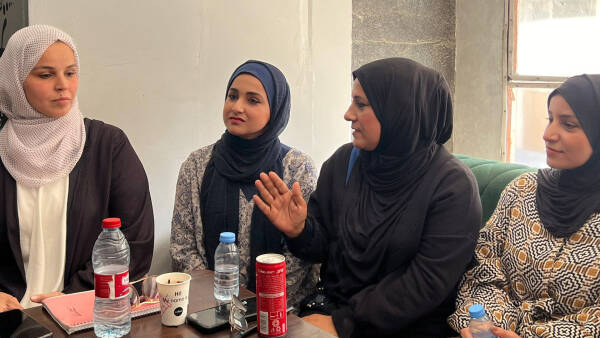
"Let's Read for Them" – an initiative to encourage reading in Gaza
"Amid Gaza's harsh reality, the 'Let's Read for Them' initiative opens a window to literature, reviving readers' bond with books that express, touch, and reshape their self and societal awareness."
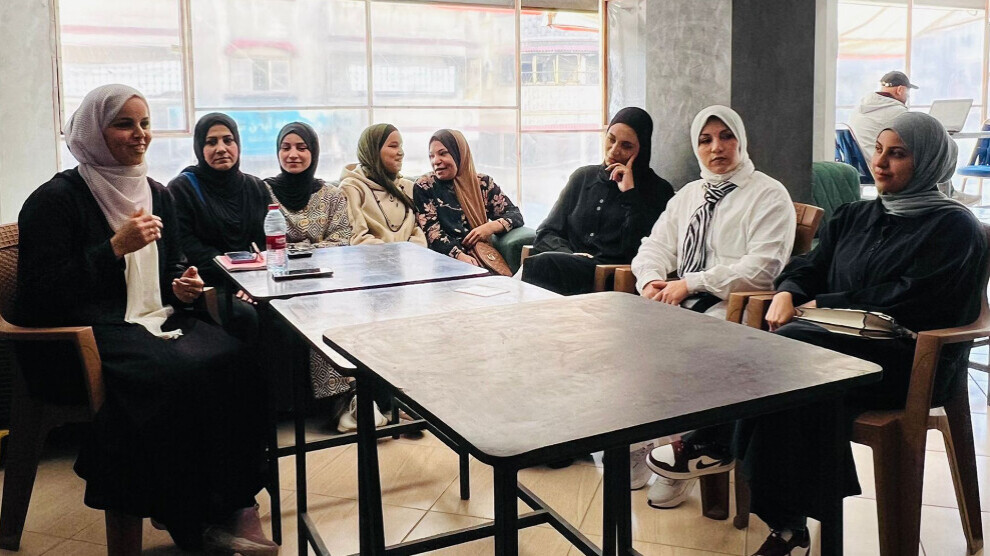
Rafif Asleem
Gaza – Writer Sabreen Abu Askar launched the "Let's Read for Them" initiative to encourage reading the works of Gaza's writers among girls, women, and young women in various places such as camps, schools, universities, and cafes, especially after the destruction of public libraries and the spread of non‑purposeful content on social media. The aim is to educate women about different cultures and inform them of their rights and needs.
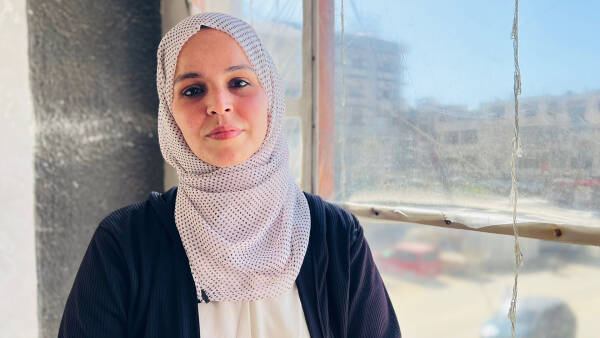
According to writer Sabreen Abu Askar, the "Let's Read for Them" cultural initiative includes not only women and girls but also women writers and young men in the Gaza Strip, with the goal of discussing recently published literary works and making recommendations on important topics that need to be highlighted, especially those related to women and the violence practiced against them.
She explained that today a large part of the literary works being read and circulated are works promoted from abroad that often do not take into account the needs of women and girls nor suit what is happening in local communities. She indicated that she realized this and took action to raise awareness about the importance of reading and what this group should read, since that will determine their personalities and what they will become in the future.
She pointed out that the initiative existed before the attack, with specific days allocated for girls and children in schools, but today they are thinking about how to expand the initiative to include women in the camps amid the harsh conditions they live in. "No matter how harsh and difficult the conditions, women must not stop reading."
Regarding why she thought of relaunching the initiative, she says: "The literature I grew up reading by the giants of Arab and foreign writers is different from what readers circulate today. A generation has emerged that tends to write cold, superficial, worthless texts, far from recording history, or addressing the human aspect of characters, or even employing aesthetic and rhetorical techniques." She asks why they should not taste literature from its original source by reading a short text from a book and commenting on it during an open discussion.
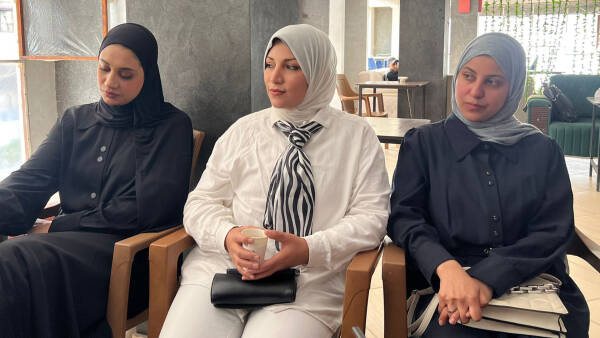
"Women complain about reading similar topics, such as reading about Palestine's history and current events, but if we do not read about our country's and land's history, how can we repel danger from it or raise our children?" She noted that there are many models, especially female ones, whose biographies should be read and from whose struggle and achievements we can benefit, so that these personalities become guiding beacons.
For Sabreen Abu Askar, the measure of success is that the circle that women gather around themselves expands when they begin to read and talk, even if that increase is just one woman, in the hope of meeting new heroines for her upcoming novel and documenting their reality and pain through literature that touches the soul and is translated into several languages. She noted that in her first session, she indeed hosted one of the heroines of her novel, which will be published in the coming days.
Sabreen Abu Askar also hosts specialists in various fields such as political analysts, critics, and social service scholars, so she considers these sessions educational first and foremost, to help women educate and change themselves before they begin to change their societies, especially given the destruction of public libraries and the fact that not everyone has the financial ability to buy paper books due to their greatly increased prices. She affirms: "We can rebuild ourselves and make up for lost time through reading."
Community and legal awareness is a necessity
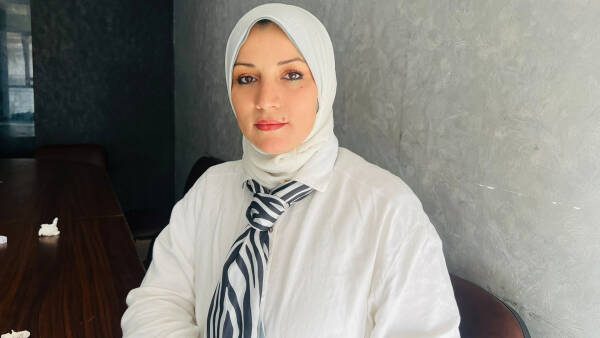
Majdoleen Mahana, one of the attendees at the reading circle, indicates that she is interested in reading because it is an important stage for understanding oneself and reality, especially if it concerns writings by those who have experienced the same pain and experience. She explains that the first time she read was because she gave birth to a child with a rare brain disease, so she began searching in books and websites to help herself alongside follow‑up with a specialist doctor.
She explained that she prefers reading topics such as domestic violence, rights, dealing with adolescence, and the psychological aspect. She noted that women should read more about community and legal awareness to be able to deal with most of the problems they encounter, especially psychological burnout and being reduced to just a number among the women of their society.
She explained that the difficult conditions women go through should be turned into a strong motivation for self‑development and self‑building. Reading means learning, and it is not a stage in women's lives but a constant part, so that they can raise a generation capable of change, and learn from the mistakes of those around them and not repeat them, because books contain hundreds of inspiring experiences of women who made the decision to live and start anew with life.