
Leila Bedirkhan: The Kurdish Princess of Ballet
From Istanbul to Cairo, then Vienna, Paris, Lelia Bedirkhan forged her path in the world of art to become a symbol of Kurdish cultural representation, drawing inspiration for her dance from a heritage of divers roots.
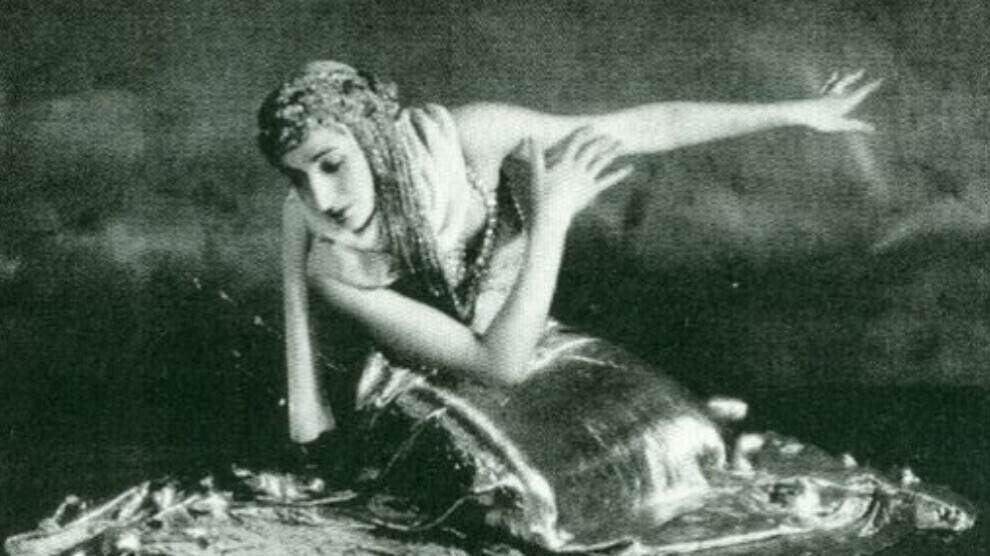
News Center — Ballet dancer Leila Bedirkhan drew attention in Europe through performances that highlighted Kurdish culture. She is considered among the first Kurdish artists to present what could today be called “cultural representation” in its modern sense.
Leila Bedirkhan was born on July 31, 1908, in Istanbul, Turkey. She was the daughter of Kurdish prince Abdul Razzaq Bedirkhan and her Austrian Jewish mother Henriette Ornik. Her family belonged to the Bedirkhan lineage, which played an important role in Kurdish cultural and political history. After her parents separated, she lived with her mother in Cairo, where she spent her childhood.
Later, she moved with her mother to Vienna, where she took her first steps into the world of dance. During World War I, her father attempted to organize an uprising against the Ottomans in Eastern Kurdistan with Russian support, gathering forces from Van and Botan in Northern Kurdistan. He was later arrested, imprisoned in Mosul, and reportedly poisoned to death without judicial accountability.
During World War II, Leila Bedirkhan was in France and faced danger because of her Jewish heritage, but survived thanks to her marriage to a French citizen. After the war, she continued her artistic career until her death on December 26, 1986, in Montauban.
Leila Bedirkhan is regarded as a pioneering figure who brought Kurdish dance to European stages. She presented original performances inspired by Kurdish folk dances rather than the stereotypical image of “Oriental dance,” and was among the first to express Kurdish cultural identity through art in a modern and influential way.
Her Art and Influence
She incorporated Kurdish music and decorative motifs into her performances, helping introduce Kurdish identity to the international stage. She was not merely a dancer, but also a cultural ambassador who presented Kurdish culture to the world.
She built connections with internationally known artists, including painter Jean Targier, who created a work titled Leila Bedirkhan Performing a Kurdish Dance, as well as renowned photographer Madame Dora, who photographed her.
Identity and Belonging
Leila Bedirkhan consistently emphasized her Kurdish identity in interviews, especially since some people in Europe identified her as a Turkish dancer. She would often say:
“I am neither Turkish nor Persian; I am Kurdish.”
Artistic Style
Her dances were inspired by the rhythms of the daf, tanbur, tar, and sitar, as well as by the dances of various peoples and cultures in Iran, Egypt, Mesopotamia, and Kurdistan. She was also influenced by Chaldean, Yazidi, and Zoroastrian heritage.
Some of Her Most Notable Works
- Bride of the Rain (Bûka Baranê)
- The Kurdish Warrior (Şervanê Kurd)
- The Dabke (Dîlan)
- Druze Dance
- The Persian Stamp
- The Hieroglyphic
- The Daf
Legacy
In short, Leila Bedirkhan was more than an artist; she was a cultural symbol who helped carry the voice and heritage of her people to the world, leaving behind an artistic legacy that remains remembered today.