Women's rights defenders in Morocco between field harassment and digital defamation
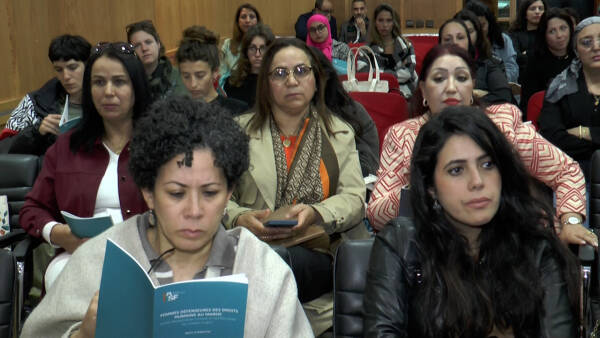
Participants in a symposium by Young Women for Democracy and Lawyers Without Borders affirmed that women human rights defenders in Morocco face increasing harassment combining field and digital violence, including smear campaigns targeting private life.
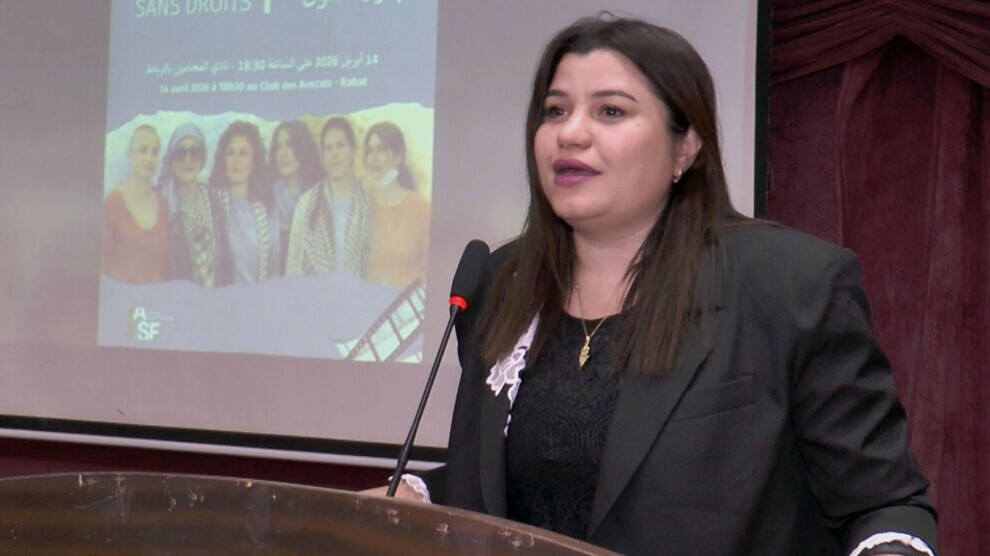
Hanan Hart
Morocco _ Women’s rights defenders in Morocco continue their work in the face of violence a discrimination. Despite the development of laws, daily practice reveals deep challenges and professional and personal pressures, raising the question of the price these women pay in defending the rights of others.
Women’s rights activists and civil society figures highlighted the complex reality experienced by women activists, between field restrictions and digital violence, during a symposium organized by the Association of Young Women for Democracy in partnership with Lawyers Without Borders yesterday, Tuesday, April 14, to address the growing challenges facing human rights defenders in Morocco.
The speakers affirmed that this reality is not limited to traditional forms of restriction but extends to the digital space, where activists are subjected to systematic smear campaigns targeting their reputation and private lives, in a context characterized by the intersection of gender-based violence with restrictions on human rights work.
The discussions also highlighted that women defenders face what was described as a "double burden," as they find themselves confronting pressures resulting from their human rights activism, along with a harsh societal view that amplifies the intensity of targeting, especially when it comes to public expression or participation in sensitive issues.
In this context, the participants stressed that some practices, whether legal or societal, contribute to narrowing the margin of freedom of expression, calling for the need to provide a safer environment for women defenders and ensure effective protection of their rights, in line with constitutional commitments and international standards.
During the meeting, a report was presented monitoring the reality of women's rights defenders, along with a documentary film entitled "Defenders of Rights Without Rights," which presented live testimonies of women facing multiple forms of harassment, including judicial prosecutions, defamation, and suspension from work—practices that directly affect their ability to continue their human rights work.
"Highlighting an invisible reality"
In this context, Ibtissam Thabat, Secretary-General of Young Women for Democracy, affirmed that organizing this activity is part of an ongoing commitment to the cause of women human rights defenders, which she considers a priority in her human rights work. She explained that this engagement is not limited to solidarity but also stems from personal experience. "The members of the group are also human rights defenders and live part of these challenges," referring to the intersection of field work with personal experience.
She affirmed that the goal of the film and the accompanying report is to highlight a reality that is often invisible, represented by multiple forms of harassment, including judicial prosecutions and defamation—practices that directly affect women's ability to continue their human rights work.
Although the film conveyed live testimonies from several women defenders, it noted the absence of the voices of detained women defenders, which she attributed to their situation. She indicated that they were symbolically present through their photos and names, in an attempt to keep their issues present in the discussion. She called for taking concrete steps, including releasing all detainees, dropping judicial prosecutions, and working to establish a legal framework that provides effective protection for women defenders.
Ibtissam Thabat reaffirmed that the report focused on cases that the association directly followed, particularly those related to detention and judicial prosecutions, without including other forms of harassment such as defamation or indirect pressures. This highlights the limitations of documentation work compared to the breadth of the phenomenon.
"Digital violence: pressure that extends beyond the virtual space"
Alongside field restrictions, a discussion emerged about the escalation of digital violence as a direct extension of the pressures facing women defenders. In this context, the national coordinator of Young Women for Democracy, Mariam Houad, explained that this type of violence is not limited to targeting activities and positions but extends to private life through defamation and violation of privacy, which multiplies the psychological impact on women defenders.
She added that the absence of effective mechanisms to protect private life, along with the limited legal framework, makes many women defenders work in an unsafe environment without sufficient guarantees to protect them while practicing their activities. She considered that this reality pushes some women to silence or retreat, fearing the scale of violence they might be subjected to. "Its effects extend to psychological and personal balance, not just to the professional field."
A double burden despite legal guarantees
As an extension of the discussions that took place during the meeting, the human rights report issued by the Association of Young Women for Democracy revealed that women human rights defenders in Morocco face multi-dimensional harassment, including judicial prosecutions and smear campaigns, especially through the digital space, despite constitutional guarantees.
It pointed out that this harassment takes multiple forms, combining legal and social restrictions, in addition to online abuse and defamation campaigns, which reflects an unsafe environment for women to practice human rights work.
It also highlighted that certain legal provisions are used, in specific cases, to restrict freedom of expression, raising questions about the compatibility of national legislation with international standards.