
Iran... Severe Damage to Infrastructure and Over 83,000 Housing Units Affected
Iran's infrastructure suffered a series of very extensive damages following the recent attacks on educational, health, and residential facilities in 12 cities. Without independent assessment of human and material losses, concerns for civilians are raised.
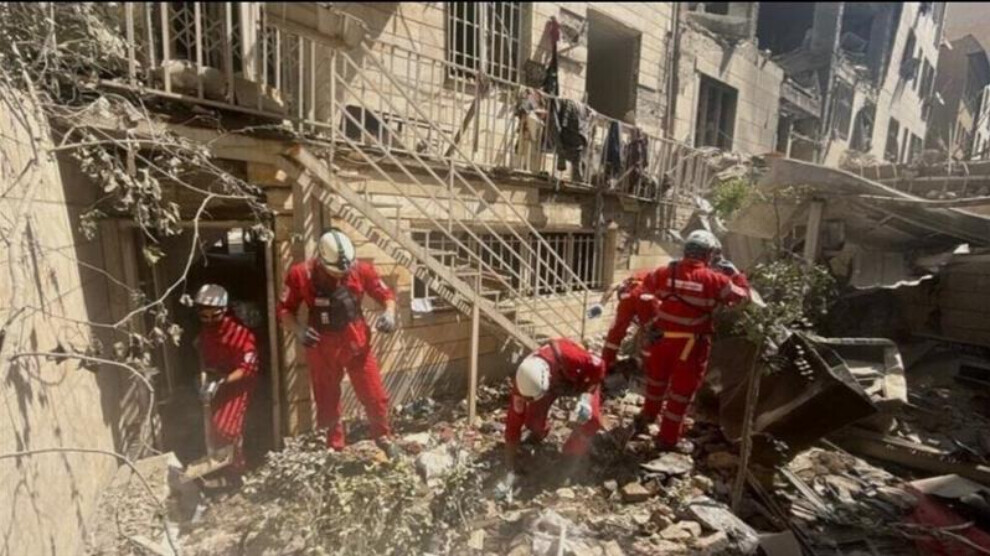
News Center — As the scope of confrontations in Iran widens, the suffering of civilian populations who find themselves at the heart of an escalating humanitarian crisis intensifies. Repeated attacks have led to widespread disruption of basic services and growing fears over the safety of families.
The spokesperson for the Iranian government, Fatemeh Mohajerani, announced that dozens of universities, medical facilities, and residential buildings across the country have suffered extensive damage as a result of recent attacks that targeted educational, health, and urban infrastructure in 12 cities. She confirmed that no independent assessment of the material and human losses has been issued yet.
Regarding the scale of the damage, she explained that about 30 universities were among the targeted sites, leading to the disruption of educational and research activities. A specialized mental health center was also damaged, while one security force member was killed during the attack on the Bushehr nuclear power plant.
The government spokesperson described the scale of damage in urban areas as "significant," stating that more than 83,000 housing units across the country have been damaged, noting that 39,508 residential and commercial units were damaged in Tehran.
She added that the attack on the Mahshahr petrochemical complex resulted in the deaths of five people and the injury of about 170 others, with a number of the wounded still receiving treatment.
Reports indicated widespread damage to 322 medical and health centers, 763 schools, and 55 libraries in 12 provinces. All of these are facilities that are part of the civilian infrastructure, and targeting them could lead to a serious disruption in the population's access to essential services such as healthcare, education, and housing.
In a related context, the spokesperson for the Tehran Fire Department announced that rescue operations are still ongoing in the capital. According to him, rescue teams have managed to pull 410 people alive from under the rubble since the clashes broke out.
He pointed out that 34 firefighters have been injured during these operations, and four fire stations have been damaged due to the wave of explosions and are out of service.
Meanwhile, the Deputy Minister of Energy revealed the extent of the damage to the electricity network, indicating that the losses are estimated at 32 trillion tomans following more than 1,900 incidents. Despite this, he ruled out the possibility of a total power outage, affirming that the vastness of the power grid and its multi-layered design reduce this risk.
The news of the extensive damage to residential areas and medical and educational facilities has raised concerns about the impact of the attacks on civilians. Under international humanitarian law, the protection of civilian infrastructure and civilian populations is a fundamental duty. However, the circumstances of armed conflicts make it difficult to verify independent reports regarding the nature of the targeting and the responsibility of the warring part