
After years of drought, rains in Afghanistan cause numerous disasters
At the start of the new year in Afghanistan, heavy rains and thick snow initially seemed like good omens after years of drought, but quickly turned into a series of disasters sweeping the entire country.
Baharan Lahib
Kabul — The year 2026 in Afghanistan began with a natural scene that seemed promising at first glance: non-stop heavy rains and snowfall in several provinces, a rare phenomenon after years of severe drought.
Most people welcomed the rains with joy and gratitude, hoping they would bring life back to the thirsty lands and rescue the country from a choking water crisis. But behind this optimism, farmers were living in deep worry; the severe cold threatened their crops and could turn fields into frozen, unproductive expanses.
As days passed, the rain turned from an anticipated blessing into a new disaster. Floods swept through most provinces, leaving widespread destruction, killing 61 people and injuring more than 200 others. In some areas, house roofs collapsed on top of residents, adding new chapters of pain to the lives of Afghans.
On April 3, 2026, an earthquake struck the capital, Kabul, killing 12 people, while a ten-year-old girl died in Laghman province due to a landslide. The country was experiencing a rapid succession of disasters, as if nature had decided to test the people's resilience once again.
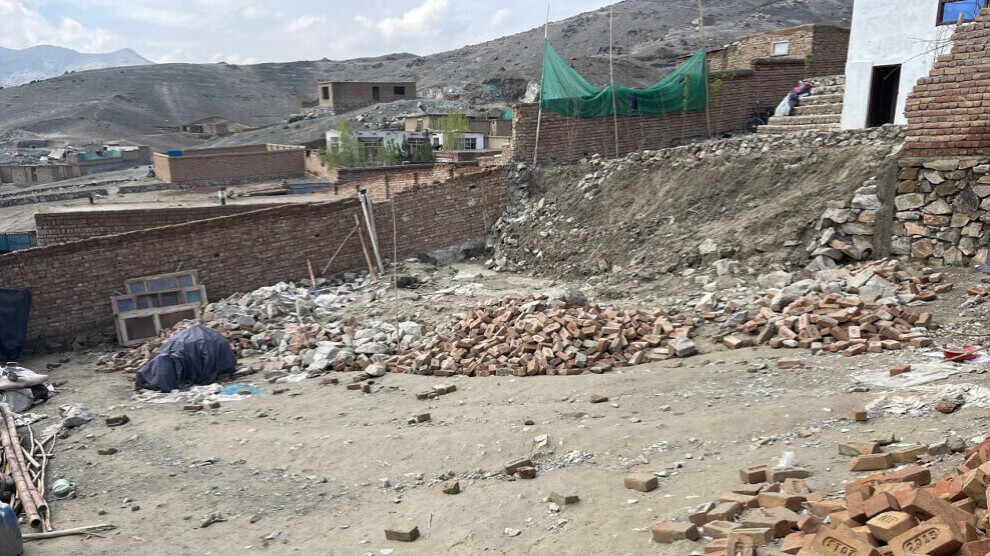
Among the stories that shook public opinion was that of a family living in Bagrami district, in the Kosfandara area east of Kabul; a family that lost all nine of its members in one night after a wall collapsed on them under the weight of the earthquake and rain. Their home turned into a pile of rubble, and their story remained a testament to the fragility of life in areas lacking the most basic elements of safety.
Kosfandara, like many areas of Afghanistan, lies among the mountains of Kabul. Over twenty years, it gradually transformed from a rural area into a growing residential cluster. It was designated for massive development projects: housing complexes for teachers and returnees, industrial cities, educational and service centers.
But most of these projects stalled due to corruption, lack of effective management, and land seizure by influential figures. Among the most prominent was former parliament member "Mullah Tara Khail," who seized vast areas of Kabul's land and sold them at exorbitant prices, and even forcibly took over lands that the government had distributed to its employees. Kosfandara was one of the areas affected by this chaos. When we arrived at the village, the roads were narrow and empty of traffic, except for a few children walking in their traditional clothes toward the religious school built before the area turned into a residential neighborhood. Despite the village's proximity to the capital, it lacks a clinic or a government school, reflecting the scale of neglect it suffers.
Noor Zia Kalnoor, one of the neighbors of the stricken family, led us to the site of the incident. She was trembling as she spoke, fear evident in her eyes. She stopped at the door of the demolished house and said in a faint voice, "I cannot enter." Then she continued as tears flowed, "Just two nights ago, we pulled eight bodies from this place, five of them women. When the wall collapsed on them while the rain was pouring heavily, the women started screaming. After we pulled out the bodies, cars came and they were taken to the hospital."
Noor Zia leaned her back against the wall, as if the scenes were returning to gnaw at her memory. After a moment of silence, she said, "This family had been deported from Iran just a month ago. They came from Takhar province and set up a tent inside a courtyard that had only four walls. We offered them a free room, but they refused. Their tent was adjacent to the wall, and when it collapsed, it buried them all. There was one child who survived, but he was seriously injured. He died last night."
All the neighbors confirmed that night was terrifying. Some children still refuse to leave their homes after losing friends they played with every day. Fear has become part of their daily lives.
This tragedy comes at a time when vast areas of Afghanistan suffer from a lack of basic services, absence of infrastructure, and weak crisis management. Although people hope the rains will save them from drought, the successive disasters reveal the fragility of reality and keep fears alive of repeated tragedies and continued human and material losses.