KCDP:Increase in Suspicious Female Deaths and Impunity Threaten Lives
Femicides in Turkey are rising due to government neglect, with 45 killed and 29 suspicious deaths recorded this year alone.

Elif Akgöl
Istanbul – Suspicious female deaths have become a seriously escalating problem in recent years in Turkey. According to the 2025 report published by the We Will Stop Femicide Platform (KCDP), at least 294 women were killed by men, and the bodies of 297 women were found under mysterious circumstances. The number of suspicious female deaths has exceeded the number of femicides.
The January 2026 report of the National Committee for the Protection of Women, affiliated with the We Will Stop Femicide Platform (KCDP), indicates a similar picture. According to the report, 22 women were killed by men in the first month of this year, and the bodies of 14 women were found under mysterious circumstances. Last February, 23 women were killed, while 29 women's deaths were recorded as suspicious.
The National Committee for the Protection of Women confirms that this picture indicates that effective investigations are not being conducted into many deaths, and that suspicious cases remain unresolved.
"I Wish March 8th Could Be Different"
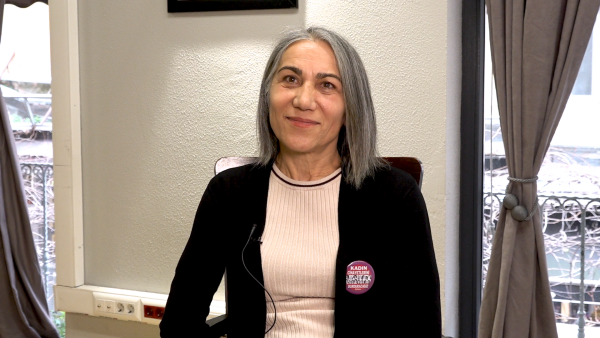
Şirin Yalçınkaya Oğlu, representative of the National Committee for the Protection of Women (KCDP), says that women's demands are not met, and that the ineffectiveness of protection mechanisms, in particular, costs women their lives. "Instead of talking about femicides and suspicious deaths of women on March 8th, I would prefer to talk about women's organization. I would prefer to talk about the loss of rights suffered by working women."
She adds, "We would prefer March 8th to be a day when we talk about the gains we have achieved, where equality in representation and gender equality are guaranteed. We prefer to celebrate International Women's Day freely," reminding that the KCDP program has been recording data on femicides for many years, playing an important role in highlighting femicides in Turkey.
"The Platform Has Documented Femicides Since 2010"
She criticized the Turkish authorities' neglect in following up on femicides and failing to address their causes. "We observed, and repeatedly stated, that the state did not keep this data until 2016, and therefore did not recognize the existence of this concept, and did not understand that these are preventable murders."
Law No. 6284, which came into effect after the signing of the Istanbul Convention, is one of the most important legal tools for protecting women. However, she says the problem lies not in the existence of the law, but in its implementation. "Enacting a law like Law No. 6284, which protects women and families from violence, after signing the Istanbul Convention, is an extremely important step. It is indeed a very important preventive legal measure. When a woman wants a divorce, or when she does not want to stay with someone, or when she wants to walk freely on the street, if she is subjected to any male violence directed against her, a restraining order can be issued under this law."
"Those Targeting Law 6284 Are Trying to Protect Perpetrators"
Şirin Yalçınkaya Oğlu reminds that in cases of escalating violence, various protection measures stipulated in the law can be applied. "If the level of violence increases, or if the perpetrator is the woman's husband or another man, a protection order can be obtained, meaning a change of address. If that is not possible, electronic ankle bracelets can be placed on male perpetrators of violence against women who do not want to disrupt their academic, professional, or educational lives."
However, as our interviewee confirms, the application of these mechanisms has suffered serious setbacks since Turkey's withdrawal from the Istanbul Convention. "Protection orders have been issued for shorter periods since Turkey's withdrawal from the Istanbul Convention, and no penalties are imposed on the perpetrator of violence. There are many such cases. The day after the protection order expires, the perpetrator can return and kill the woman or assault her again."
She pointed out that withdrawing from the Istanbul Convention directly affects women's lives. "Abandoning the Istanbul Convention has made women's lives more difficult, and has increased femicides, child abuse, and rape, unfortunately, because when gender equality is not achieved, it leads to male dominance, where those perceived as holding power dominate females."
She noted that Law No. 6284 has also been targeted. "They are trying to create an impression that Law No. 6284 is ineffective, with statements like 'we will ease it,' or 'we will repeal part of it,' or by saying that women drive men out of their homes and become victims. These statements are actually victim-blaming and an attempt to protect the perpetrator, i.e., the man, and to repeal this entire law."
"Women Don't Just Fall from Balconies and Die"
She pointed to the increase in suspicious deaths of women in recent years. "Women don't just fall from balconies or windows while cleaning alone or while living alone in their homes," highlighting the absence of effective investigations into many suspicious female deaths.
According to Şirin Yalçınkaya Oğlu, one of the most important factors behind femicides and suspicious deaths is impunity. "Because the concept of impunity drives many men to kill women, or kill their children, or cover up the crime. The main reason is impunity."
She cited platform data showing that suspicious female deaths exceed femicides, noting that from this perspective, 500 women were killed last year. She reminds the state of its obligation to protect women: "The state's duty is to stand by every female citizen who is subjected to any form of injustice. It is obligated to do so. Immediate action must be taken, the Istanbul Convention must be reactivated, and women who request protection measures due to exposure to violence must be protected; even without a complaint, protection requests should be automatically implemented in cases of violence."