
Safety... A Right That Has Not Reached All Women!
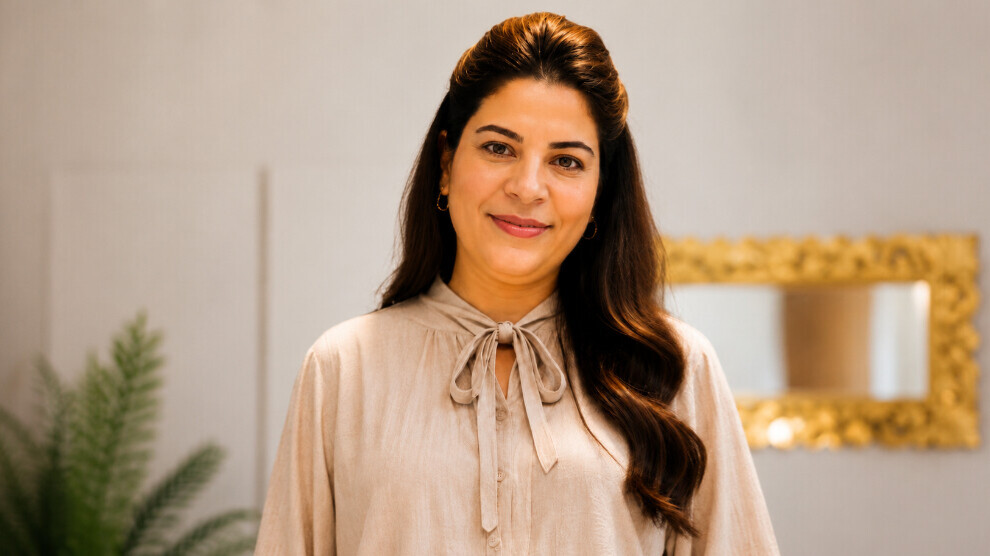
An article by Moroccan journalist Hanan Hart
As is my custom, I was browsing news agencies and websites—following the news is not merely a habit, but an integral part of my profession as a journalist. Each day, I make a point of knowing what is happening in the world. However, what caught my attention this time was not a political or economic event, but rather that I found myself, once again, confronted with news items all converging on one theme: women.
It began in India. What stopped me this time was not merely the crime itself, but the ongoing protests that followed it. Weeks after the rape and murder of an eleven-year-old girl in the state of West Bengal, anger continues to fill the streets, and the same questions persist: How can such crimes recur despite the tightening of laws? And why do women and girls still feel that safety is an elusive right?
I then moved to another news item, this time from Sudan. It was not about a single crime, but about a reality documented by the United Nations, which spoke of hundreds of incidents of sexual violence since the outbreak of the conflict in April 2023, targeting hundreds of women and girls. There, rape is no longer merely an individual assault but has become, according to the UN, a weapon of war used to spread terror and tear communities apart.
I closed that piece, only to find another headline asserting itself, this time from Libya. It was not about a crime committed today, but rather news carrying a glimmer of delayed justice: the International Criminal Court announced the referral of a former official at the Mitiga prison to trial on charges including rape and torture—a step that brought back to the fore files of violations that had spent years awaiting accountability, as though justice, however late, were finally attempting to find its way to the victims.
I turned off my phone screen for a moment, but the news remained open in my mind.
Three news items, three countries, three different contexts—and yet, it seemed to me that I was reading the same story. Sometimes the victim is a child, sometimes a woman fleeing war, sometimes a survivor waiting for justice for years. The details change, but the scene repeats itself in a painful manner.
As I follow this news from Morocco, I do not see them as events confined to distant countries. It is true that each society has its own circumstances and complexities, yet what unites these realities is greater than the difference of geography. In every case, women are the weakest link, and their bodies become a space upon which violence is exercised, whether in times of peace or in times of war.
Perhaps for this reason, this news no longer passes before me as it once did. It is no longer merely headlines in news bulletins; it has transformed into questions that haunt me: Why does humanity advance in countless fields, yet remain unable, to this day, to guarantee women the most basic right—the right to safety?
Sometimes I fear that the greatest problem is not the recurrence of these crimes, but our habituation to them—that we wake up to news of a rape, become angry for a few minutes, and then move on to the next story. That tragedy becomes just another statistic, and that pain becomes part of the daily routine imposed by the speed of news cycles.
Here precisely, I find that the responsibility of journalism goes beyond transmitting facts. The journalist does not merely inform people of what happened, but also helps them not to forget, and to perceive the connections between events that may appear disparate. What happens in India is not isolated from Sudan; what happens in Libya is not a story that ended once a judicial file was opened. They are all reminders that women's struggle for safety and dignity has not yet ended.
I do not write these words because I possess ready-made solutions, nor because I believe that an opinion piece will stop violence against women. I write because writing, for me, is a form of resistance to oblivion. Whenever I browse the news, I realize that behind every headline there is a woman with a name, a story, and unfulfilled dreams. What I fear is not merely that these crimes will recur, but that we will become accustomed to reading about them—that they will become part of the daily news routine.
And from Morocco, as I observe this world that appears small on a phone screen yet immense in its tragedies, I grow increasingly convinced that defending women's right to safety is not an issue exclusive to any one country, nor merely a feminist concern, but a true measure of the humanity of the world in which we aspire to live.