
Before Sunrise, the Women of Halabja Begin Their Toil in the Potato Fields
Every morning, before sunshine's, several women quietly leave their homes, carrying bread in their hands, hope in their hearts, and the burden of a long day upon their shoulders, heading to the potato fields where a long day of arduous work awaits them.
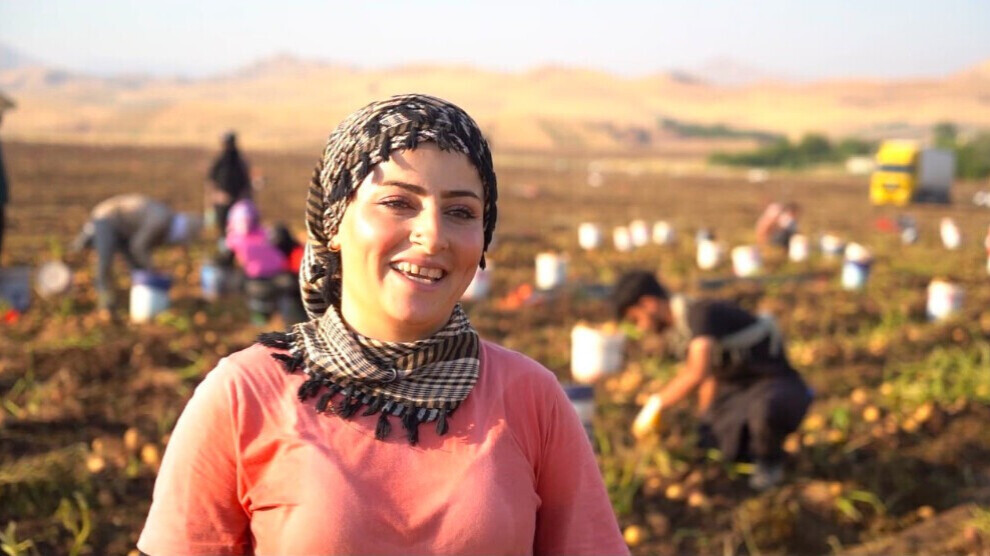
MEHRIBAN SALAM
Halabja — Amid the hardship of labor and the spirit of solidarity that unites them, the women workers recount stories of struggle and determination, where each working day transforms into a journey for sustenance and for building a better future for their children.
Before the first light of dawn spills over the mountains of Halabja, women have already quietly departed their homes. They carry bread in their hands and an unextinguished hope in their hearts.
In those hours when the city remains shrouded in sleep, the journey of livelihood begins. The women turn the soil with their hands and gather potato tubers under the scorching sun. For them, this is not merely paid labor; it is a daily responsibility toward families awaiting sustenance and children dreaming of a future better than their present.
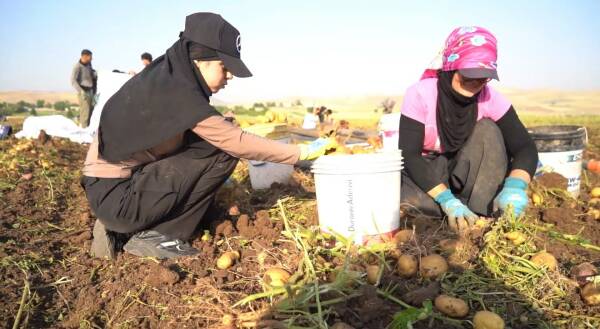
Perhaps it does not occur to the buyer of potatoes at the market that behind every kilogram lies the story of a woman who awoke before dawn, endured the hardship of labor and bodily pain to secure her family's needs. Each crop reaching the markets carries within it long hours of toil, sweat, and determination.
Amid this scene, Sana Luqman recounts her story. She was a second-year student at an institute, but found herself compelled to leave her studies and work in the fields. She did not wish to remain confined at home, so she chose to carve her own path.
She says: "We have a supervisor who gathers us into a group and notifies us of the work schedule. Then the bus passes by our homes to pick us up and take us to the fields. We wake up at 2:30 in the morning, have breakfast at one of the cafes in Halabja or Sayyid Sadiq, and then begin work at 4:00 a.m."
She adds that the work begins by dividing the workers into three groups, each with a specific task in collecting different varieties of potatoes, including "Jumbo" and "Shabaka." The work continues until 8:00 or 8:30 a.m., when the refrigerated truck arrives to transport the harvest, in a race against time to preserve the quality of the produce.
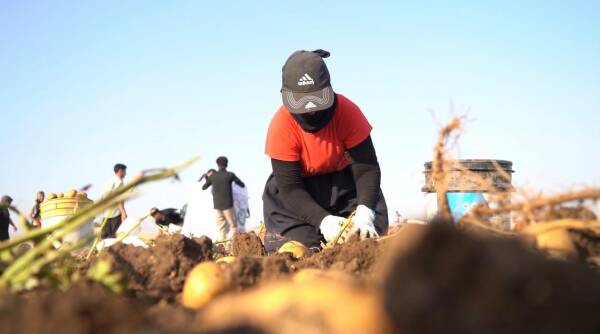
Despite the harshness of the work, Sana Luqman affirms that what binds the women together is greater than a mere working relationship: "We have four work seasons, from planting seedlings to harvesting the crop. Our supervisor is like a mother or an elder sister to us, and working together has forged a strong friendship among us. We have become like one family; if there is no work on a given day, we call one another and go out together on an outing."
She affirmed that the work requires desire and willpower, and that it is "easier than people imagine." Even under the heat of the sun, "the work becomes enjoyable to the point that you do not feel the heat."
Despite the fatigue and hardship that accompany this work, the women laboring in the potato fields continue their journey every day, bearing on their shoulders the responsibility of their families and the dreams of their children. Between the first thread of morning light and the last box of potatoes leaving the field, they write anew each day a story whose title is dignity, determination, and labor.