
Despite its Societal Success, the “Bidi Bisklet” Campaign Still Awaits Support
Five years after the establishment of the first all-female cycling team, the “Bidi Bisiklet” campaign in Rojava continues to await backing and support, having yet to receive any assistance from sports federations or women’s organizations.
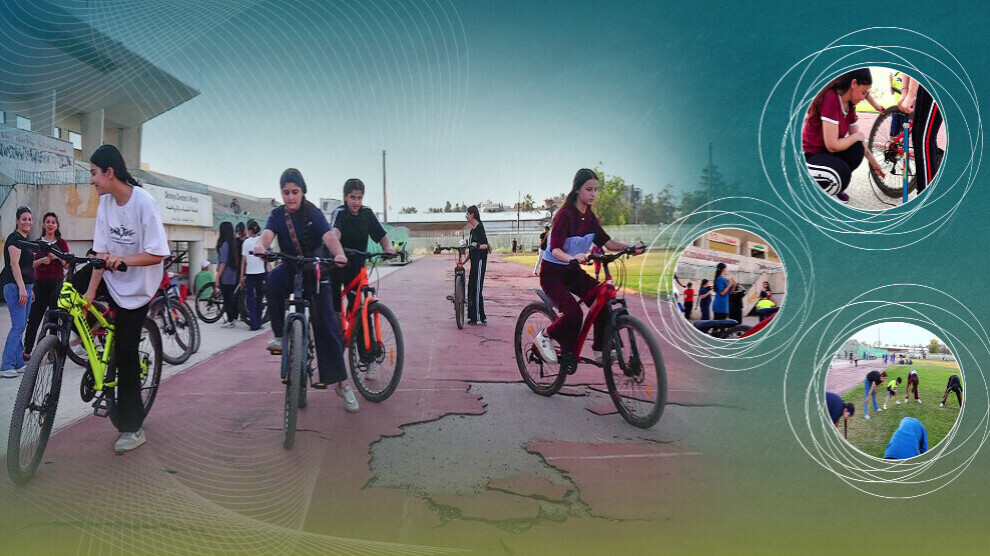
Qamishlo — The "Bidi Bisiklet"(I want bicycle) campaign has shone as the first initiative to launch a women's cycling team in the region since its founding in January 2021 in the city of Qamishlo. The campaign quickly became a remarkable phenomenon, attracting the attention of Kurdish, Arab, and international media, and paving the way for dozens of young women to discover their passion for cycling and to engage in it with confidence and presence in public space.
Over the past five years since the project was launched by Media Ghanem, the campaign has succeeded in bringing about a tangible change in societal attitudes toward women's participation in cycling. However, the absence of support and sponsorship from sports institutions and women's organizations has prevented the campaign from expanding, leaving it unable to attract more girls to the team or to provide the additional bicycles needed for its activities.
To this day, Media Ghanem herself undertakes the maintenance and repair of the bicycles and, despite limited resources, strives to continue the campaign so that girls are not denied the opportunity to learn to ride and practice the sport.
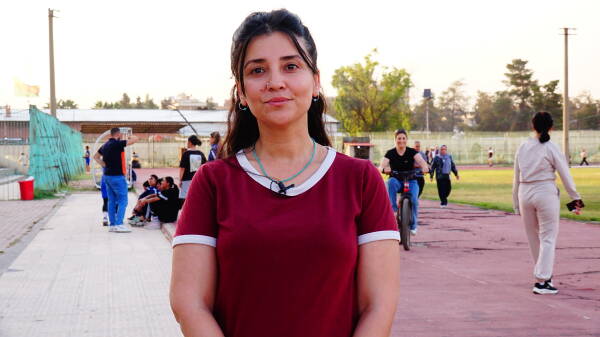
Media Ghanem says: "The last time I rode a bicycle, I was eight years old. When I turned 28, I returned to cycling with determination, and then I established a team of girls. The reason for founding the team was my childhood love for the bicycle. Of course, there were also the difficulties of transportation and the long waits for public transport on the roads. So, I thought first about myself and then about the young women: how could I solve the problems and difficulties of mobility? I found no better option than the bicycle. It is environmentally friendly. I used it to go from home to work, in the streets and markets. Then I founded a cycling team specifically for girls and women."
Media Ghanem also speaks about the level of societal awareness and the extent to which the idea of women cycling has been accepted, saying: "When we started, society absolutely did not accept the idea of women cycling. They directed inappropriate remarks at us in the streets, and we were also subjected to many attacks on social media. The treatment we received was negative."
She added: "When we rode bicycles in the streets, cars and motorcycles would block our way. The rejection by men and society sometimes reached a level that posed a physical danger to us, in addition to psychological pressure. At that moment, I felt that greater dangers awaited me and awaited women. But that did not stop me from continuing; on the contrary, I said that we must change the way society and men view us. We harm neither society nor nature; we are doing something positive for ourselves and for all women. Today, we have managed to pave our own way, and the bicycle has become a means of transport that stands alongside cars and motorcycles in the street."
A Great Opportunity for Girls
Media Ghanem says she has trained more than 100 girls in cycling: "It is a source of pride for me that I have trained more than 100 young women to ride bicycles. They now use them to go to school, for education, and even to help their mothers go to the market. This is a great opportunity for girls, as it keeps them away from using phones and sitting in cafés, and also helps them engage in a healthy form of sport."
Criticism of the Sports Sector in Rojava
She criticized the absence of women's and youth cycling teams in Rojava and called for her team to be among the first initiatives in this field: "I want bicycles to spread more in our cities. Even if we cannot use them everywhere, we can benefit from them within the city. In the first place, they are very beneficial for physical and mental health. They are also good for the environment because they produce no smoke or noise. Therefore, we want to be pioneers in this field and to expand our team."
Demands from the Youth and Sports Authority
Media Ghanem says that her team currently includes more than 30 women and accepts girls and women from ages 8 to 50, and continues to expand: "Our training ground is in very poor condition, and the girls fall during practice. That is why we ask sports institutions to improve the ground. We also need a dedicated training time because the grounds are very crowded. There are many sports teams in the same place, and this creates difficulties for us. Moreover, beginner girls cannot train properly amidst this crowding."
A Team Without Support Taking Small Steps
She notes that the support the team has received is very limited: "Some international organizations have provided assistance, but it was not sufficient. Some individuals also helped by purchasing a number of bicycles, but this support was temporary. Therefore, we have not been able to organize races or increase the number of bicycles."
She explains: "Sometimes I am forced to refuse to accept young children because we do not have enough bicycles. I work alone, and this places a great burden on me. I wanted to organize environmental tours and cleaning activities in the Jazira region this spring, but due to limited capabilities, we have only been able to take small steps."
Girls' Dreams Await Support
Our interlocutor affirms that many of the girls on the team dream of becoming among the best cyclists in Syria and the world, but these dreams remain without sufficient support: "We have many sports tools in the clubs, but there are no bicycles."
Media Ghanem adds that Qamishlo is a city crowded with cars, which causes environmental, health, and psychological problems: "Power outages have led to increased use of generators. The large number of cars and the remnants of war are all factors that harm the environment. Through the use of bicycles, we try to strengthen our relationship with the environment, and we hope that everyone will use them. We will not stop this journey; we will continue until the end."