
Women are redefining their relationship with their bodies and lives inside gyms
Women agreed that exercise is no longer just a physical activity but has become a women's space to breathe from daily pressures and rebuild balance.
Ikhlas Hamrouni
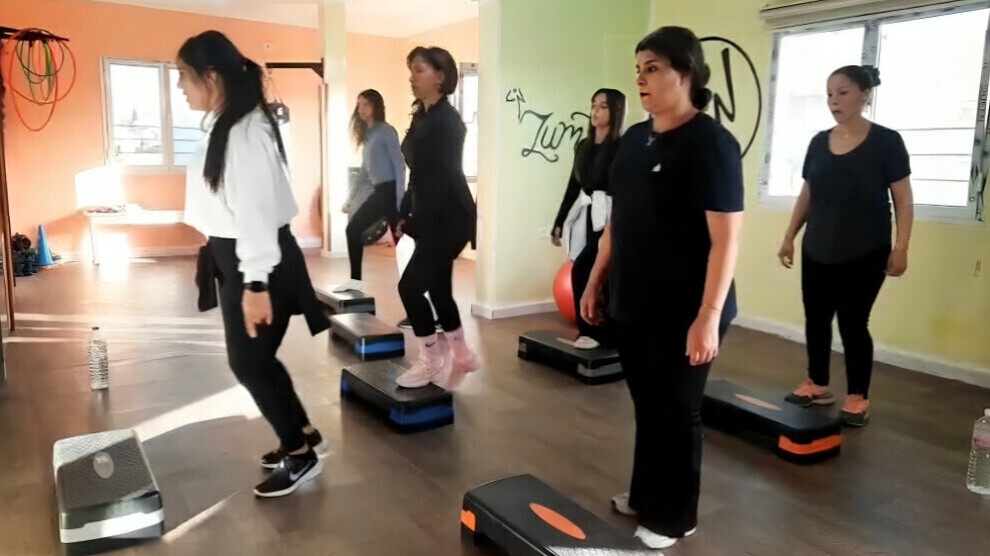
Tunis – Inside a gym in one of the cities of Kasserine province in Tunisia, the sound of music blends with the movement of exercise machines, while women of different ages engage in training sessions ranging from fitness to aerobic dance.
The daily scene there does not appear as a passing physical activity; rather, it reflects a quiet social transformation that deepens day by day. Women have become more present in sports spaces and more determined to make exercise part of their lives.
In this space, individual experiences intersect to form a collective picture of a new relationship between women and sports, where the gym turns into a space to breathe from life's pressures and rebuild psychological and physical balance.
A means to improve quality of life
In this context, Hajer Al‑Daassi speaks about her return to exercise after years of interruption, affirming that the current experience is completely different from the past, both in terms of awareness and psychological and physical impact.
She says: "For me, exercise is no longer just a physical activity; it has become a necessary space for psychological pleasure. When I enter the gym, I leave everything behind – pressure, fatigue, problems – and focus only on myself." She adds that during the exercises, she feels as if she is fully recharging her energy, explaining that exercise helps her regain her psychological balance. "I leave the session as if I were a new person, with a new spirit and a different mood."
She points out that the effect is not limited to the psychological side but extends to the body as well. She says she now feels a clear difference in her fitness and daily activity, considering that women by nature care about their bodies and appearance, and that exercise helps them achieve this balance between form and health.
She also explains that the gym gives her a sense of temporary detachment from daily responsibilities, especially household and family duties, adding that this "private time" has become essential in her life.
She concludes: "Exercise for women is not a luxury; it is an essential means to maintain their psychological and physical health, and to return to their daily lives with greater energy and better endurance."
From a hobby to a permanent lifestyle
Bouthaina Ben Al‑Khamisi speaks about a long journey with exercise that began as a hobby in earlier years before gradually turning into a permanent lifestyle. She adds: "The absence of a women's sports culture in the past made exercise less widespread, but the situation has clearly changed today, as women have become more engaged and aware of its importance."
She explains that she continued to exercise despite her family and professional responsibilities, considering that it is no longer an option but a necessity to maintain psychological and physical balance. She says: "Exercise helps me get rid of daily stress and gives me a sense of comfort and the ability to continue working and family life with better energy."
She points out that many people start exercising without realizing its true benefit, but over time they notice the change in mood, health, and overall energy, affirming that exercise is not only about weight or external appearance; it is a means to improve quality of life comprehensively, as it affects both mind and body.
Women have become more aware and stronger in presence
For her part, trainer Abeer Al‑Khamasi affirms that women's turnout at gyms is noticeably increasing, considering that this change reflects a shift in societal culture toward women's sports. She explains that women have become more aware of the importance of exercise from a health and psychological perspective, and that they no longer consider it a secondary activity but part of an integrated lifestyle.
She says: "Many women enter the gym suffering from fatigue or psychological stress, but over time they notice a clear improvement in their condition. After a short period of training, energy changes, mood improves, and there is a sense of psychological comfort."
She adds that this improvement pushes many to continue and even encourages others to try the experience. She also notes the diversity of sports programs in the gym, ranging from fitness, strength training, and aerobic dance, in addition to other sports such as boxing, explaining that this diversity makes exercise more attractive to women.
She stops at boxing specifically, explaining that despite the stereotype surrounding it, it has become a favorite sport for a number of women because it helps release negative energy and strengthen the body at the same time. She adds: "Women have proven their ability to practice these sports with high efficiency, and sometimes even exceed the coaches' expectations, which reflects a strong will and a real desire for change."
She also stresses the importance of organization within women's daily lives, pointing to the need to choose an appropriate time for exercise that aligns with work and home commitments, and the importance of having qualified trainers and programs that take into account the different abilities of participants.
Abeer Al‑Khamasi concludes by affirming that exercise has become for women a means of balance – not only to improve appearance but also to enhance psychological health and the ability to face life's pressures.
Between Hajer Al‑Daassi, Abeer Al‑Khamasi, and Bouthaina Ben Al‑Khamisi, a single picture emerges: women engaged in a small daily experience that carries a great impact on their lives and on the way they are redefining themselves within a society that is changing quietly but steadily.