
Algerian Woman Holds the Title “Maker of Champions”After Decades of Questioning Her Abilities
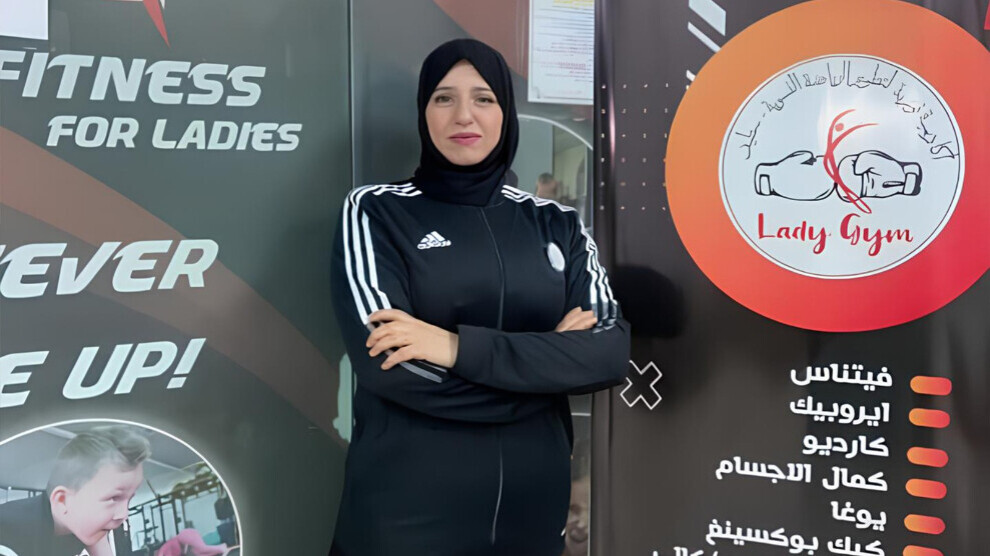
From the ring to the training and refereeing platform, Fouzia Nahawa has spent more than three decades in combat sports, transforming from a player who faced questioning into a coach who holds the title “Maker of Champions.”
RABIAA KHREIS
ALGERIA – The entry of Algerian Fouzia Nahawa into the world of boxing and kickboxing was not merely a sports choice, but a societal challenge and a message affirming her belief that women are capable of possessing strength, discipline, and the ability to compete, without relinquishing their femininity or their value.
Since her feet touched the world of combat sports in 1994, Fouzia Nahawa carved a path that was not paved with ease, before transforming over the years from an athlete into a national referee, a sports coach, and vice-president of the Sétif League for Full Contact, Muay Thai, and similar sports, in addition to chairing its refereeing committee.
When the Traditional View Turns into Fuel for Success
In Sétif city, her birthplace and the cradle of her sports experience, the path was not easy. In her beginnings, Fouzia Nahawa collided with a traditional view that sees combat sports as a field far from women, and with voices questioning her ability to continue. She says: "I did not deal with that as an obstacle, but made it a greater motivation. I believed that the best response to any questioning is work and continuity."
For Fouzia Nahawa, martial arts were not just techniques, strikes, and competitions, but an integrated school through which she rediscovered herself and built her philosophy in life. "Martial arts taught me that real strength is not in the strike, but in the ability to control oneself. I learned from them patience, discipline, respect for others, and making decisions at the right time."
She adds: "I learned that winning does not always mean being first, and that losing is not the end of the road, but an opportunity to know your weaknesses and work on developing them."
From this standpoint, she seeks today to transfer these values to her daughters and to the new generation of female athletes, confirming that the real goal of sport should not be measured only by the number of medals, but by the impact it leaves on the athlete's personality.
Since 2022, Fouzia Nahawa's name has been linked to the title "Maker of Champions," a title that did not come from nothing, but is the fruit of years of training and work.
She noted that she searches for "the strengths of each athlete and works on enhancing and developing them step by step. I fully believe that each player has their own speed of development, and my main task as a coach is to discover the latent potential inside them, and help them reach it."
An Entire Family Following in the Mother's Footsteps
Fouzia Nahawa's influence extended to her family circle as well, where sport turned into a fundamental part of her family's life. She says with pride: "I am today a mother of three sons and daughters; the eldest is my son Isaac, who follows in my footsteps as a sports coach in kickboxing, and my daughters are also active in the same field, and they hold the blue belt."
This experience reveals another aspect of her career, represented in her ability to transform sport from a mere activity into a family culture based on discipline, self-confidence, and continuous work.
If Fouzia Nahawa succeeded in breaking the stereotypical image inside the ring, her battle with the world of refereeing was more difficult, as she confirms that women's combat sport in Algeria has made important strides, and girls' presence in competitions has become stronger, more confident, and more ambitious. However, the path "was not paved with roses."
She adds: "In my city, I was the only woman practicing this sport, which made some in society direct a look of disapproval and questioning at me. I also faced severe difficulties and numerous obstacles in order to obtain a provincial referee certificate."
She recalls that phase, saying: "I did not receive support locally, but faced various forms of deterrence and rejection. But I did not surrender. I decided to move and study refereeing in Skikda province for more than a year, where I succeeded in obtaining the provincial certificate." But she did not consider that the end of the journey, but the beginning of a new phase, during which she continued training and field work until she obtained a national referee certificate.
Self-Defense Is a Strength to Protect Women, Not to Create Violence
Among the files that receive Fouzia Nahawa's attention is teaching girls self-defense skills, based on the conviction that women's empowerment is not limited to education and work, but also includes giving them the ability to protect themselves. She explains: "The idea for me was not linked to a single incident only, but to what I saw and heard of women's and girls' fears of situations they might be exposed to."
She stressed that teaching self-defense does not mean pushing women toward violence, but quite the opposite; it gives them confidence, awareness, the ability to act under pressure, and to assess the situation.
Perhaps one of the most prominent transformations that Fouzia Nahawa touched during her years of work is the change that has occurred in the view of Algerian families toward their daughters practicing martial arts.
At the end of her interview, she says that many parents today have become more accepting of the idea compared to the past. She attributes this, on the one hand, to the results achieved by female athletes, and on the other hand, to families' awareness that martial arts do not necessarily mean violence or roughness. "Many fathers and mothers have come to see the other, bright side of this sport, especially its role in keeping children away from negative behaviors."