
Lack of swimming pools... an obstacle hindering the development of women's swimming in Algeria
Hamida Boudalia's journey became an inspiring model for women's swimming in Algeria, combining passion and academic training to empower women and enhance their sporting presence despite social and structural challenges.
Rabia Kharis
Algeria – At a very young age, Hamida Boudalia emerged as one of Algeria's sporting talents, succeeding in achieving accomplishments that reflect her high ambition and great determination to develop swimming, a sport that still suffers from a set of obstacles and challenges affecting its development and spread, such as customs and traditions, and a lack of facilities and resources.
About the beginning of her journey in the world of swimming, Hamida Boudalia, 28 years old, says: "The beginning was with personal passion after the inauguration of the first Olympic swimming pool in the city of Annaba. I was among the first to register there, and during that period I received great moral and material support from my father. I contributed to raising Algeria's flag high through my participation in many championships and winning many medals."
Women's sports in general are considered a modern phenomenon, as interest in them began immediately after independence on July 5, 1962, when women broke into all fields, especially sports. This is evident through women's teams in team sports such as basketball, handball, and volleyball, in addition to their emergence in individual sports such as swimming, athletics, gymnastics, and others.
Hamida Boudalia combined practical training, which includes the direct application of water plans and exercises to develop movement skills, with academic study. She says: "In 2018, I joined a training course, and then I joined the MCA (Moustakbal Chabab Annaba) club, which is an active club with women's teams. I work there as a basic swimming coach and supervise the girls' team."
Field experience
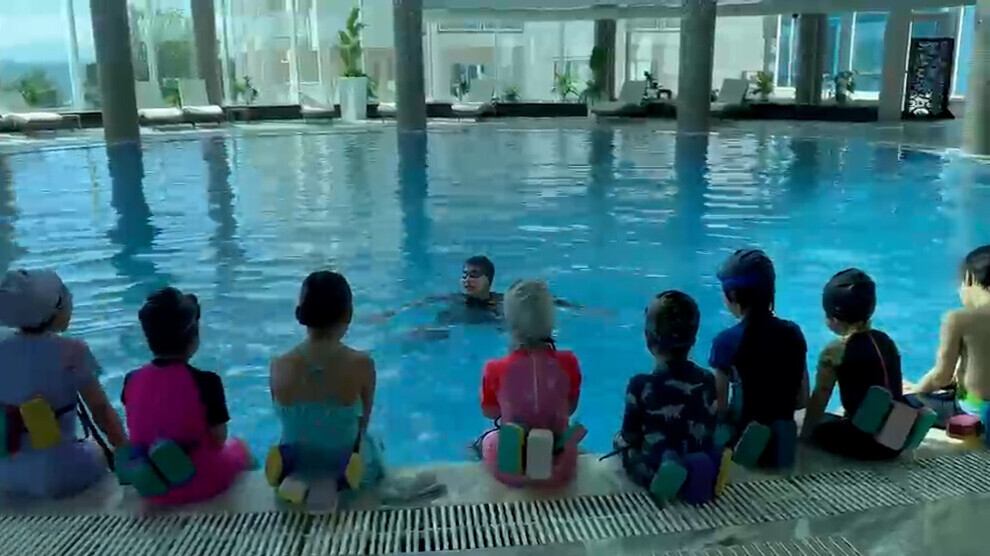
She later expanded her training programs to include women, infants, children with autism, hyperactivity, and speech delay. She launched the first program in eastern Algeria under the name "maman et bébé nageur" (mother and baby swimmer). The program saw great demand from mothers. Its importance lies in training the infant to adapt to water, which requires patience to ensure they feel safe, and it also helps build a strong relationship between mother and child.
Based on her long field experience, Hamida Boudalia believes that women's swimming has witnessed a qualitative leap and increasing demand in recent years, especially in cities. Given the great psychological and social benefits of swimming, it plays a major role in treating many incurable physical diseases and psychological conditions, and it also greatly helps to avoid social problems.
She says: "I have received various cases of women suffering from scoliosis (curvature and lateral deviation of the spine), others suffering from osteoarthritis (a chronic degenerative joint disease), and other women suffering from depression and psychological stress."
Despite the progress this sport has seen, there are a set of interrelated challenges hindering its development, most notably the lack of facilities and resources, and the social stereotype. She explains that "most families, especially in inland areas, are still governed by customs and traditions, and are constrained by society's view that rejects women practicing sports as contradicting their feminine nature."
Also among the reasons for women's weak practice of this sport in general, she points to "the lack of swimming pools, whether private or public. What is currently available does not meet the demand for practicing it."
In conclusion, Algerian swimmer Hamida Boudalia sent a message to women, saying: "Swimming is a life skill not linked to a specific age. As is well known, swimming is among the types of sports that work all the general muscle groups in the body, which we are in dire need of moving."