
Women's Representation Rises, but Are Opportunities to Reach the Moroccan Parliament Equal?
Do more female representatives in Morocco's Parliament reflect better access to the legislature, or do persistent social and political challenges reveal a gap between gains and desired representation?
HANAN HART
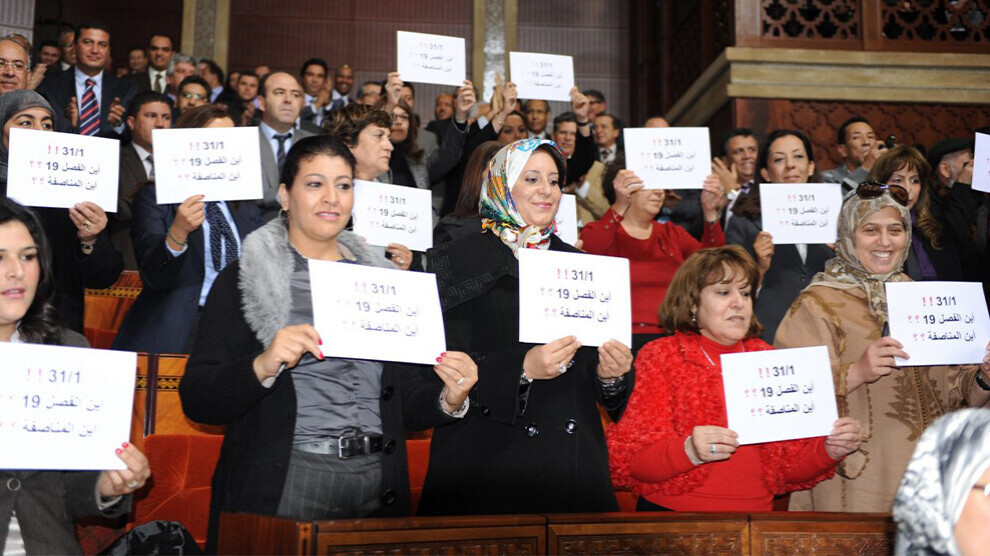
MOROCCO-The results of the Moroccan legislative elections held on 23 September 2026 showed an increase in the number of women in the House of Representatives to 107 female representatives out of 395, compared to 96 female representatives during the 2021 elections, raising their representation rate from about 24.3 to 27.1 percent.
Despite this numerical progress, the conditions for women's access to the legislative institution, and the extent of equal opportunities in electoral competition, remain among the issues raised in evaluating the path of women's political participation in Morocco.
Data indicate that 90 women won through regional electoral districts, compared to 17 women through local districts, compared to six women who won through local districts during the 2021 elections. Women also headed 121 local lists out of 1,615, or about 7.5 percent of the total lists.
These figures highlight a disparity in women's presence between electoral districts, and open the discussion about their opportunities to reach direct competition positions, given the importance of party endorsements and the resources available to female candidates during electoral campaigns.
Fighting Corruption and Confronting Digital Violence
In her assessment of the rise in women's representation within Parliament, political and human rights activist Kalthoum Mustaqim believes that the bet should not be limited to the number of seats women obtained, but should include the nature of the programs they carry and the extent of their response to the political, economic, and social needs of citizens, and their ability to confront poverty, marginalization, and corruption.
In this context, she raises the question "Which woman do we want?", considering that what is required is the arrival of women capable of defending the interests of the people and fighting corruption, and not settling for achieving numerical presence within elected institutions.
She believes that the value of women's representation is linked to what women can add to political work, and to the extent of translating their presence in positions of responsibility into policies that respond to citizens' expectations.
Regarding the electoral path, she notes that party endorsements did not rise to the level of the left's aspirations, stressing the necessity that the selection of male and female candidates be based on competence and the ability to do political work, not on financial capabilities.
She believes that the influence of money in the electoral process harms equal opportunities, and may limit women's ability to compete and reach advanced positions, which makes achieving parity also linked to removing the obstacles that prevent their access to decision-making centers.
She also points to digital violence targeting female candidates, describing it as a "silent epidemic eroding Moroccan society," adding that these practices not only affect women's dignity, but may also affect their political participation, and dissuade some of them from running or heading electoral lists, which is reflected in their opportunities to compete.
To confront this phenomenon, she calls for coordinating efforts between associations and political parties, enhancing awareness of the dangers of digital violence, with the involvement of educational institutions in awareness efforts, contributing to confronting practices that limit women's participation in public life.
She expresses her hope that women's presence will be distinguished and appropriate, allowing for further development in their participation in the upcoming electoral entitlements.
Women's Participation in Elections Is Still Limited
For her part, associative actor Zahra Al-Shakir believes that women's participation in the recent legislative elections recorded remarkable development, despite social pressures and challenges they face within a conservative society.
She notes that this presence was not achieved easily, but came after overcoming a set of difficulties that continued to obstruct women wishing to engage in political work and enter electoral entitlements. She considers that the recorded progress, despite its importance, is still limited and does not yet reflect the ambitions associated with achieving a clear and effective women's presence within Parliament.
She believes that the rise in the number of women reaching the legislative institution does not necessarily mean reaching the desired level of representation, which requires continuing efforts to enhance women's participation and expand their opportunities to access elected institutions.
At the end of her interview, Zahra Al-Shakir expressed her hope that the upcoming electoral entitlements will witness further progress in women's representation, and that Moroccan women will be able to enhance their presence in a way that makes their experience a model to be emulated at the national and international levels.