
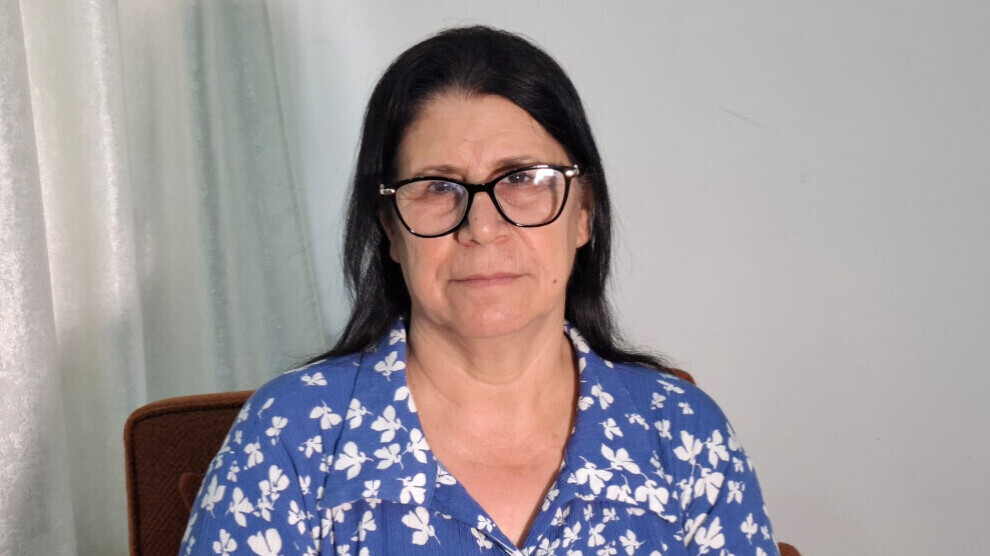
Runak Majid: Framework Law Can Prepare Legal Ground for Resolving Kurdish Issue
Political activist Runak Majid affirmed that the nest phase requires concrete steps to address the status of leader Öcalanö polıtıcal prisoers, and women’s role in peacebuilding.
DIREN RAHIM
Sulaymaniyah — Following the Turkish parliament's approval of a law on the peace and democratic society process titled "Strengthening National Unity and Social Solidarity," published in Turkey's Official Gazette on August 18, attention now turns to the practical steps that may follow in the peace process.
In this context, political activist Runak Majid from the Kurdistan Region spoke to our agency about the importance of the framework law, the opportunities and challenges it contains, as well as her vision for the requirements of the next phase and the role of leadership and women in advancing the peace process.
"Among the Important Steps in the Framework Law Is Giving a Title to the Leadership"
Political activist Runak Majid said that the freedom movement and leadership view the framework law, despite its shortcomings and gaps, as a step that can be built upon—provided that the state follows its approval with practical measures that ensure its implementation.
She explained that among the most prominent demands raised within the peace process are defining the status and legal position of leader Abdullah Öcalan, securing his freedom, releasing political prisoners, along with the recognition of the Kurdish people's national, cultural, and linguistic rights, and guaranteeing their right to political participation and the free exercise of their choices.
She emphasized that the release of leader Öcalan represents a fundamental step in the success of the peace path, to enable his direct participation in managing negotiations and dialogue. She affirmed that any peace process lacking the direct participation of leadership will remain limited and incomplete, and will not be able to effectively reach the freedom movement and the Kurdish people.
She added that the success of the framework law requires the inclusion of clear guarantees for rights and freedoms—not only for Kurds, but for all peoples and components suffering from marginalization and discrimination within Turkey. She emphasized the necessity of the law including rights related to language, culture, religion, and political participation, enabling Kurdish society to freely practice its identity and rights within a clear legal framework.
She noted that the law's true value lies not only in its approval, but in "transforming its texts into practical and concrete steps that open the way to a just and lasting peace, and guarantee the recognition of the rights and freedoms of all components of Turkish society."
"A 50-Year Struggle Forced the Turkish State to Seek Negotiation"
She believes that the Kurdish people have the right to learn, speak, and freely practice their identity and culture in their language. For over a century, this right has been denied and suppressed, and Kurds have been deprived of using their language, practicing political activity, and expressing their identity and culture naturally within Turkey.
She noted that through a struggle spanning about fifty years, the freedom movement has succeeded in imposing the reality of the Kurdish people's existence on the political scene, to the extent that the Turkish state itself today is calling for the opening of negotiations. She considers that the Kurdish issue reaching this stage represents an important achievement and a first milestone on a long path.
She pointed out that transitioning from conflict to peace is not easy, as it requires mutual political will, initiatives from both sides, and clear guarantees and foundations that enable the serious and sustainable resolution of outstanding issues.
She affirmed that the Kurdish people have the right to have their rights enshrined politically and constitutionally within the framework of the Turkish state, while emphasizing that the issue does not concern Kurds alone, but includes all peoples and components whose rights have been marginalized or confiscated. In this context, she sees the Kurdish people playing a leading role in the struggle to entrench these rights.
Education in the Kurdish Language Is a Legitimate Right
She explained that the right to education in the Kurdish language, freedom to practice politics, and unrestricted political participation should be among the fundamental principles included in the framework law. The presence of a number of Kurdish politicians in prisons in North Kurdistan, including co-chairs, confirms the need to address this issue within the peace path and the new law.
She emphasized that the protection of Kurdish language and culture can only be achieved through clear legal guarantees that allow the Kurdish people to freely manage their cultural and educational affairs, alongside guaranteeing the right of every individual, party, and political force to freely practice political activity and choose their orientations. "The Turkish state's recognition of these rights and their entrenchment within the framework law constitutes an essential condition for transforming the peace path from mere negotiations into a genuine and sustainable political process."
"The Framework Law Contains Many Shortcomings and Gaps"
Runak Majid explained that the Turkish state has not yet taken practical and serious steps toward peace, including regarding ceasefire, affirming that waging war may be easier than building peace, because the peace process requires genuine political will, clear positions, and mechanisms that ensure its continuation.
She noted that the leadership driving the negotiation and peace process is aware of the complexity surrounding this process, and takes into account the various criticisms and concerns raised from the four parts of Kurdistan. She said it is unrealistic to expect all issues to be resolved at once, especially since the region has witnessed multiple experiences, uprisings, and peace paths over past decades—some of which stalled or failed—but that did not lead to the Kurdish people's retreat or disappearance from the scene; rather, they were able each time to reorganize their ranks and return to political work more powerfully and systematically.
She added that part of the current criticism stems from genuine concerns, especially given past experiences and the fear that the Turkish state may rearrange its cards and then return to a more rigid approach or resume attacks. She believes these fears arise from accumulated experiences and concern over the nature of the Turkish state's dealings with the Kurdish people and its political environment.
In contrast, Runak Majid criticized what she described as the contradictory positions of some parties, noting that there are those who previously called on the freedom movement to stop war and move toward peace, yet criticize it today after it has already entered a negotiation and peaceful path. She considered this contradiction raises questions about the motives behind these criticisms, especially when they turn into organized campaigns through social media to question the peace process and portray it as failed or meaningless.
She affirmed that constructive criticism and legitimate concerns are different from campaigns aimed at undermining the peace path, emphasizing the need to distinguish between those who criticize out of concern and fear of repeating past experiences, and those who seek to derail the process and return the region to an atmosphere of conflict.
She noted that the continuation of the peace process requires treating it seriously, and not allowing misinformation and polarization campaigns to undermine it, affirming that the primary goal should be reaching a sustainable political solution that guarantees rights and freedoms and puts an end to recurring cycles of conflict.
Women and Managing the Peace Process
Runak Majid affirmed that the leadership accords women a central position in the peace process, granting them a direct role in managing negotiations and shaping the future of the political process. She noted that women's presence in peace processes worldwide has remained limited, but the freedom movement's experience offers a different model.
In this context, she pointed to the appointment of Berivan Buldan as head of the delegation, making her an active party in negotiations and playing a role in building a direct bridge between the Turkish government and the leadership, as well as between various parties and political forces in the four parts of Kurdistan. She also noted the presence of prominent women figures, including Leyla Zana, who participated in meetings and political communications related to the path.
Runak Majid affirmed that women hold a special place in the freedom movement and leadership's vision, as their transition from participation to leadership represents an important political and social transformation.
She added that the Kurdish experience has demonstrated women's ability to play a leadership role at various stages—whether in political and social struggle or in war and peace—citing the prominent women's presence in leading society and political activism in Rojava, eastern Kurdistan, northern Kurdistan, and southern Kurdistan.
She emphasized that the next phase requires a new mindset in administration and leadership, based on dialogue, participation, and the ability to build consensus, and she believes that women possess important qualities to undertake this role. She concluded by affirming that women can become a vanguard force in building peace—not only in Kurdistan but across the Middle East as a whole.