
Kobani is Not Just a City, But a Legacy of Resistance and a People's Identity
PYD’s Shirin Owso emphasized that Kobani symbolizes Rojava’s identity and resistance, asserting that attempts to change its name aim to erase the city’s historical memory and revolutionary achievements.
RONIDA HAJI
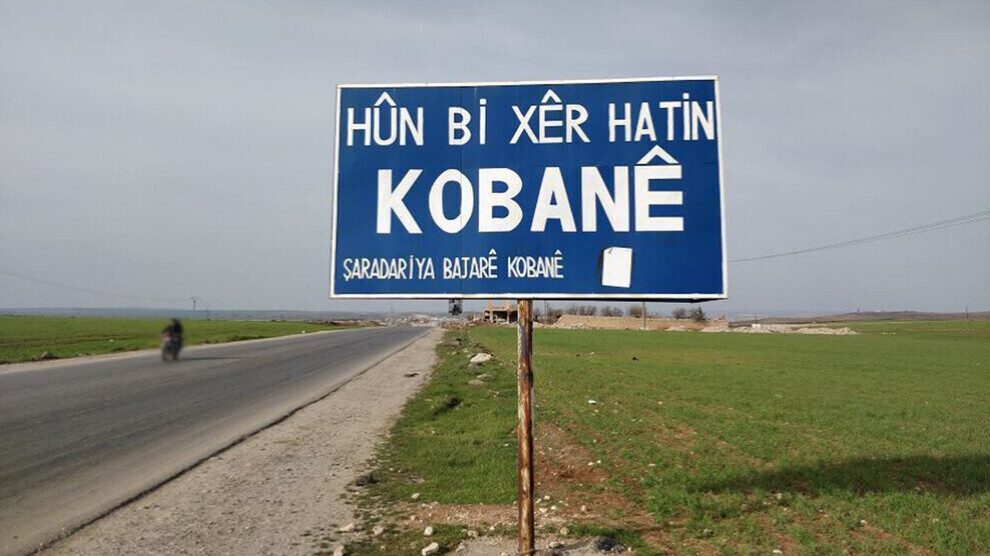
Al-Hasakah— The issue of Kobani's name has resurfaced amid political and public debate. The Kurdish people view attempts to alter it not simply as a matter of naming, but as an assault on the city's memory and historical symbolism.
In the collective memory of nations, some cities are measured neither by their geographical size nor their location on a map, but by the meanings, sacrifices, and historical transformations they embody. Kobani is one of those cities whose name has transcended geographical borders to become a beacon of resistance and resilience—a testament to a pivotal era where the will of a people confronted the machinery of violence and darkness.
Kobani is no longer just a city associated with a battle; it has become a symbol of unprecedented resistance, a land whose soil is mixed with the sacrifices of martyrs, and a landmark in the history of the struggle for freedom and human dignity. While ISIS attempted to impose its darkness on the region, a resilient will emerged from the narrow streets and alleys of Kobani, turning the tide of the battle and transforming the city into a global symbol of confronting extremism and defending the values of freedom.
From the heart of that resistance, the image of Kobani was forged as an essential part of Rojava's memory, carrying symbols and values of democracy, coexistence among peoples, and the role of women in shaping history. Therefore, the debate over Kobani's name cannot be reduced to changing the nomenclature of a place; rather, it is tied to a broader battle over the memory, identity, and history associated with this city.
This profound significance, embedded in every inch of Kobani’s soil, also found its place in political agreements. One of the core clauses of the January 29 Agreement, signed between the Syrian Democratic Forces (SDF) and the Syrian Interim Government, was the protection of the distinct character and identity of Kurdish regions. However, this clause, like several others, has not been implemented in a clear and direct manner.
In light of ongoing attempts to change Kobani's name, political and public circles believe these steps transcend the issue of naming, targeting the city's symbolism and historical standing. According to critics, these attempts aim to undermine the principle of protecting the cultural identity and distinctiveness of Kurdish areas, directly contradicting the spirit and clauses of the agreement.
Consequently, Kobani is not just the name of a city; it is an integral part of the history, identity, and legacy of the Kurdish people's resistance, which is why any attempt to alter its name faces widespread opposition.
"Through Its Resistance, Kobani Became a Symbol of Freedom"
Regarding this issue, Shirin Owso, a member of the Women’s Council Coordination of the Democratic Union Party (PYD), stated that through its struggle and resistance, the Rojava Revolution has become a symbol of freedom and equality.
On the 16th anniversary of the Rojava Revolution, Shirin Owso drew attention to the significance of Kobani, which is regarded as a symbol of resistance and the identity of the Kurdish people. "Attempts to change the name of Kobani are not just a change of name; it is a political attempt aimed at erasing the history and achievements of the Rojava Revolution."
Owso explained that the Rojava Revolution is defined by the resistance of Kobani, noting that the city witnessed a historic struggle against ISIS. "During these sixteen years, the region has faced numerous attacks, whether from the Ba'ath regime, ISIS, or the occupying Turkish state. Their goal through these attacks was to break the will of the people and destroy the gains of the revolution."
She pointed out that "through its resistance, Kobani became a symbol of freedom, and its name resounded across the world. Through its struggle, the people of Kobani thwarted ISIS's plan to occupy the city and the region, rewriting history."
"Changing Kobani's Name Contradicts the Terms of the January 29 Agreement"
Shirin Owso noted that following the January 29 Agreement, the region entered a new political phase aimed at building a democratic Syria and protecting the gains of the Rojava Revolution, pointing out that one of the main foundations of this agreement is safeguarding the distinct identity of Kurdish regions.
She added that attempts to change Kobani's name contradict these principles and serve as an indicator of the ongoing policy of denial and erasure targeting Kurdish areas.
"The Name Kobani is Part of Our History and Identity"
Shirin Owso asserted that the name Kobani is not just the name of a city, but a part of the history, culture, and identity of the Kurdish people, adding, "Just as language is our identity, the names of our cities also signify our history and existence."
She explained that the goal of changing Kobani's name is to obliterate the history of resistance and write an alternative narrative in place of historical truth. She concluded by saying, "Sixteen years after the Rojava Revolution, we have renewed our struggle and defense of the revolution's gains. We will continue our struggle until victory is secured."