
Algerian Women Enter the Electoral Battle
Algeria’s election campaign sees thousands of women candidates runing on platforms for women’s empowerment.
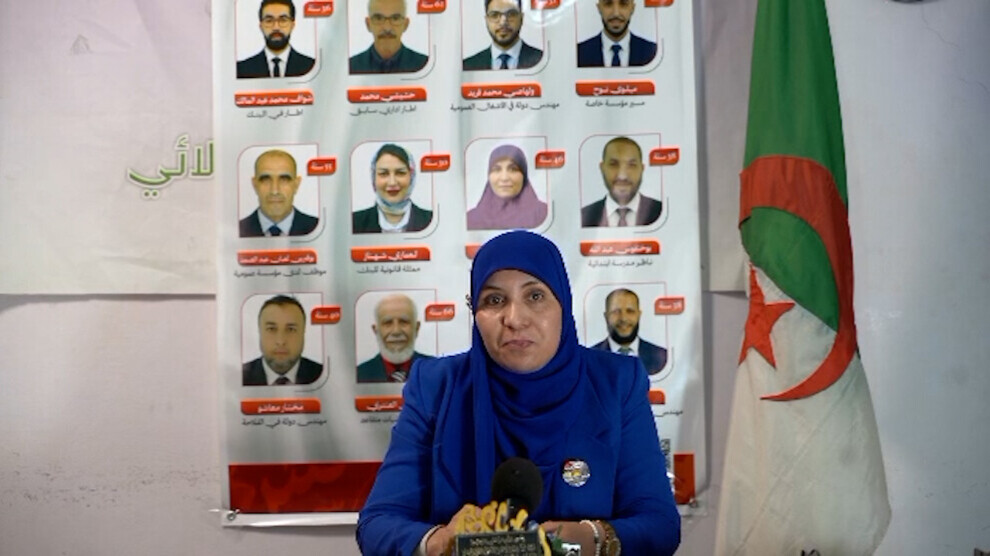
RABIA KHARIS
Algiers — Various Algerian cities are witnessing a remarkable presence of female candidates in the field, through meetings and popular gatherings aimed at attracting voters and convincing them of their development platforms. Their campaign materials are also spread across streets and broadcast through various media and social media platforms. The lingering question remains: will this strong presence contribute to increasing women's representation within the Algerian parliament?
With the launch of the electoral campaign for the parliamentary elections scheduled to begin on July 2, in which political parties and independent lists are competing in an electoral constituency encompassing more than 24 million Algerian voters, numerous women's names have emerged across various electoral lists, coming from diverse academic and educational backgrounds. They carry electoral platforms targeting various issues, including the protection of women from violence, ensuring a safe environment that guarantees their rights and dignity, advancing their status, empowering them in various educational, economic, and social fields, and providing an environment that allows for their active participation in development and decision-making.
According to the detailed presentation by the acting head of the Independent Electoral Authority in Algeria during a press conference held at the International Conference Center, the number of collective candidacy declaration files processed across all electoral districts reached 854. Of these, 793 lists were accepted, comprising 9,854 candidates, while 61 lists were rejected, totaling 842 candidates.
More Than Two Thousand Women Enter the Race
According to the Authority's data, 2,032 women have registered as candidates for the Algerian parliamentary elections, representing 21 percent of the total of more than 9,000 candidates.
Most political party lists are comparable in terms of the number of female candidates competing in the upcoming elections, including the National Liberation Front (FLN), the National Democratic Rally (RND), the Movement of Society for Peace (MSP), the Workers' Party, the Socialist Forces Front (FFS), and other political formations involved in the electoral race—totaling 32 political parties. The number of female candidates on each electoral list ranges from one to eight women, most of whom hold university degrees, reflecting their aspirations and their overwhelming desire to enhance parliamentary representation.
Challenges
Dr. Saliha Brahimi, a prominent feminist figure running in the upcoming legislative elections under the banner of the Movement of Society for Peace, following a long path of political struggle, states that her candidacy aims to "raise the voices that have grown hoarse and the concerns for which paths have narrowed and the earth, despite its vastness, has become constricted."
She rejects the well-known saying that "parliament is for men and the field is for knights," saying: "There is a biological and human reality that cannot be denied at all—all men came from the wombs of women, and they depend in their existence and beginnings on the mother. Woman is the foundation of society and its inextinguishable flame." She adds that her electoral participation is built on the conviction that women are partners in building society and the nation.
Saliha Brahimi believes that "the notable female presence in electoral events has come to correct many misconceptions, especially regarding the inferior view of women, which feeds on a set of cultural legacies and outdated customs that ignore their intellectual and scientific potential." She explains that "some customs and traditions consider a woman's voice, her speech, and her expression of opinion as a flaw."
Another challenge facing many women is "the challenge of destructive criticism," which negatively affects their confidence. She says: "This criticism is the price of a woman's success and evidence of her prominence."
Among the compounded challenges women face when engaging in the electoral race compared to their male counterparts is balancing family and the electoral campaign. She explains that "the female candidate's efforts are distributed among a set of pivotal roles, including the family and the electoral campaign—this is the most important price the political woman pays." She also highlights the absence of training and coaching in communication, advocacy, and particularly the art of public speaking.
Pivotal Issues
Saliha Brahimi will advocate for pivotal issues, most notably defending working women to ensure a safe environment that preserves their material and moral rights. She points to the number of working hours they put in, which exceeds their capacity and causes physical and mental exhaustion.
Another source of suffering is the high cost of childcare nurseries in Algeria, which poses a major challenge for working women. She therefore proposes "establishing nurseries specific to each sector at a price commensurate with purchasing power." Among the other issues she will advocate for is the suffering of women working in the private sector in terms of low wages and the absence of job insurance (social security), while also ensuring proportional retirement for women that allows them to devote themselves and preserve their health.