
University Admission Conditions in Syria Spark Debate Over Equal Opportunities Between the Sexes
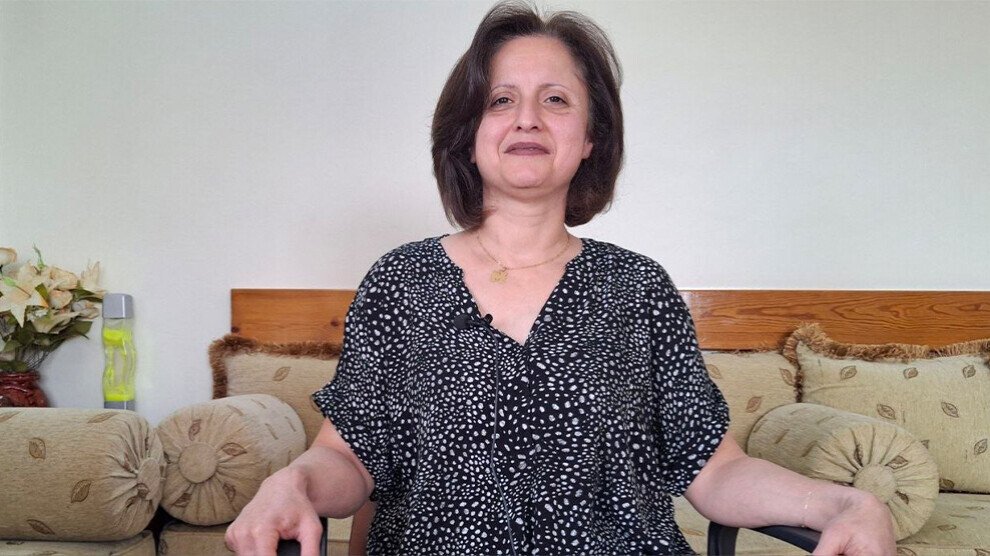
Political and feminist activits Maysaa Al-Nabwani says restricting Syrian university admissions by sex limits female students’ right to choose educational path by qualification, urging review and equal opportunities.
ROCHELLE JUNIOR
AS-SWEIDA_Equal opportunity in university education is not limited to admission rates and competition for seats but includes female students’ right to choose their specializations according to competence and merit, away from gender-based discrimination.
In Syria, the university admission competition conditions for the 2026–2027 academic year brought this debate back to the forefront, after they included specializations and institutes whose admission is restricted to females or males, which raised questions about the fairness of these criteria and their repercussions on the future of female students and their right to chart their educational and professional paths.
These restrictions reflect an exclusionary mentality pursued by the Syrian interim government to entrench stereotypes about women's role, through policies that limit their educational and professional choices. Restricting some specializations to one sex without the other reinforces discrimination and makes the student's sex an obstacle to her ambition, instead of competence and merit being the fundamental criterion for admission.
In this context, political and feminist activist Maysaa Al-Nabwani believes that depriving female students of specializations for which they meet the admission conditions, merely because they are women, represents a form of discrimination that diminishes their right to education and choice, confirming that academic rates, competence, and the ability to achieve must be the fundamental criteria for admission, not the gender of the applicant.
Competence, Not Gender, as the Criterion for Admission
Maysaa Al-Nabwani rejects linking some specializations and professions to men without women based on stereotypical perceptions about physical abilities or the nature of work, confirming that law, judiciary, media, and other fields should be available to everyone who possesses the necessary qualifications.
She cites women's work in professions that require physical effort, including mechanics, to indicate that competence is not determined by gender. She also believes that restricting some fields to one category without another limits women's choices and deprives institutions of competencies capable of developing them, warning that the continuation of these restrictions may entrench discrimination in educational decisions and make it a familiar practice.
Legal and Societal Movement to Confront Discrimination
Maysaa Al-Nabwani noted that confronting these decisions should not be limited to the women affected by them, but requires a clear societal position and a legal movement aimed at reviewing the adopted criteria and assessing their effects. She called on lawyers and human rights defenders to study the decisions that restrict women's enrollment in some specializations, and to verify the extent of their compatibility with laws and standards related to equality and non-discrimination.
She stressed the importance of documenting the cases of female students whose rates qualify them for admission to certain specializations, but who are deprived of them because of their sex, considering that collecting testimonies and evidence related to these cases would clarify the actual impact of these restrictions, and provide a basis for demanding their review.
She explained that confronting these decisions requires a legal and societal movement, calling on lawyers and human rights defenders to review them and verify their compatibility with national laws and international conventions related to women's rights, equality, and non-discrimination. She also stressed the importance of documenting the cases of female students qualified for admission and deprived of it because of their sex, to provide evidence supporting the demand for reviewing the restrictions.
Restrictions Threatening Women's Ambitions and Exacerbating the Loss of Competencies
The effects of discrimination in education, according to Maysaa Al-Nabwani, are not limited to depriving female students of certain specializations, but extend to the choices available to them in the future. She believes that the continuation of these restrictions may put the girl before two difficult choices: either abandoning the specialization she aspires to and adapting to the imposed limits, or searching for alternative opportunities outside the country through travel or migration for study and work.
In this context, Maysaa Al-Nabwani evokes the reality of girls in Afghanistan, where restrictions imposed on women's education pushed some of them to search for exceptional means to continue studying, drawing attention to the "Bacha Posh" phenomenon, which is linked in some Afghan contexts to raising girls in a social appearance presented as masculine, which may give them opportunities not available to girls in the same way.
She explained that resorting to such means reflects the scale of restrictions that systems of discrimination can push toward, when access to a fundamental right becomes contingent on transcending the identity on the basis of which the prohibition is imposed. She warned that pushing women to leave the country in search of more equitable educational and professional opportunities does not represent an individual loss only, but also leads to the depletion of scientific and professional competencies that society needs to develop its institutions.
Equal Opportunity Is an Investment in Society and Future Generations
She noted that empowering women to education and work according to their qualifications and capabilities is positively reflected on their personal future, the family, and society, noting that women's role in building the family and contributing to raising generations makes providing an environment based on justice and equal opportunity a fundamental factor in building a more balanced and capable society.
Maysaa Al-Nabwani confirms that empowering women to education and work according to their qualifications and capabilities is positively reflected on the family and society, and contributes to preserving scientific and professional competencies. She believes that guaranteeing female students' right to choose their specializations according to their academic achievement and capabilities, away from gender-based discrimination, constitutes the foundation for a more just and capable society.
https://www.youtube.com/watch?v=fJCEbn9NnF0