
Kurdish and Druze Rights in the Face to Exclusion… A Lawyer Warns of the Repercussions of Sectarianism
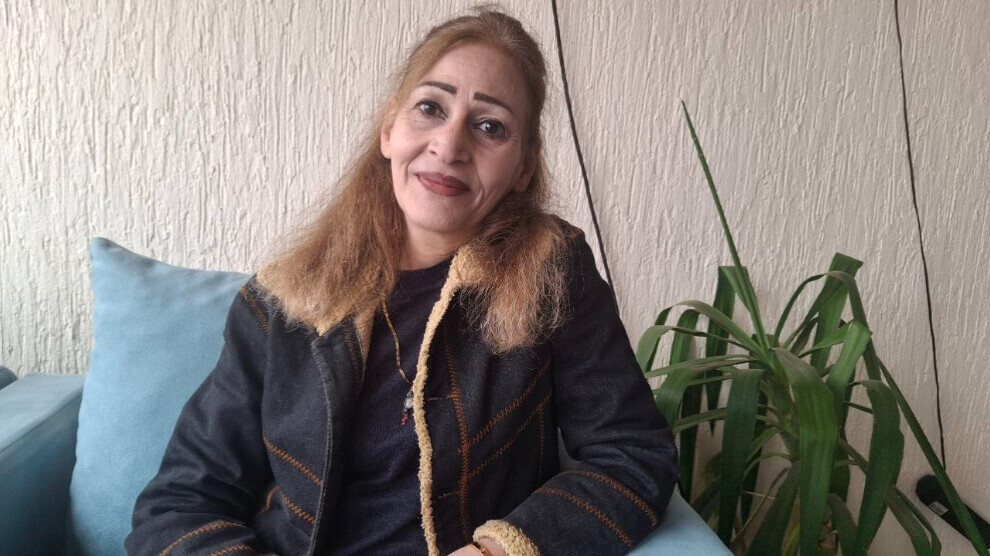
Lina Abu Hamdan warned of escalating incitement against Syrian components, saying threats targeting Kurdish students demanding mother-tongue education and remarks against Druze protesters in New York reflect growing risks to pluralism.
ROCHELLE JUNIOR
AS-SWEIDA_In two secenes reflecting the escalation of incitement and exclusion discourse in Syria, fears are growing about the threats and practices targeting members of Syrian components on the basis of their religious and national identity. The student demonstrations demanding the right to education in the mother tongue, and the threats and intimidating gestures they faced, reveal the scale of challenges facing freedoms and cultural rights, and raise serious questions about the future of pluralism in the country.
In this context, lawyer Lina Abu Hamdan confirmed that the current authority's rise to power was not the fruit of an independent national path, but came as a result of international and regional plans and understandings, considering that it plays a functional role within a project aimed at dividing Syria.
She explained that what is happening in Damascus reflects a trend toward entrenching a totalitarian system that monopolizes power, excludes Syrian components, and deprives minorities and national forces of actual participation in running the government and its institutions. She noted that the escalation of sectarian discourse and incitement among Syrians is not a passing matter, but constitutes a dangerous path aimed at dismantling the social fabric and preparing the ground for division.
Lina Abu Hamdan warned of a project with Turkish-Ottoman orientations that seeks, in her assessment, to establish an Islamic emirate, confirming that Syria cannot be built on the logic of a single color or a single component, and that its future can only be through pluralism, partnership, and equal recognition of the rights of all its components.
Syria for All Its Children
Lina Abu Hamdan stressed her rejection of classifying Syrian components under the concept of "minorities," confirming that all Syrians are equal in national identity and rights, and that they have the right to participate in building their homeland and managing its affairs without exclusion or discrimination.
She questioned the feasibility of talking about an inclusive national identity amid the continuation of killing and violations on a religious basis, considering that what the people of As-Suwayda were subjected to during the July events embodies the danger of turning religious and cultural difference into a pretext for targeting.
She also described the current authority as carrying exclusionary features that do not accept the other, warning that the transformation of political Islam into a project for dominating the state and society leads to the dismantling and destruction of states.
Solidarity with the Kurdish Cause and the Right to Learn in the Mother Tongue
Abu Hamdan confirmed that the Kurds are an authentic component of Syrian society, and they have legitimate rights, most notably preserving their language and culture, teaching their children in Kurdish, and recognizing it as an official language. She stressed that these demands do not affect Syria's unity, but fall within the rights of citizenship and cultural diversity.
She expressed her condemnation of the threats that targeted Kurdish students, including the threat of killing and torture because of their demand for their linguistic and cultural rights, considering that these practices evoke the violations to which the Kurds were previously subjected by ISIS, and reinforce their fears of targeting their identity and existence.
She linked the threats that targeted Kurdish students with the scenes that accompanied Al-Sharaa's visit to New York, noting that protesters from the people of As-Suwayda were subjected to gestures she described as inciting from his supporters, including threats to cut mustaches and boasting of violations, killing, and burning houses in As-Suwayda.
She considered that these practices reflect the continuation of hate speech and incitement against Syrian components, warning of the repercussions of escalating sectarianism and revenge. She also criticized the silence toward the violations to which the people of As-Suwayda were subjected.
Integration with the Government... An Agreement Without Guarantees
In her comment on the integration agreement between the Autonomous Administration and the interim government in Damascus, Lina Abu Hamdan described it as fragile, considering that it did not exceed the limits of paper understandings, in light of the absence of actual implementation and guarantees that protect the rights of Syrian components.
She confirmed that the Kurds, Druze, and other components have the right to live on their land, participate in state institutions, and enjoy the rights of citizenship without discrimination. She stressed that national belonging should not be conditional on abandoning language, culture, or religious identity, and that building a stable state requires respecting and protecting Syrian diversity.
On the rights side, lawyer Lina Abu Hamdan relied on the Universal Declaration of Human Rights issued in 1948, confirming that its principles are based on equality and prohibit discrimination on the basis of religion, race, gender, or other forms of difference.
She stressed the necessity of translating these principles into legal and legislative measures that guarantee holding perpetrators of violations accountable, combating discrimination, protecting the rights of women and children, and prohibiting torture in all its forms. She confirmed that human rights must turn from slogans and texts into practical guarantees that ensure the protection of all Syrians without exception.