
Hate Speech and Incitement Against Women in Tunisia…Where to
Hate speech and incitement targeting women-Particularly young women activists_has recently spread in Tunisia, in a clear attempt to intimidate them, silence their voices, and push them away from public space.
NAZIHA BOUSSAIDI
Tunis- Several civil society activists have recently been subjected to systematic targeting campaigns, among them Ghofrane Binous, who faced a wave of defamation and accusations of treason. In a post, she held full responsibility against all those who participated in inciting against her and spreading hate speech, warning against any threat to her physical safety and affirming her right to take all necessary legal measures.
Similar campaigns have also targeted journalist Khawla Boukrim following her travel to France to conduct a series of interviews with figures who had been forcibly exiled. She was subjected to attacks on social media platforms. In a post published this week, she emphasized that incitement to violate women's honor only reveals the character of those who practice it, adding that those who support such crimes today will find no one to protect them tomorrow when positions change—a clear lesson from history.
Khawla Boukrim affirmed that her media platform "Toumedia" reserves the right to pursue legal action against any comment or post inciting the violation of honor, while maintaining her full commitment to the ethics of journalism.
Both Basma Al-Khalfawi, a feminist activist, and Iman Guzzara, a lawyer and human rights defender, were also subjected to systematic defamation campaigns taking an "ethical" character, accompanied by insults, verbal abuse, digital violence, and accusations that violate moral sanctity and human dignity.
These practices sparked a wide wave of outrage and condemnation among civil society activists, who expressed through social media platforms their rejection of the discourse of defamation and digital violence directed against women. Among the voices that engaged with this campaign, Najat Al-Arari, a civil society activist, stood out, writing a clear message of support stating that she stands fully with Ghofrane Binous, affirming that "sick minds and hearts full of malice and hatred are only met with disregard," and stressing that Ghofrane will remain a voice defending human dignity, rights, and freedoms.
The Democratic Women's Organization and the Intersection Organization for Rights and Freedoms also issued statements condemning the wave of violence and hatred targeting activists in recent times.
Law 58 Between Text and Reality
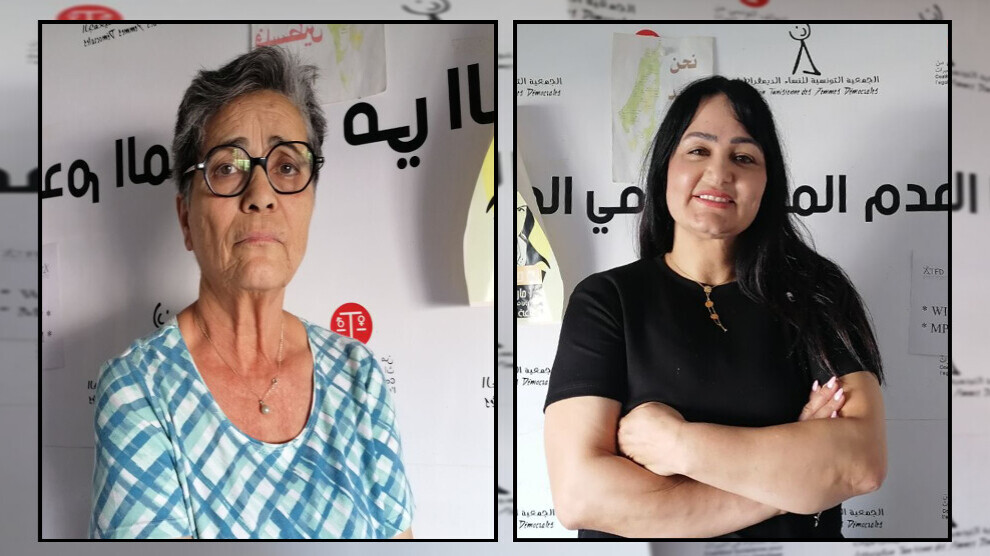
Lawyer and human rights activist Hamida Al-Shaib stated in a statement to our agency that Tunisia possesses the legal framework represented by Law No. 58 on the elimination of violence against women, which criminalizes various forms of violence, including digital violence. However, what is happening today, in her words, reveals organized attempts to silence women and exclude them from participation in public life through defamation, stigmatization, and attacks on dignity.
She pointed out that there is now a great deal of fear, and some women have even withdrawn from associational work and civic life. She added: "We need to strengthen young people's engagement in political life and associational work so that, over time, we develop a qualified political class capable of continuing to build Tunisia on solid democratic foundations."
She explained that "the situation in Tunisia has become extremely difficult, but we can still send a message of solidarity to all women subjected to multiple forms of violence. A message that the shackles must be broken, and that a new day will come when reality changes and we reclaim what we have lost."
Serious Challenges Facing Tunisian Democracy
For her part, feminist and human rights activist Fathia Hayzem affirmed that the spread of incitement and hate speech in Tunisia today "makes us feel as though we are living in a jungle, where constructive criticism is absent. In contrast, a discourse that drives hatred and incitement emerges, pushing many women to retreat from public life."
She noted that these behaviors are foreign to Tunisian society and do not reflect its values or ethics, expressing hope that one day it will awaken from this nightmare and that humanistic and solidarity-based discourse—especially feminist solidarity—will return.
She added that the situation in Tunisia today has reached such a degree of deterioration that words cannot describe it, noting that hate speech intensifies as the authorities' problems increase, and that the more the economic and social crisis deepens, the more hate narratives become apparent.
She mentioned that young women activists, who are supposed to be an essential part of Tunisia's future, have their wings clipped from the start through targeting by investigations. However, more dangerous than that is the targeting of their honor and reputation. "Our society, despite the progress it has made, still carries deep within it, to some extent, a vile traditional mentality that criminalizes women's struggle and uses the weapon of reputation to silence them and push them to retreat from political work and public space."
She considered that this reality may pose a real obstacle to young people, adding that incitement and hate speech do not resemble Tunisia, which has historically been open to the Mediterranean and has interacted over centuries with multiple civilizations. It cannot, therefore, turn into a country that produces this amount of hatred.
Fathia Hayzem concluded by saying that the official narrative today seeks to scapegoat citizens from sub-Saharan Africa so that Tunisians forget their fundamental problems and become preoccupied with a narrative that deludes them into believing that "they came to consume our wealth," while the real crisis is much deeper.