
From the Suffering of Inheritance to Defending the Rights of Women Farmers in Upper Egypt
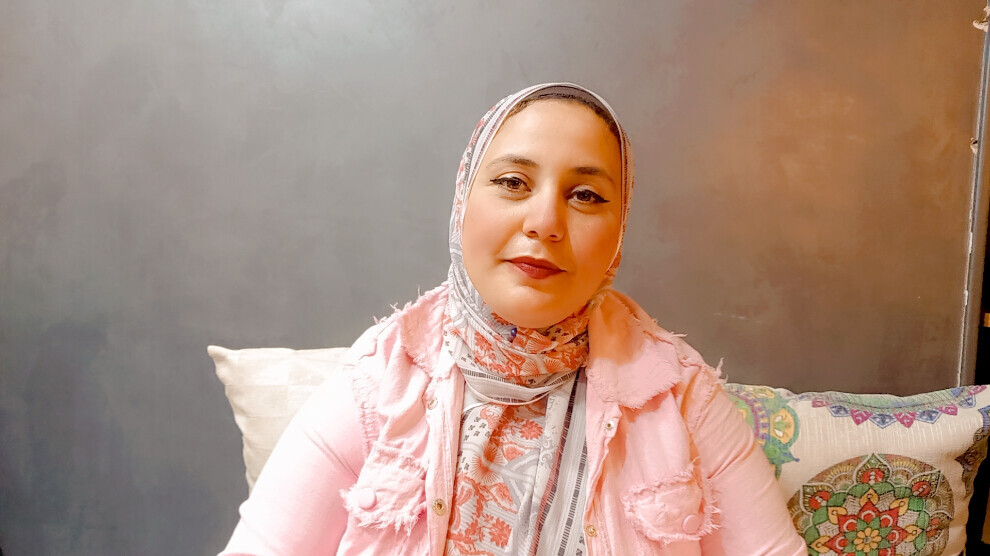
Asma Mehran never imagined that her personal experience with inheritance would one day become a cause she would defend, and that she would become a voice for dozens of women facing the same fate in the villages of Upper Egypt.
EMAN SAMER ALI
Egypt — After her father's death, Asma Mehran found herself facing a family dispute over inheritance, discovering that the path to obtaining her right to agricultural land was not easy. The problem was not so much legal as it was social, as some customs still view a woman's claim to her inheritance rights as a departure from tradition, even if that right is guaranteed by law.
Asma Mehran says that her mother was her first supporter, having herself experienced the complexities of inheritance disputes. However, the surrounding community was not equally supportive. She faced criticism and accusations of encouraging women to stand up to their families. Some elderly women even believed that speaking about women's rights could lead to family disintegration and sibling conflicts.
An Initiative to Support Women Farmers
Despite this, she did not retreat. In January 2025, she gathered with a group of young men and women to establish the "Sit Aman" (Lady Safe) initiative, aiming to support women farmers who are deprived of their right to own agricultural land or subjected to violence and discrimination while working in agriculture.
The initiative began with a small team of no more than five members, and its first steps were organizing listening sessions in the village of "Al-Balayza" in Assiut. There, she listened to stories of women who lacked the courage to demand their rights for fear of losing their families or being subjected to social ostracism.
During these sessions, she realized that the problem does not stop at women being deprived of inheritance but extends to the details of their daily lives in the field. Many women farmers face harassment while working, as well as difficulties in accessing agricultural services, while men are given priority in receiving production supplies, even though women work in agriculture and depend on it as their main source of income.
To confront these challenges, Asma Mehran expanded the scope of the initiative, organizing legal awareness sessions, field campaigns, and meetings with agricultural service providers to affirm women's right to access services without discrimination.
As the impact of climate change on agriculture intensified, she noticed that training programs on climate adaptation predominantly target men, while women are absent. Therefore, she added a new axis to the initiative: training women farmers on modern agricultural techniques, such as ridge planting and recycling agricultural and animal waste, to help them protect their crops and improve their production.
Among the most impactful experiences was the story of a woman the initiative helped regain her legal right to her agricultural land. After attempts at reconciliation, she received the necessary legal support and won the case, reclaiming her land despite subsequent threats she faced for demanding her rights. Asma Mehran considers this case evidence that legal knowledge and community support can bring real change to women's lives.
Awareness and Determination Are the First Steps
On a personal level, Asma Mehran managed to complete the procedures for owning her agricultural land, now holding both the official ownership title and the agricultural holding card. She describes this step as a turning point in her life, as it gave her the confidence that rights can be reclaimed when coupled with awareness and determination.
Today, she dreams of transforming "Sit Aman" into a specialized institution serving women farmers across Upper Egypt, providing them with legal, social, and developmental support. She affirms that her message was never to call for conflict but to empower women to obtain their legitimate rights and work on their land safely and with dignity.
Asma Mehran concludes her journey with a message: "We are not looking for problems; we are looking for our rights. We want to own our land, cultivate it, and work on it safely, because the woman farmer is an essential partner in agricultural development, and it is her right to have the opportunity, recognition, and justice."