
Activist Confirms: What Happened in Suwayda is Larger than the Announced Accountability Measures
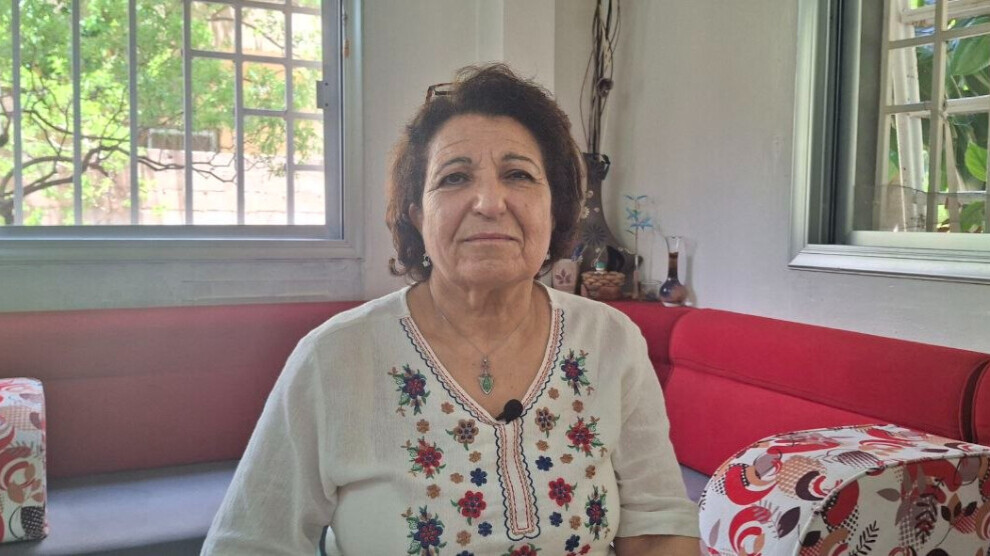
Activist Basma Al-Uqbani stated that detaining some accused individuals is insufficient for justice, stressing that accountability must include both planners and perpetrators.
ROCHELLE JUNIOUR
As-Suwayda — Despite the National Investigation Committee's announcement of detaining 23 individuals in connection with the July 2025 massacres in the Syrian city of Suwayda, the most pressing question remains unanswered: How can a committee formed by the Interim Government itself—which was responsible for facilitating the military operation in the city—impartially judge a case in which it is implicated?
In cases of grave crimes and violations, independence and neutrality are fundamental prerequisites for any credible investigation. Meanwhile, committees affiliated with the Syrian Interim Government lack the trust of the people of Suwayda. For this reason, residents refused to allow the committee to enter the city, drawing upon what they view as a previous experience that failed to achieve justice in investigations related to the Coastal events—a factor that has reinforced their demands for an independent and impartial investigation.
Questioning the Neutrality of the Investigation Committee
Basma Al-Uqbani, a social and feminist activist, spoke about the National Investigation Committee's report on the perpetrators of the Suwayda massacres, which was issued a few days ago. She considered that naming the committee "National" does not reflect the standards of transparency and neutrality required in such cases, stating that the issue connected to what happened in Suwayda is "much larger" than mere announced procedures, calling for an examination into the nature of the committee, its powers, and the entity that formed it.
She deemed that the committee, from her perspective, does not enjoy sufficient neutrality as it was formed by an "authority with a history fraught with killing and terrorism." She added that according to international standards, the formation of investigation committees for grave violations presupposes the availability of independence and impartiality to guarantee trust in the results.
She pointed out that many residents of Suwayda refused to let the National Committee enter the city, considering that this came as a result of a loss of trust due to previous experiences, including the investigations related to the Coastal events, which she believes failed to achieve the required justice or do right by the victims and their families—a matter that reinforced demands for an independent investigation.
Speaking on the committee's findings, Basma Al-Uqbani criticized the announcement of referring 23 accused individuals to the judiciary, considering that this number "does not match the scale of the attack" that Suwayda was subjected to. She stated that a large number of attackers participated in what happened, pointing to individuals appearing in video recordings and posts on social media speaking about their participation or boasting about what they had done.
She argued that referring this number to Syrian criminal courts does not reflect the nature of the case, considering that dealing with it as individual crimes is disproportionate to the scale of the events, and that what happened, as she described it, goes beyond that to a case of a broader character.
Demands for an Independent International Investigation
Basma Al-Uqbani noted that the UN International Commission of Inquiry spoke about violations in Suwayda that may amount to war crimes and crimes against humanity, adding that she considers what happened to be "crimes of genocide," questioning why it has not been officially classified under this description.
She added that local courts are "insufficient" to look into such cases, maintaining that accountability must start from the top of the pyramid—from planning and issuing orders down to execution—and not be limited to the individuals who directly carried out the violations.
She also emphasized that the attack on Suwayda was "planned and deliberate," starting with hate speech months before the events, followed by security and military bodies, in addition to other groups including foreign fighters, asserting that responsibility must include various leadership and executive levels.
Furthermore, she criticized the statements of the investigation committee's spokesperson, who spoke about the presence of fugitives and masked individuals whose identities have not been determined. She deemed this justification insufficient, pointing to the existence of video clips and posts on social media that "document violations and show certain individuals openly."
She cited the case of Qusay Al-Shuwaymri, who is accused of committing violations and kidnapping women, pointing out his subsequent appearance at public events and alongside ministers, which she believes raises questions about the seriousness of the accountability measures. She also questioned the reasons behind not clearly announcing the names of those referred to the judiciary to the public, stressing that the victims and their families knowing the course of the trials is a fundamental right.
Calls for Justice for the Victims
Basma Al-Uqbani pointed out that the announced measures come in the context of an attempt to project the existence of accountability before the international community, especially as the one-year anniversary of the Suwayda events approaches. She considered these steps to be falling short of meeting the victims' demands or achieving the justice they seek; rather, it is a "failed attempt to polish their image" before other countries to show that they are moving toward a state of justice.
She added that the committee's statements included references to individuals involved in the violations who still hold positions within the Ministry of Defense, considering that their continuation in their positions raises doubts about the seriousness of the accountability process.
She stated that the people of Suwayda still live with the aftermath of the events on a daily basis, and that the passage of a year since they occurred does not mean their impact has ended, noting that the victims and their families are still waiting for justice and for the displaced to return to their regions.
Basma Al-Uqbani concluded her speech by emphasizing that the case requires international judicial mechanisms capable of dealing with wide-scale violations, noting that the people of Suwayda will not forget the killing, displacement, and violations they were subjected to, and that achieving justice requires holding all those responsible accountable and compensating those affected.