
From Empowerment to Advocacy... "Taa Mabsouta" Creates Opportunities for Women in Syria
"Taa Mabsouta" believes women's empowerment starts with tools and opportunities, not just aid, so it trained women, opened work doors, and created dialogue and advocacy space for Syrian women's issues.
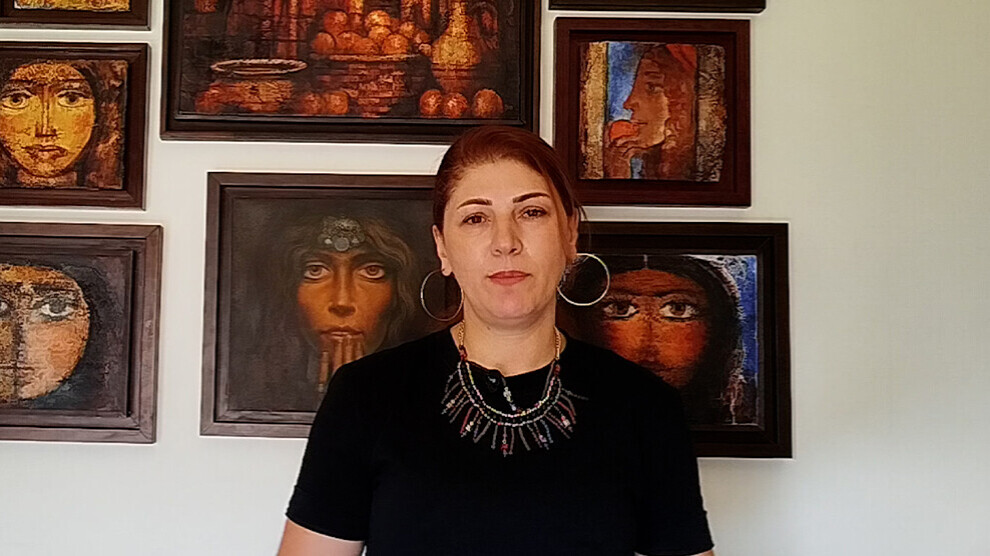
RANEEM KHALOUF
Damascus – With the beginning of 2011, Syria witnessed increasing activity in the civil society movement, simultaneously with the outbreak of the crisis that soon cast its shadows over various aspects of life. Women were among the most vulnerable and affected groups under crises and wars, which pushed many civil institutions to intervene in Syrian affairs, starting from the relief gateway and providing basic needs, to economic and social empowerment programs.
The programs of a large number of these institutions were similar in the nature of the support they provided, from distributing food baskets and organizing vocational courses to providing ways to earn income. But the "Taa Mabsouta" institution chose a different path, as it sought to open new spaces for women away from the traditional frameworks of relief and empowerment work, through art and screenwriting as tools for expression and rebuilding the self. In 2016, the institution entered the civil scene as a Syrian feminist space.
Founding of "Taa Mabsouta"
"Taa Mabsouta" began as a legally licensed association in Syria, operating in the capital, Damascus, concerned with the affairs of Syrian women in general, supporting their creativity and developing plans to help them be an actual part of developing society.
After 2024, "Taa Mabsouta" turned into an institution operating across the entire Syrian geography. Pascale Deeb, one of the members of the Board of Directors of the "Taa Mabsouta" association, says: "We paid great attention to the aspect of empowering women and enhancing their capabilities, and we had an important role during the crises that occurred in Syria. We did not, for example, go toward giving food baskets to women, but we thought of something different to help them access the labor market. For example, we offered photography workshops and screenwriting workshops, one of which was for women from the general public, meaning from all specializations, and another was for those who possess a little experience. We also went toward the deaf and mute segment and tried to qualify them academically with workshops so that they would be able to work directly. After the workshops, doors opened for many, and these workshops became a source or a path to income."
The "Taa Mabsouta" institution did not content itself with workshops and producing empowered women who go to the labor market, but established a gathering of plastic artists to sell paintings at quarter prices, where the support of this project returned to women during the Corona pandemic, and during the earthquake, volunteers in the institution allocated baskets for affected women that included health supplies.
A Point of Dialogue!
After the fall of the regime, the institution tried to search for a unifying dialogue space for Syrian men and women, in which women's issues are raised. Thus, the "Taa" Cultural Salon was a monthly activity where people who believe in women's issues from Damascus and other Syrian cities gather.
About that, Pascale Deeb explains in detail: "The idea began that all guests would be women, because they are more capable of speaking about women's issues. But some time ago, we began hosting men who believe in women's issues, because the supportive man's voice is important to be heard. The monthly attendance began to increase and to be gender-balanced between the sexes, and the goal is always to find a space and other ways for dialogue and societal advocacy."
No civil work is free of difficulties and risks. She adds: "We suffer like all institutions today from a lack of resources, and in many cases the institution relies on donations and contributions from members of the Board of Directors. When we turned into an institution, our activity was supposed to be across the Syrian geography, but due to the lack of resources until now we have not been able to activate this. Therefore, we tried to find a solution by inviting guests to the monthly Taa Salon dialogue from other cities. Despite the institution's members' constant pursuit to obtain funding, we find difficulties because our projects depend on empowering women and conducting courses, trainings, and workshops, and sometimes need large sums, and we do not have funding. This is the main point that prevents us from moving to the cities."
The "Taa Mabsouta" institution does not content itself with inviting people from the cities to attend the monthly "Taa" Salon, but aims through these invitations to transfer knowledge and expertise, as a means to confront challenges related to funding. Pascale Deeb comments: "Every time we are surprised by the strong attendance from the cities despite the distance, where the delegates of the cities transfer these dialogues and meetings to other civil institutions in the cities, so that they represent Taa Mabsouta and its experience, and this is the goal that the institution seeks."
"Taa Mabsouta" includes volunteers of different ages and generations, united by a common ambition to expand more in various Syrian cities, reach a broader segment of women, and obtain greater funding that allows them to expand the scope of their work.
Despite the limited activities and available resources, merely reserving a civil space for women's voices in Syria represents an achievement worthy of appreciation, and most importantly, it is a space that should be worked on to expand and enhance its presence and influence.