
Delayed Payments Threaten Iran’s Electronic Coupon Project and Increase Budens on Families
Iran's electronic coupon project faces shop refusals due to delayed payments, worsening economic pressures and declining purchasing power for households."
JWAN SHARIFZADEH
Bukan — In recent years, economic inflation has placed significant pressure on household living standards. In response to these conditions, the Islamic Republic of Iran implemented the electronic coupon (food voucher) project, which it says aims to cover part of citizens' living needs. However, despite its implementation, this project has not brought about a tangible change in living conditions and faces numerous problems across the country.
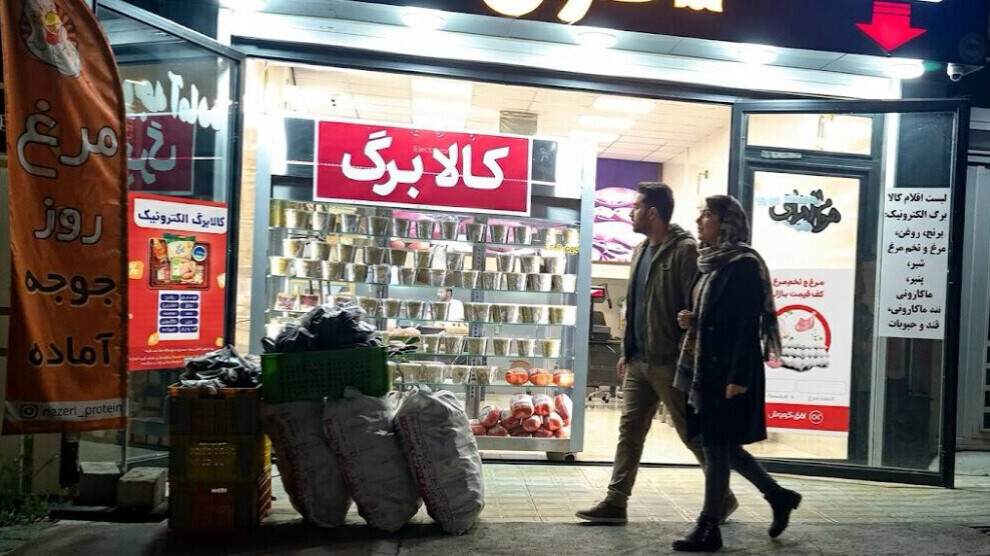
Amid daily inflation, the coupon has not only faded from people's minds but its presence has even begun to disappear from signs displayed on shop fronts. Over the past month, the number of shops refusing to accept it has increased. Citizens say many shops no longer accept it, while shop owners say the reason is that relevant authorities have not settled their financial dues.
Some local Iranian media have also confirmed that accounts with shops have not been settled, noting that the delay period is less than a month, but for some shop owners, this period extends to more than three months.
The Coupon Is Losing Its Presence
Kojal Rahimi (a pseudonym), who runs a grocery store with her husband, says: "For about two months, the authorities have owed us 500 million tomans. When we visit the governor's office, their only response is 'soon.' Restocking the store with goods is also difficult for us under these circumstances."
Some citizens in eastern Kurdistan also speak of business owners dealing cautiously with the coupon. Shida W., who recently bought chicken using the vouchers allocated to her two‑person household, says sellers deal selectively with the sale of goods: "Two meat and poultry shops were not selling chicken using the coupon. The third shop, whose owner I know, accepted my card. When I asked why, he said: 'We no longer dare to give large quantities of goods to customers using it, because we don't know whether our money will be returned to us or not.'"
Masoumeh J., from Bukan, affirms that acceptance of the coupon is limited, in her experience, to shops and commercial chains linked to the authorities: "Large shops and commercial chains accept it, but the prices of some goods there, when purchased with it, do not include the discounts available in regular purchases, and are sometimes more expensive."
From Empty Tables to the Illusion of Controlling the Situation
Commodity prices in Iran change from day to day, and even from hour to hour, depending on the type of goods. The main problem for Iran's residents today has become the cost‑of‑living crisis and tables that shrink day by day.
Looking at Iranian households' tables, it can be observed that red meat has long become a rare presence or disappeared entirely. In low‑income households, chicken has also become a weekly or even monthly meal.
Sharmin A., an employee at a government institution, says about the coupon's value: "It has become very low even compared to what it was two months ago. Each time we bought, we had to pay a similar amount from our own pockets to be able to buy a reasonable quantity of one item. Previously, we could buy three medium‑sized chickens with it, but now only two chickens can be bought."
Currently, prices in small city markets are: one kilogram of red meat, one kilogram of chicken, a bag of Indian rice, a three‑litre bottle of cooking oil, one egg, and a five‑kilogram block of solid vegetable oil—1,500,000 tomans, 330,000 tomans, 3,000,000 tomans, 1,600,000 tomans, 19,000 tomans, and 3,000,000 tomans, respectively.
The fruit and vegetable market is emptier than ever, and no decent‑quality fruit costs less than 80,000 to 100,000 tomans. This comes at a time when the value of the coupon provided by the authorities is only one million tomans per person.
Living pressures in Iran have reached the point where people are pawning their subsidy and coupon cards to pay off debts, or selling their value for cash amounts below their nominal value.
Although this amount never had a significant impact on people's livelihoods, it covered a very small part of their needs—a part that has been shrinking day by day under continuous inflation, and is now threatened with disappearing entirely. Yet this has not led to any decrease in the baseless claims of government officials denying the dire living situation.