
From the 74th Genocide to the Journey of Searching for Identity and Justice (3)
Mother Kore Amir lost her son, brother, and mother during the genocide in Shingal(Sinjar), and to this day she still does not know whether they are alive or perished in captivity.
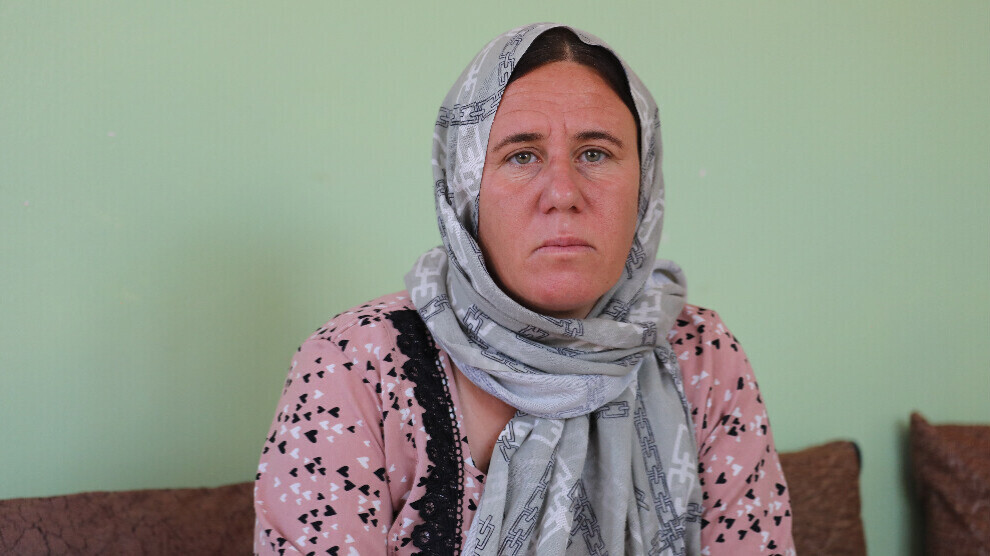
"There Is No Single Answer That Can Extinguish the Fire of Waiting"
JIHAN ZIMO&KULISTAN AZIZ
Shingal_Twelve years after the genocide ISIS committed against the Yazidis in Shingal, thousands of families continue to live suspended between waiting, hope, and pain.Among these painful stories, Mother Kore Amir stands as a witness to a tragedy that has not ended, after losing her son, her brother on August 3, 2014.
After the Dersim massacre in northern Kurdistan in 1938, young girls were forcibly torn from their families and handed over to soldires, uprooted from their origins and pushed into a brutal process of assimilaiton and erasure. Since then, the term "the missing girls of Dersim"has been become a byword for endless grief, and a symbol of the tragedy of thousands of children deprived of their families and identities.
Times and places may change. the people at the center of the story may differ.but history often repeats itself through events. In wars and massacres, driven by differnt aims and motives, childrenare abducted an lost. What Shingal witnessed in 2014 brought back echoes of that earlier tragedy, when thousands of Yazidi children and women were abducted,separated from their families, and subjected to enslavement, captivity, and attempts to erase their identity.
Mother Kore Amir says, her voice heavy with grief: "We don't want anything from this world, If they're alive, bring them back to us. If they were martyred, bring us their bones, so we can visit their graves."
A Journey of Loss That Began at Dawn
At dawn on the day of the attack, her mother woke the family screaming, "ISIS has arrived _and no one realized then the scale of the catastrophe closing in."
The family members got into a small car trying to flee, but the cramped space forced Kore Amir's mother to get out, saying: "You go. They say ISIS takes the young women and girls, but us older people_they won't do anything to us "She then asked her son to see his sisters to safety and come back for her.
But her son,Sufyan Ibrahim Khalaf, who was fourteen at the time, and her grandson, Amir Hassan Khalaf Khodeida, twelve, refused to leave their grandmother, Sherin Khalaf Haji, alone, and got out of the car to stay with her. that was the last time a mother would ever see her son, her brother, and her mother.
No News in Twelve Yaars
The family reached the village of Sikaniyah, where one of their relatives tried to go back to save those who remained, but word came back confirming that ISIS had captured everyone who had stayed behind_ no one survived.
Since that day, no confirmed news has ever reached them about the missing, aside from unverified information suggesting that the child Amir was taken to Raqqa,Syria.
Mother Kore Amir says:"Every time survivors return from captivity, I go to them and ask about my son, my brother, and my mother. Some say they saw them; others say they know nothing. There is no single answer that can put out the fire of this waiting."
The family submitted documentation on the missing to the relevant authorities in Duhok and repeatedly followed up with government institutions, but without any result:"Twelve years, and wer haven't known the tastw of sleep or rest. we can't live normally. Every day our wounds bleed as if the crime just happened. "she affirms she is not asking for any compensation or property_only to know the fate of her loves ones.
A Photo Under the Pillow
As the anniversary of the genocide approaches eash year, her suffering double. Holding a photo of her son, she says:"I look at his picture every night,and I place it under my pillow befor I sleep." I ask myself: maybe he'll come back tomorrow...maybe someone will see him and tell us about him. Befor I die , I wish I could hold him just once.
Then she adds, with anguish:"When I look at his picture, I can't stop my tears, They tore his hand from mine without any guilt or reason,"and this day i don't know if he's alive or dead.
An Open Wound Awaiting Justice
Mother Kore Amir affirms that the Yazidis wronged no one, yet they paid a heavy price, losing their sons, fathers, mothers,and siblings.
the file of the missing remains one of the most painful legacies of the genocide, with estimates suggesting that the fate of around 2,700 Yazidi men and women remains unknown to this day, amid the absence of definitive answers about their whereabouts or fate.
Despite the years that have passed, the tragedy of Shingal has not yet been closed. Many doors still open every morning in hopw of an absent loved one's return,and many mothers still wait for news_or even a grave_to bring an end to years of waiting.
To be continued...