
From Inanna to the invention of writing… Uruk, the memory of civilization and women’s leadership
Uruk is the city of firsts, shaped by the creative power and leadership of women. The conflict between Inanna and Enki symbolizes the protection of women’s creative power in the face of the dominant patriarchal order.
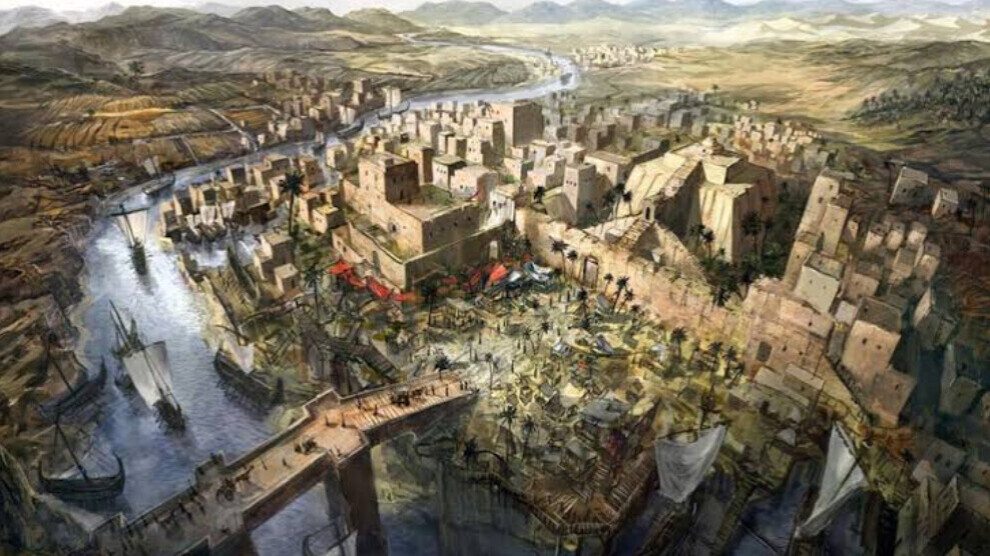
NEWS CENTER — The city of Uruk (Warka), located in what is now southern Iraq, is considered one of the most prominent historical metropolises of ancient Mesopotamia. The city acquires pivotal importance in the course of Sumerian civilization, as it witnessed the earliest beginnings of urbanization, the invention of writing, and the spread of the worship of the goddess "Inanna."
In the readings and analyses of Leader Abdullah Öcalan on the history of civilization, Uruk is presented as a main arena for the historical and mythological conflict between the creative power of women on the one hand, and the rise of the dominant patriarchal civilizational system on the other.
On the social and economic levels, the city brought about a radical transformation thanks to its population density, public facilities, production areas, and advanced administrative organization, making it an essential center of urbanization in the region. The presence of the most important sacred temple of the goddess "Inanna" in it also gives it a unique cultural and spiritual character, consolidating its exceptional status in the cultural history of Mesopotamia.
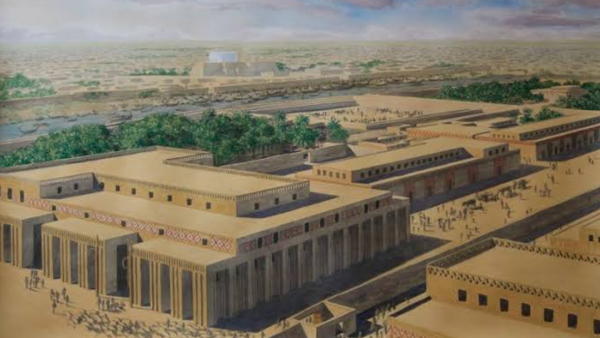
Inanna and the woman-centered social memory
Leader Abdullah Öcalan interprets the doctrinal and cultural significance of Inanna in the Fertile Crescent through the social status of women and their creative power in the Neolithic era and before. In his analysis of civilization, Inanna is not dealt with merely as a mythological goddess, but as a symbol of the role women played in production, creativity, and the founding of social life.
The conflict between Inanna and Enki cannot be addressed in isolation from this historical threshold. The Sumerian myth recounts that after Enki stole the "Me's" — which are women's inventions — Inanna visited Enki in Eridu, recovered them from him, and returned with them to Uruk.
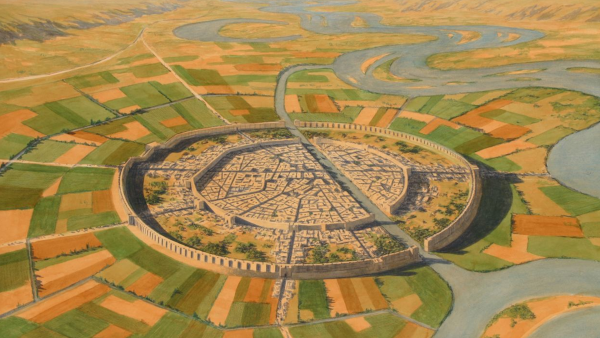 Women's will to protect their historical creations
The "Me's" in Sumerian civilization are defined as women's inventions or the life-founding principles that form the basis of the social order, culture, and various life activities. Leader Öcalan interprets this mythological narrative as a struggle of women's creative and social productive power against the dominant patriarchal state-priest system.
Inanna's return to Uruk after recovering the "Me's" is regarded as a symbolic expression of women's will to protect their historical creations and social gains. In this sense, Uruk acquires its significance as one of the places that witnessed the first urbanization led by women, and at the same time a place representing women's power of production and creativity. The mythological contradiction between Enki and Inanna can be read as the institutional step toward the rise of the state-priest system and the establishment of the dominant patriarchal civilization.
Alongside its place in women's historical and mythological memory, Uruk also witnessed important transformations in human history. The discovery of the first examples of writing in the temples, represented by cuneiform tablets of an economic and administrative nature, reveals the existence of an advanced system of administration and record-keeping in the city.
From this aspect, Uruk is also considered one of the important centers of the first processes of urbanization, writing, and institutional organization in human history. The city, associated with the worship of Inanna, stands out as an important place where the relationship between women's creative power, social memory, and the rise of the dominant patriarchal civilization is also discussed.