
Women Confronting Ideology… A Renewed Presence in the Arenas of Resistance
While some women fought for their homelands, others still seek recognition and justice, as women’s mobilization in the Middle East reflects diverse and contrasting experiences.
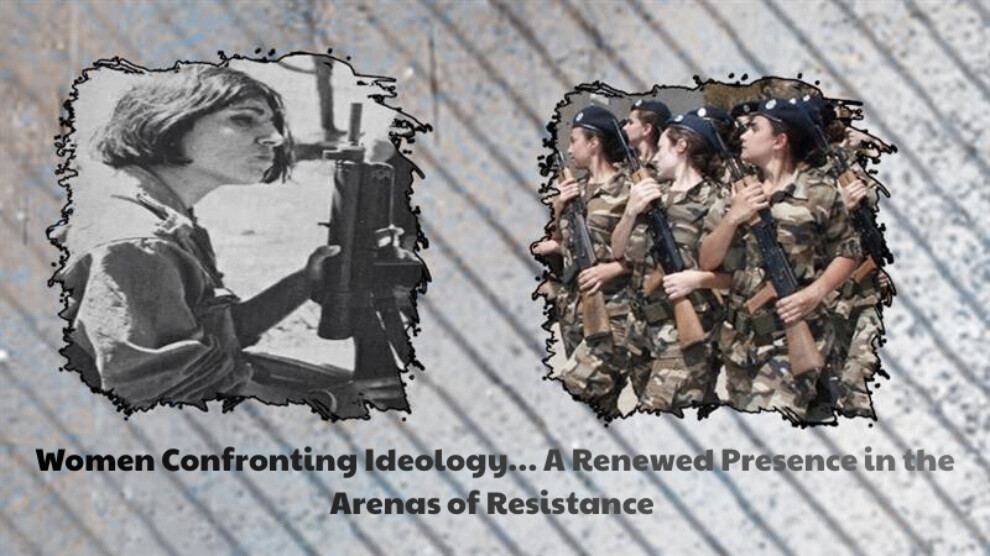
Malva Mohammed
News Center-The issue of mobilizing women in Middle Eastern countries is complex and deeply intertwined, shaped by history, ideology, and social policies. Women’s participation in military forces did not emerge overnight, but developed gradually, facing numerous challenges, including cultural restrictions and traditional views of women’s roles in society.
To understand this phenomenon, it is not enough to look at numbers or official decisions; it requires analyzing the underlying motivations behind women’s mobilization, the objectives states seek to achieve, and its long-term social and political impacts.
Iraqi Women: From White Uniforms to Battlefields
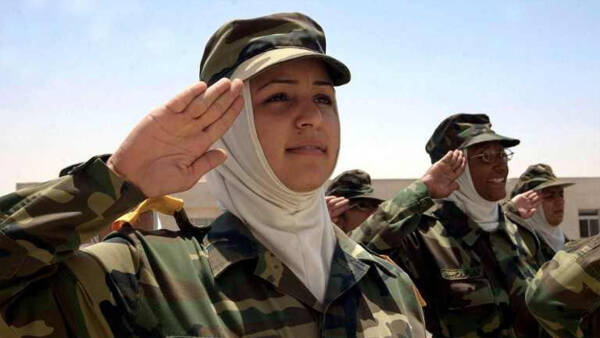
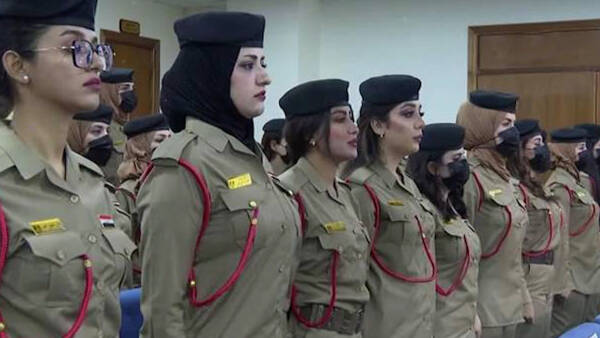
In Baghdad, heroism was not limited to men. In the 1970s, specifically in 1977, female students in medicine, science, and nursing walked through university halls in military uniforms, holding officer ranks and performing duties within the armed forces. This moment marked an unspoken step signaling women’s entry into the sphere of power.
However, the Iran–Iraq War in 1980 turned the situation upside down. As conflict intensified, women were called to the frontlines, then quietly pushed back again. Later, a decision was issued to stop granting military ranks to women, limiting them to civilian contracts. Women were summoned in times of war and forgotten in times of peace, as if their participation were temporary and conditional.
In the 1990s, women refused to remain on the margins. In 1993, the first independent female military units appeared—units led by women, away from male control. It was a new beginning: combat training, tactical missions, and growing awareness that women were not only capable but ready. However, these units did not last long as independent entities, remaining tied to specific wartime conditions.
After 2003, this experience faded. Women’s participation became individual and limited, mostly in administrative or medical roles, with almost no independent combat units remaining.
In 2005, women were again invited to volunteer in the armed forces, but with limited opportunities, often confined to non-combat roles. Recent reports indicate that women in the Iraqi army still face a significant representation gap, especially in leadership, training, and tactical roles, affecting the military’s ability to address issues like civilian protection and gender-based violence.
Despite institutional setbacks, individual success stories emerged. For example, Angham Al-Tamimi became the first Iraqi woman to hold the rank of Brigadier General (Staff), symbolizing women’s ability to break barriers—though without restoring independent female units.
With ISIS’s invasion of Iraqi cities in 2014, a new paradox emerged. While the state did not revive female units, women established independent local initiatives, most notably the Yazidi Women’s Units in Sinjar in 2015, taking up arms to defend their community after massacres. Yet, these remained outside official military structures, reinforcing that women’s participation remains crisis-driven rather than policy-based.
Today, women make up no more than 5% of military personnel, mostly in media and medical fields, while leadership remains an elusive goal.
Palestinian Women: Between Symbol and Rifle
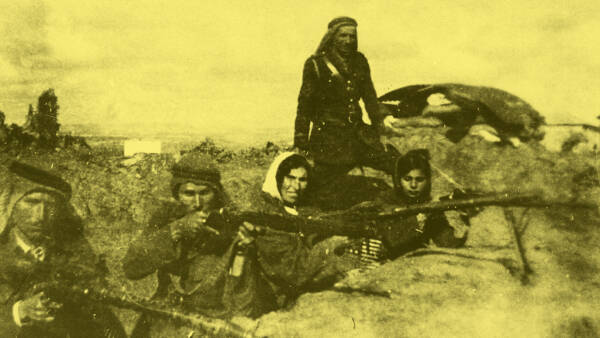
In refugee camps, among cracked walls and the sound of aircraft, Palestinian women have written chapters of quiet yet unforgettable heroism. Their mobilization has not always been formal, but it is deeply rooted in collective consciousness, where the image of the female fighter is tied to national dignity.
Since the 1930s in Jerusalem, women supported resistance efforts, smuggling weapons and delivering messages. During the 1936 الثورة, they played active roles. In 1948, “Hulwa Zidan” confronted Israeli forces with her husband’s rifle until she was killed after reportedly taking down six soldiers.
In the 1970s, women joined training camps. Among them, Dalal Mughrabi led a military operation and was killed, becoming a national symbol. During the two intifadas, women stood in the frontlines, facing repression and imprisonment without retreat.
Despite their courage, leadership positions largely remained male-dominated, even within factions claiming equality. In Gaza, female units appeared within Hamas and Islamic Jihad, but often served symbolic or propaganda roles rather than genuine empowerment.
Women were frequently confined to specific roles—called upon when needed and sidelined during negotiations. Yet, some women broke these barriers, asserting their presence politically and militarily.
Recent reports indicate that women still participate in armed factions, though in limited numbers, often in logistics, media, or occasionally combat roles, particularly in Gaza.
Lebanon: From Logistics to Political Discourse
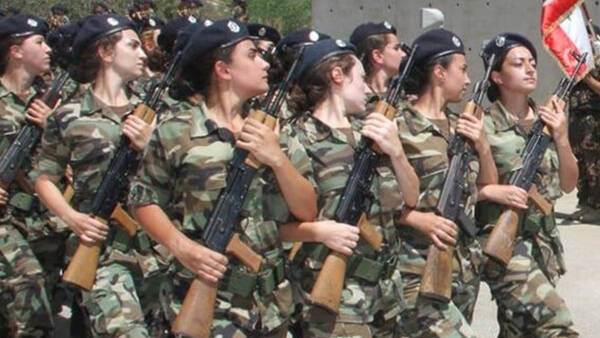
In Lebanon, where sectarianism intersects with armed conflict, women have struggled to find space in arenas shaped by political allegiance.
During the civil war, women joined armed political groups such as Hezbollah and the Lebanese Forces—not as leaders, but as conditional participants. Their involvement was tied to affiliation rather than independence.
Between 1975 and 1990, women participated in protests, medical support, and some combat operations, joining factions like Amal Movement and Hezbollah. Yet their role remained under male-dominated political structures.
Even after the war, women were largely returned to traditional roles, used to enhance rhetoric without real decision-making power. Structural barriers—promotion discrimination, social pressure, and instability—continue to limit their advancement.
A notable milestone was Jana Sader, the first Lebanese woman to pilot a fighter jet. While historic, it did not translate into broader leadership opportunities. Women remain largely confined to logistical roles.
Lebanese women have proven their capabilities, yet recognition remains limited. Their experience reflects a broader Arab reality: women are often used as symbols of progress without being granted its tools.
A Female Imprint in Jordan’s National Defense
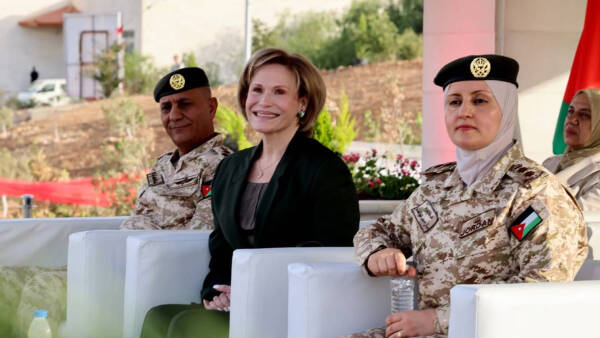
The Jordanian Armed Forces were among the first in the region to include women, beginning in the 1950s as teachers. Their roles gradually expanded to fieldwork and special operations.
In the 1960s, military nurses were trained, and by 1973, female engineers were commissioned as officers. With rising regional tensions, women’s participation increased, and dedicated units were established.
Princess Aisha bint Al-Hussein became the first Middle Eastern woman to graduate from the Royal Military Academy Sandhurst in 1987, later serving in special forces and attaining the rank of Major General.
The 1990s saw increased female participation and training programs. In 2003, women were allowed to enlist as soldiers, eventually taking on combat roles.
Further milestones included the establishment of the Women’s Air Police Unit in 2007 and expanded roles in airport security by 2010. In 2016, female pilot candidates were recruited, and in 2021, a dedicated women’s operations division was created.
Across the three parts of this file, it is clear that women’s mobilization in Africa and the Middle East has largely been situational—linked to crises and wars, often dictated by state or factional decisions. Women are called upon in times of need and marginalized in times of stability.
This differs fundamentally from the experience of Kurdish women across the four parts of Kurdistan, which has followed a distinct path—one that will be explored in the fourth and final part of this series.