
Elections in Syria... legitimizing exclusion and falsifying the will
A wave of widespread denunciation has swept away the legitimacy of the recent Syrian elections, as the street and human rights forces reject a parliamentary engineering in favor of an interim government.
Silva Ibrahim
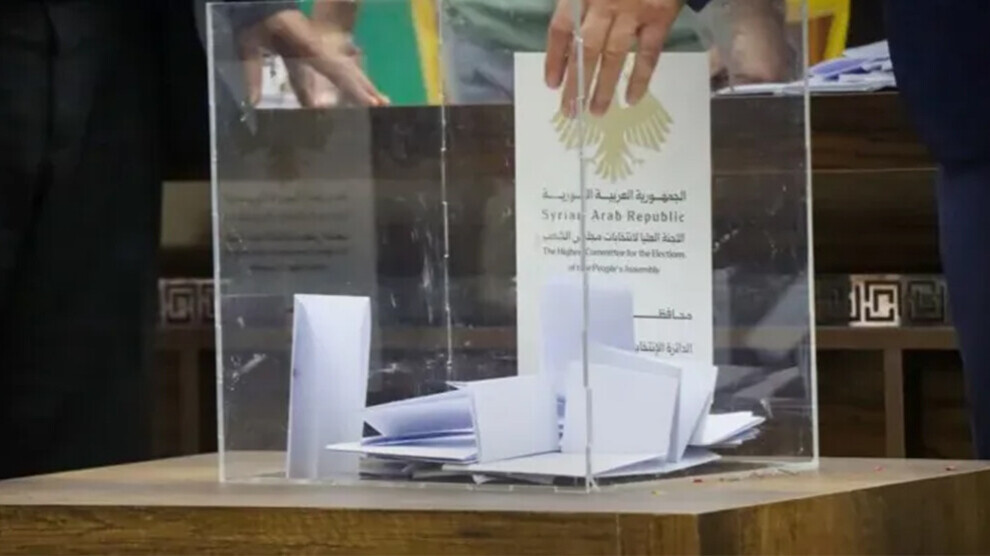
News Center – Between directed ballot boxes and engineering that entrenches exclusion, the Syrian elections deepen the crisis of legitimacy. With the presidency seizing a third of the seats and shrinking the women's quota, leading and women's voices unite to condemn a process that has turned into a facade of appointments that silences the will of the street and confiscates its voice.
The recent parliamentary elections in Syria have sparked a wide wave of debate and rejection in political, human rights, and women's circles. Opinions converge on the lack of democratic and legal legitimacy of this process, amid non‑acceptance of an electoral mechanism that deliberately excludes components and silences the popular will.
These tensions are driven by an electoral mechanism that grants the head of the interim government the power to directly appoint 70 out of 210 seats (a third of parliament), along with shrinking the Kurdish component's quota to only 20%, a percentage that human rights advocates and politicians consider unfair and inaccurate in light of displacement waves and the crisis of unregistered persons.
In a series of private meetings to explore the behind‑the‑scenes and dimensions of these elections, our agency recorded differing readings that all converge on one point: "The electoral process is merely pre‑arranged appointments that entrench domination and exclude the street."
Exclusion of women and rejection of candidates
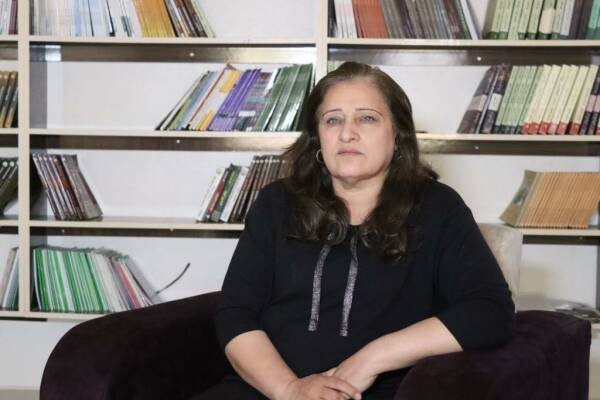
Leyla Ahmed, a member of the Relations Office of the Democratic Union Party (PYD), criticized the electoral mechanism used in the city of Kobani, revealing the reasons that led her party to withdraw from the electoral process. "The role of women was completely absent. Only 100 people were chosen to vote for the candidates. Before that, about 200 people were nominated for the election commission in Aleppo, but the majority were rejected. Those whose nominations were accepted do not represent all segments of society."
Leyla Ahmed was among the women who were nominated and whose names were rejected by the electoral commission; her nomination for membership in the commission itself was also rejected.
Leyla Ahmed described the elections as "unfair and undemocratic," affirming that the winners had been pre‑arranged, which was clearly reflected in the atmosphere in which the electoral process took place. She added: "These elections are unacceptable because they do not represent the will of the people."
She also criticized the stance of the Kurdish National Council regarding these elections. "Although representatives of the Kurds of Rojava were formed in the Kurdish Unity Conference, the Kurdish National Council held separate meetings with Damascus authorities. This fragmentation negatively affects the future of Kurds in the country, especially since Damascus seeks to weaken the Kurdish position through these individual meetings with parties."
This rejection is not limited to the political field and party boycott in Kobani; it extends to probing the constitutional and legal roots of the electoral mechanism as a whole. Human rights circles believe that the crisis is structural and begins with legislation designed to serve the executive authority at the expense of Syrian components.
Human rights criticism of the distribution of parliament seats and the quota in Syria
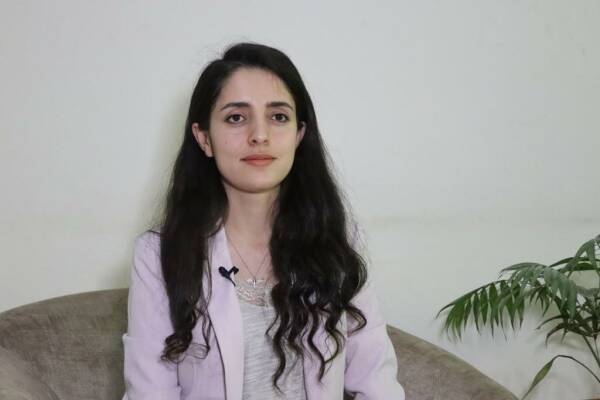
For her part, lawyer Rozef Keno explained that Syria is going through a transitional phase managed by an interim government, considering that the mechanism by which the elections are conducted lacks any legal basis, even the constitutional declaration that legislated these elections last year. She pointed out that the provisions related to parliamentary elections "are not based on a clear law and do not do justice to the various components in the constitution."
She added: "The distribution of the quota was based on geographical and demographic dimensions, not on the basis of the components present in Syria, which was clearly evident in the elections that took place in Kobani and Al‑Hasakah." She noted that "the 20% quota allocated to Kurds is inaccurate, because the vast majority of them are currently displaced from their lands, in addition to the fact that some of them remain unregistered. Therefore, the quota for the Kurdish people should be 40 seats distributed on the basis of component, not on a geographical basis."
She also detailed the flaws in the electoral process. "Holding elections on a geographical basis rather than on component ratios deliberately places Kurdish parties in a weak position." She pointed out that "the head of the interim government determines 70 out of 210 seats, meaning that the president directly chooses a third of parliament, giving the executive authority absolute dominance over parliamentary decisions and silencing the people's will, especially since the president also chooses the majority of the seats distributed to cities. This entrenches the exclusion of the street, and the people are not aware of the election mechanism because the electoral body chooses who votes."
Regarding women's participation, Rozef Keno concluded by noting that "when comparing the situation with countries that rely on human rights charters to grant women a parliamentary quota, we see notable progress there, while Syria is not keeping pace with these legal developments; rather, it is witnessing a regrettable regression."
This legal and human rights regression, along with the focus on marginalizing the "women's quota," is the most bitter common denominator among women's organizations. This electoral mechanism is seen as a clear regression from the gains that Syrian women achieved in administration and organization over the past years.
"The women's quota is exclusionary, and Kurdish unity is a safety valve"
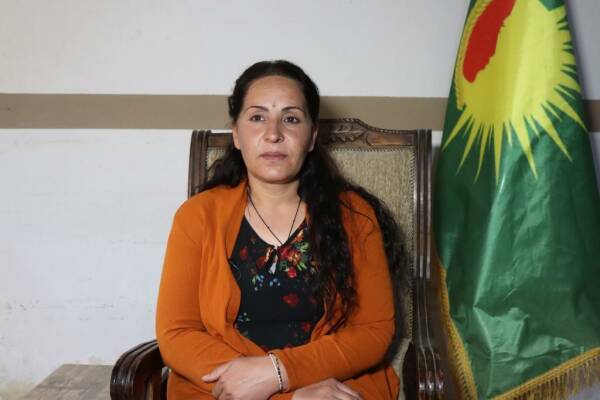
For her part, Nadia Haso, spokesperson for the Star Congress in the Shiran sub‑district, spoke about their position as a women's institution on the parliamentary elections that marginalized women's role. "The Syrian government adopts a radical Islamic mentality, which negatively affects its acceptance or rejection of women's presence in decision‑making positions. Although women have sufficient administrative capacity and the experience of northern and eastern Syria is a prime example of their leadership, the quota granted to women, which did not exceed 14%, constitutes exclusion and marginalization of society as a whole."
She added: "Women represent half of society; excluding them means excluding society as a whole. Their absence from parliament in the proportions they deserve means that their rights will not be protected and will remain marginalized." She affirmed their stance as women: "We will not accept the mentality we fought for decades to reproduce itself at the expense of our marginalization."
She noted that "women are the ones who sacrificed and paid the greatest price over the past years, and the failure to do them justice in parliament represents a blatant disregard for the sacrifices they made."
Nadia Haso concluded by pointing to "the pioneering role of women in reunifying the Kurdish ranks, which Damascus authorities seek to exploit gaps in to push their policies," affirming the necessity of "Kurdish unity and closing any gap that could be exploited against our unity as a people."