
For the third consecutive year... Another chapter in the tragedy of Sudanese women
The people of Sudan are living through one of the worst humanitarian crises in the world, with women at the heart of the tragedy but outside the spotlight.
Ghadeer Al-Abbas
News Center — Three years were enough to completely change the face of Sudan. Since the outbreak of conflict between the Sudanese army and the Rapid Support Forces, the country has entered a spiral of accelerating collapse affecting cities, communities, and the economy. Women have been at the heart of the tragedy: between systematic sexual violence, forced displacement, the collapse of the health system, and the absence of education, a complex humanitarian tragedy unfolds on women's bodies in a conflict whose chapters are still being written far from the media spotlight and the world's attention.
As the conflict between the Sudanese army and the Rapid Support Forces enters its fourth year, Sudanese people stand before a reality they never imagined. Three years were enough to completely change the country's face: cities collapsed, communities disintegrated, and the economy crumbled. Yet the conflict shows no sign of stopping; rather, it is heading toward an even more complex phase. The question is no longer: How did the war start? But rather: Where is it heading? And what awaits Sudanese people in the fourth year?
On the ground, over three years, the control map has changed more than once, but civilians' lives have changed in only one direction: further collapse. Women have paid the heaviest price, not only in terms of human losses but also in terms of media and political disregard for their suffering. Although international human rights reports reveal unprecedented atrocities, the volume of coverage remains far below the scale of the catastrophe.
Sexual violence as a weapon of war
The conflict that began on April 15, 2023, was not merely a struggle for power or land. From the first days, deeper layers of violence began to unfold—layers not seen in news bulletins or documented by cameras.
In destroyed neighborhoods, on roads turned into escape routes, and in overcrowded displacement camps, women faced another war: a war waged on their bodies in heavy silence.
As months passed, testimonies began to emerge, revealing that sexual violence was not an isolated incident but a consciously used weapon of war, leaving indelible marks.
The UN Office for the High Commissioner for Human Rights documented many stories of young girls, some under twelve, who were subjected to gang rape during attacks on neighborhoods. Human Rights Watch also documented accounts of women assaulted inside their homes after they were stormed. On roads leading to displacement areas, checkpoints turned into stations of fear.
Reports from the UN Mission (UNITAMS) spoke of women forced to accompany armed men to abandoned buildings, where they were subjected to rape or forcible detention. In refugee camps in Chad and South Sudan, medical organizations recorded pregnancies resulting from assaults that occurred during displacement journeys. Some survivors arrive at health centers in shock, unable to speak.
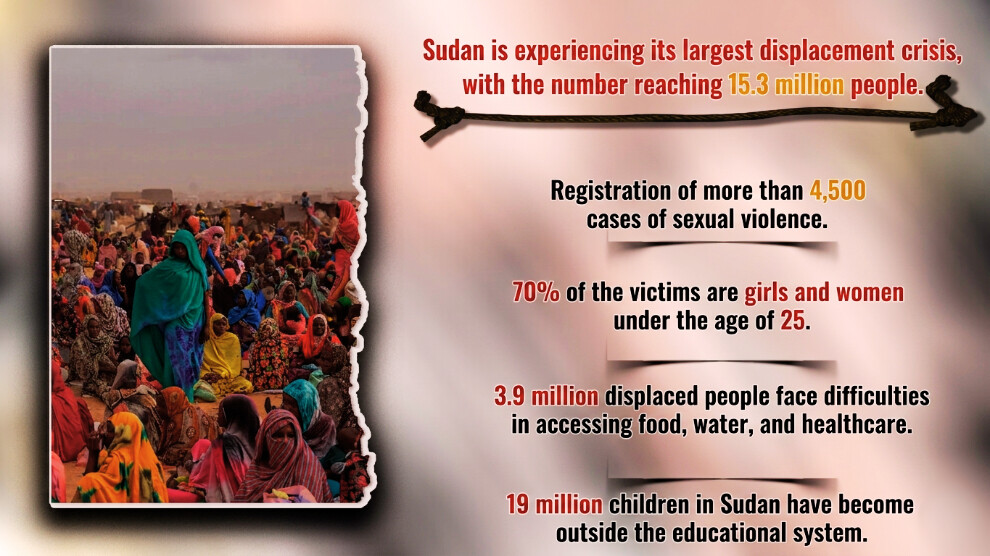
According to UN and human rights organization reports, as of early 2025, more than 4,500 cases of sexual violence have been officially reported, with indications that the real numbers are much higher due to fear, stigma, and the collapse of the health system. Approximately 70% of victims are girls and women under 25. 40% of cases were committed during displacement or on roads leading to shelters. About 65% of survivors receive no medical or psychological care due to the collapse of health services.
These violations were not isolated incidents but a systematic weapon to break and humiliate communities, as confirmed by Sudanese and international human rights organizations.
Forced displacement... A perilous journey
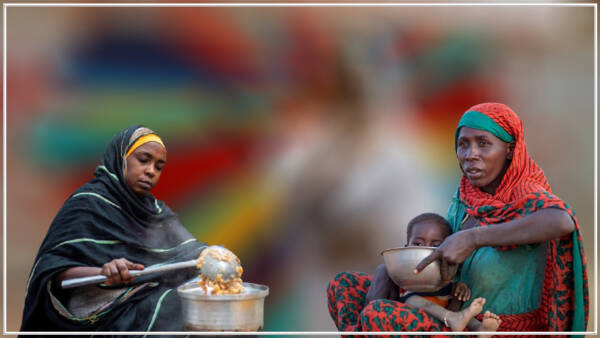
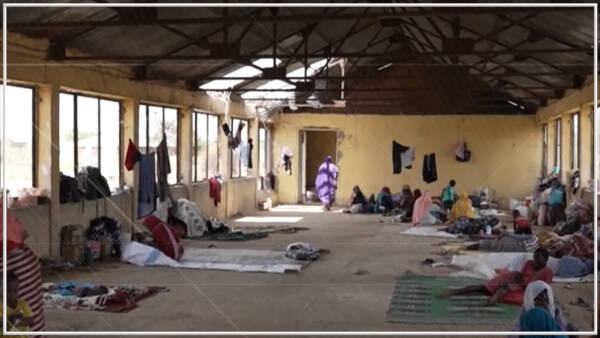
As the conflict in Sudan expands, forced displacement has become one of the country's largest humanitarian crises. Millions of women have been forced to leave their homes under bombardment or after neighborhood incursions, in escape journeys marked by danger and lack of protection.
The roads leading to displacement areas were not safe; many women walked for hours amid clashes, while others faced direct threats at checkpoints, where cases of extortion and assault were recorded according to humanitarian organization reports.
In the camps that received the displaced, suffering did not stop: overcrowding, food shortages, and the collapse of health services made conditions even more fragile, especially for women and children. Human rights reports also indicated cases of exploitation within some camps, where women were forced to "barter" food or shelter for protection, in the absence of oversight and weak security.
The displacement journey in Sudan was not merely a geographical transfer but a harsh experience revealing the scale of humanitarian collapse left by the conflict, placing women at the forefront of risks without guarantees or adequate protection.
According to a UNHCR report, Sudan is experiencing the largest displacement crisis in the world, with 15.3 million people displaced, including 9.3 million internally displaced, and 4.9 million refugees, asylum-seekers, and returnees.
Kidnapping and detention
Sudan has also witnessed a dangerous escalation in cases of kidnapping and arbitrary detention targeting women and girls in several states, particularly in Khartoum and Darfur. The UN and human rights organizations have documented a series of systematic violations, making this one of the most serious crimes committed in the context of the conflict.
UN reports indicated that women and girls were kidnapped from their homes, from public roads, or while attempting to flee combat zones. In many cases, victims were taken to informal detention sites, including private homes, military barracks, or abandoned buildings.
Detention periods ranged from a few days to several weeks, during which victims were denied contact with their families, and some were subjected to threats, intimidation, or extortion in exchange for release. The UN also documented numerous cases where abducted women were subjected to sexual exploitation, rape, gang rape, sexual slavery, and forced marriage.
Epidemics pursue Sudanese people... A collapsing health system and spreading disease
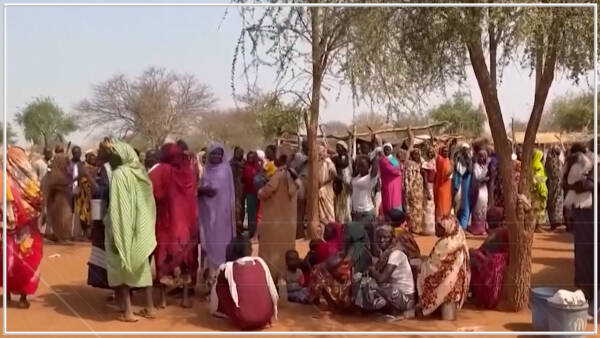
Since the outbreak of conflict, Sudan has become an epicenter of the region's worst health crises, with epidemics spreading faster than the collapsed health system's ability to respond.
In the hospitals that still function, there are medicine shortages, power cuts, and patients dying due to lack of basic care. 70% of health facilities in conflict zones are out of service. Maternal deaths during childbirth have increased. Diseases such as malaria, measles, and acute malnutrition among children have spread. In the camps, there are children suffering from severe wasting, and women giving birth in conditions unbefitting humans.
The World Health Organization has warned of an extremely dangerous humanitarian situation, with about 3.9 million internally displaced people facing difficulties accessing food, water, and healthcare, while returnees and displaced persons suffer severe service shortages amid deteriorating economic conditions. The health crisis is characterized by a dangerous duality: the country is witnessing widespread infectious diseases, malnutrition, and chronic diseases, while health facilities suffer acute shortages of medicines, staff, and financial resources, in addition to difficulties accessing healthcare due to the security situation.
The health system has been repeatedly attacked during the conflict, targeting hospitals, ambulances, and health workers, leading to the destruction of facilities and equipment and the killing and injury of many staff and patients. During the conflict period, approximately 2,002 attacks on the health sector were recorded, resulting in 2,052 deaths.
Infectious diseases have spread, and cholera has spread to more than 18 states, with 3,500 deaths recorded. Dengue fever claimed the lives of 1,084 people, and more than 2.7 million malaria infections were recorded, in addition to about 44,000 children admitted to hospitals due to acute malnutrition, increased maternal deaths during childbirth, and the spread of chronic diseases such as high blood pressure.
In Sudan today, death comes not only from weapons but also from contaminated water, from a virus preventable by vaccine, and from a health system that collapsed under the weight of conflict.
Deprivation of education... A crisis threatening an entire generation
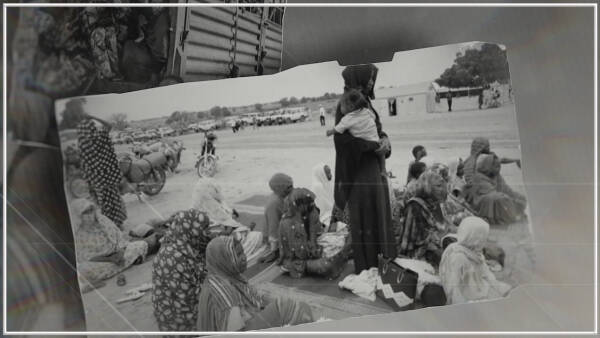
Turning to the education sector, its collapse is no longer just a side effect of the conflict but has become a comprehensive crisis threatening an entire generation, particularly girls.
Recent UN estimates indicate that more than 2.5 million girls—approximately 74% of school-aged girls—are out of school due to displacement, poverty, and insecurity. UNICEF confirms that 19 million children in Sudan are now out of the education system, a figure that places the country on the brink of the worst educational crisis in the world if the conflict continues without effective intervention.
This collapse is not limited to the absence of classrooms but extends to the infrastructure itself: more than 10,400 schools have been damaged or closed in conflict zones, while 3,200 schools are used as shelters for the displaced, making a return to education nearly impossible.
For girls, the loss of education carries compounded consequences. As poverty and insecurity increase, early marriage rates rise as an "economic solution" or a means of protection, placing girls in a cycle of violence and economic and social dependency.
Women as makers of hope... Silent resistance
Despite this harsh reality, women do not only appear as victims; many become makers of hope in their communities.
In destroyed neighborhoods and displacement camps, women create small initiatives to share food, teach children, provide simple psychological support, or organize awareness sessions on gender-based violence. Others work in local organizations or volunteer networks, combining the roles of breadwinner and activist.
These roles are not merely "humanitarian assistance"; they are acts of resistance in the face of collapse, attempts to preserve what remains of the social fabric. Therefore, it is essential to recognize women as key actors in any path toward peace and reconstruction, not just as beneficiaries of aid. Including them in decision-making, from the local level to negotiating tables, is part of justice, not a concession.
The voices of Sudanese women have remained faint despite the enormity of the tragedy
Although the stories of Sudanese women carry enough pain to impose themselves on the world's agenda, these stories have not found their way to the forefront. While women faced sexual violence, kidnapping, and forced displacement, the international scene was preoccupied with other wars making headlines. Sudan, with all its political and geographical complexity, found no place in global news bulletins. It seemed like a "distant" conflict, not threatening the interests of major powers and not imposing itself on the media agenda.
But the silence was not only international; it was also local. Social stigma made many survivors remain silent. Sexual violence in a conservative society is not easily spoken of. Fear of retaliation, loss of family support, and society's gaze caused many testimonies to be buried before reaching any organization or journalist.
In the field, humanitarian organizations worked under nearly impossible conditions. Roads were unsafe, access to areas where violations occurred was limited, and the media environment was exhausted. Journalists who tried to approach the stories faced direct threats or were prevented from entering areas that witnessed the worst crimes.
The warring parties also played another role in this silence. Each side tried to use the violence file as a political pressure card without acknowledging its responsibility. In the game of mutual accusations, the truth was lost, and with it, women's voices were lost. In the end, women remained in the front rows of pain and the back rows of attention.
The silence was not accidental; it was the result of an entire system that made the suffering of Sudanese women marginal in a conflict whose chapters are still being written on their bodies.
In conclusion, the geography of wars may differ, but the fate of women in conflicts remains a mirror of the world's humanity. Unless the international community's silence turns into action, and unless Sudanese women are given the protection, recognition, and support they deserve, the fourth year of the conflict will be just another chapter in a tragedy that could have been stopped.