
Yemeni Women in the Digital Space: Determination Defying Weak Infrastructure
Despite technical and social barriers, Yemeni women pursue digital economy opportunities through home projects, using tech tools for marketing, though a wide digital gap limits expansion.
RAHMA SHANZOUR
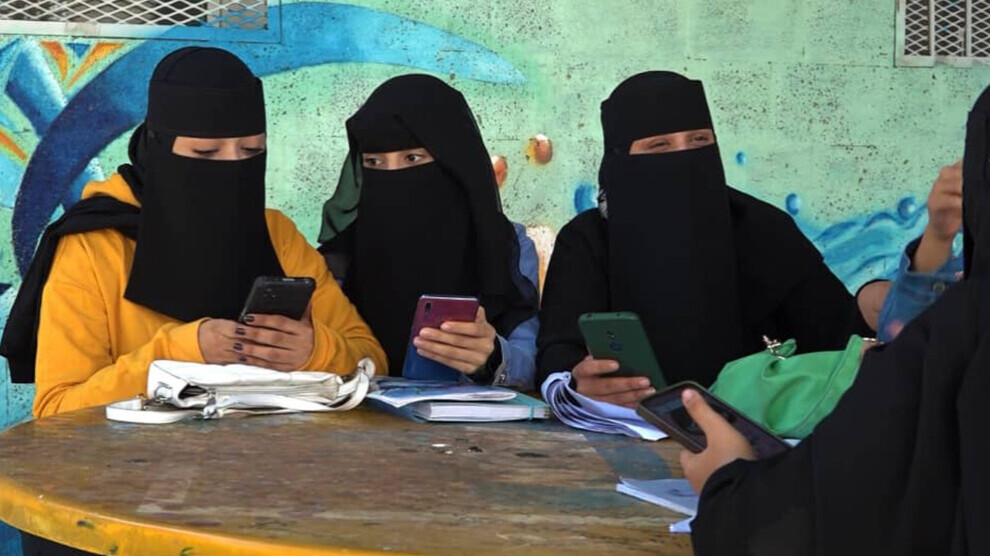
Yemen — In Yemen, growing numbers of women are turning to the digital space as a means of breaking economic isolation and creating new income opportunities, benefiting from smartphones and social media platforms to learn e-marketing skills and manage small home-based projects, despite the significant challenges posed by fragile infrastructure, including weak internet services and frequent power outages.
Despite the determination women show in benefiting from the digital transformation, the digital gap, limited opportunities for equitable access to resources and training, as well as favoritism in some sectors, continue to constitute major obstacles hindering Yemeni women's broader integration into the modern labor market and the digital economy.
Home-Based Projects... and Limited Impact in the Face of Unemployment
In recent years, women's home-based projects have spread across multiple fields, from confectionery to e-commerce. However, their impact on addressing mass unemployment remains limited. Nevertheless, some women attempt to self-utilize available technology to create alternative opportunities and confront the challenges of high rental costs by promoting their products in the digital space.
It should be noted that there are no precise official statistics on the number of e-commerce projects in Yemen. However, available indicators show that the number of internet users in Yemen reached approximately 6.16 million people by January 2024, representing 17.7% of the total population—a gradually growing digital base representing a potential market for women working in this field.
The Dream of Expansion Collides with Reality
Inas Abdo (36), owner of a home-based confectionery project, says she tried through her project to provide an income source to help her cope with difficult economic conditions, but she soon encountered obstacles that prevented its expansion.
She adds: "I decided to open a confectionery project and create a social media page to promote the products, but I faced major challenges. I suffered daily due to weak internet, the exorbitant cost of data packages, and frequent power outages. Continuing to work under these conditions is like a miracle. Weak internet and electricity drain our energy and time. If there were real support for infrastructure, thousands of women could work and produce from their homes."
Technical and Economic Challenges Hindering Continuity
For her part, Yemeni journalist and activist Abrar Mustafa affirms that working in the digital space has become an increasingly popular option for Yemeni women in recent years to confront unemployment and improve income. However, it simultaneously imposes major challenges that may hinder the success and continuity of projects.
She explains that women working in e-marketing or managing home-based online projects face daily difficulties due to frequent power outages and weak internet service—two essential factors for any digital activity. She adds that these conditions make it difficult to expand the customer base and reach new markets, especially given the difficult economic conditions that have affected many families' purchasing power.
She says: "The income from these projects is often unstable. A project owner may achieve sales and profits on a given day, but on other days she may be unable to cover basic costs." Some products may also spoil due to power outages, resulting in direct losses to the limited capital women rely on to start their projects.
She believes that the challenge is not limited to launching the project but extends to the ability to continue, expand, and overcome obstacles until it reaches a stage of stability. She points out that every economic opportunity available to women in Yemen is accompanied by a series of challenges, especially in digital marketing and selling products online.
Social Challenges and Early Failure Stories
Difficulties were not limited to the technical and economic aspects but extended to social and cultural challenges that limit some women's ability to expand their businesses. Abrar Mustafa explains that many prefer to keep their customer base limited for fear of harassment or misuse of social media after appearing in the digital space.
She affirms that many women who turned to e-commerce and e-marketing in search of an income source were forced to stop in the early stages of their projects due to the interplay of several factors, most notably power outages, weak internet, and losses resulting from product spoilage or marketing difficulties.
She adds that the difficulty of renting commercial spaces pushes the majority of women to manage their projects from within homes, which reduces expenses but imposes additional challenges related to reaching customers and achieving the desired outreach.
The Digital Gap Increases Challenges, Yet Success Stories Persist
The challenges facing Yemeni women are not limited to weak infrastructure alone but extend to the digital gap related to access to technology and training. Many women, especially in rural areas, still face difficulty in obtaining stable internet services or acquiring the digital skills necessary to enter the e-labor market, limiting their ability to benefit from the opportunities offered by the digital economy.
Despite these challenges, some Yemeni women have managed to turn social media into platforms for marketing and selling products and services, benefiting from home-based projects and online self-training. These experiences have contributed to providing income sources for families and demonstrated the ability of Yemeni women to adapt to difficult conditions and innovate alternative solutions to continue working and producing from home.
A study conducted on 101 businesswomen in Yemen confirms that social media has become a widely used tool among women and has significantly contributed to enhancing marketing, promotion, and business communication strategies, reflecting the potential of this sector despite existing obstacles.
Those interested in entrepreneurship believe that expanding women's participation in the digital economy requires investment in communications and energy infrastructure, alongside providing specialized training programs in e-marketing, project management, and digital commerce. They also emphasize the importance of providing microfinance and support initiatives targeting women entrepreneurs, helping them overcome initial obstacles and transform their projects into sustainable income sources.
A Long Road to Stability
Activist Abrar Mustafa concludes by saying that building a successful digital project requires time, patience, and financial resources to help the project owner continue. She notes that many women need a period ranging from six months to a full year before their projects begin to achieve a real presence and stable returns. During this period, they continue to spend from their own savings, hoping to reach a stage of stability and growth.
Despite the technical, economic, and social challenges facing Yemeni women in the digital space, many of them continue to view technology as an important window to improve their living conditions and create job opportunities from within their homes. However, expanding women's participation in the digital economy requires improving internet and electricity services, and providing training programs and financial support that enable women to develop their projects and transform them into sustainable income sources.
At a time when the world is moving toward the digital economy as one of the most important drivers of development and job creation, Yemeni women continue their daily battle to prove their presence in this field, armed with determination and ambition, despite a reality weighed down by crises and weak resources.