
Women's Solidarity Initiatives Accompany Survivors of Algeria's Fires
Beyond the casualty figures of Algeria's Jijel, Bejaia, and Tizi Ouzou fires, survivors' hospital suffering is met by solidarity initiatives offering essential supplies and support.
NAJWA RAHIM
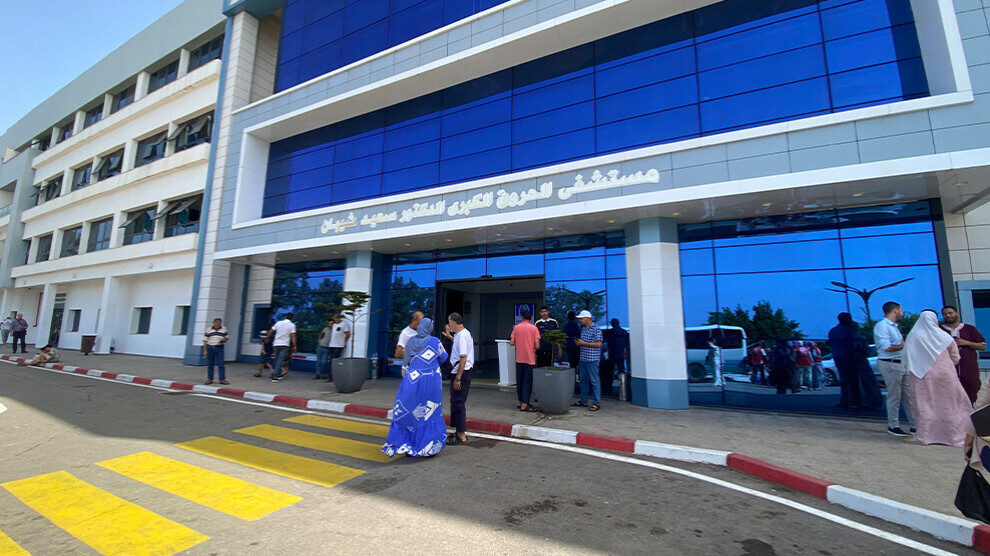
Algeria — The suffering of survivors of forest fires in Algeria does not end once they leave the danger zones. For those who find themselves in hospital beds at the major burns hospital "Said Chibane" in Zeralda, another phase of pain and recovery begins, amid daily needs that go beyond medical treatment to include essential supplies for women, men, and children.
During a field visit by our agency to the hospital, we observed some of the solidarity initiatives accompanying the survivors of the fires that particularly affected the provinces of Jijel, Bejaia, and Tizi Ouzou.
Inside the hospital, solidarity was not limited to visiting patients, but extended to collecting and providing supplies needed by patients and their families during the treatment period, as the repercussions of the fires continue to affect their daily lives.
In this context, the Algerian Red Crescent, Sour El Ghozlane municipality office in Bouira province, made a visit to check on the conditions of survivors and stand by them and their families.
The head of the Sour El Ghozlane municipality office in Bouira province, Mariam Ammara, said that the team went on a visit to check on the health and safety of survivors of the recent fires in Jijel, stressing that the goal was to alleviate the suffering of patients and their families.
The team did not come empty‑handed, carrying essential supplies including diapers, sanitary pads, bottled water, underwear for both women and men, as well as milk and other items.
The nature of these supplies reveals needs that often remain hidden behind casualty figures and disaster statistics. Beyond burns and injuries, there are women who need sanitary pads and underwear, patients who need daily supplies, and families facing additional burdens while a family member is in hospital.
Mariam Ammara stressed that this initiative would not have been possible without the contributions of citizens who provided whatever assistance they could, considering that what is given to the affected is "the least we can offer them."
Feminist Solidarity from Social Media to the Hospital
In another scene of solidarity, a group of volunteers came to the hospital as part of a feminist initiative launched on social media. Nouha Mohammed, one of the volunteers, said the initiative is "100 percent feminist," explaining that the participants are young women who did not know each other but met through social media and decided to unite their efforts to help survivors and patients from the fire victims.
The volunteers brought supplies specifically for women and girls, including sanitary pads, underwear, and other needs that may seem simple but become essential for a woman spending days in hospital after surviving a fire.
The volunteer issued an appeal to citizens wishing to continue the solidarity, calling for the provision of burn ointments and cotton bandages, as these are among the needs still required.
From Bejaia to Zeralda... A Survival Story
During the visit, our agency also met Fatima Ahmed, a visitor from Bejaia province who came to "Said Chibane" hospital to check on her relative who survived the fires. She said her relative survived the fire and received emergency care, noting that doctors and nurses provided the necessary support and care, and that she came out of surgery and is now in good health.
Although her relative's story has a reassuring ending, it serves as a reminder of the scale of danger experienced by residents of the affected areas, and that surviving the flames does not necessarily mean the end of the disaster's impact.
From Jijel, Bejaia, and Tizi Ouzou to the major burns hospital in Zeralda, the stories of survivors continue to remind us that fires leave behind not only burned forests and damaged homes, but also injured bodies, anxious families, and women and girls who need care and support that may extend beyond their discharge from hospital.
In the face of these effects, popular initiatives, the Red Crescent, women's groups, and volunteers form a support network that complements medical care, giving survivors a sense that they are not alone in facing the consequences of the disaster.