
When Doors Close on Dreams... The Story of an Afghan Girl and Education Deprivation
Five years of Taliban rule have suffocated Afghan education, barring girls from school, eroding quality, and deepening staff shortages amid growing student despair.
BAHARAN LAHIB
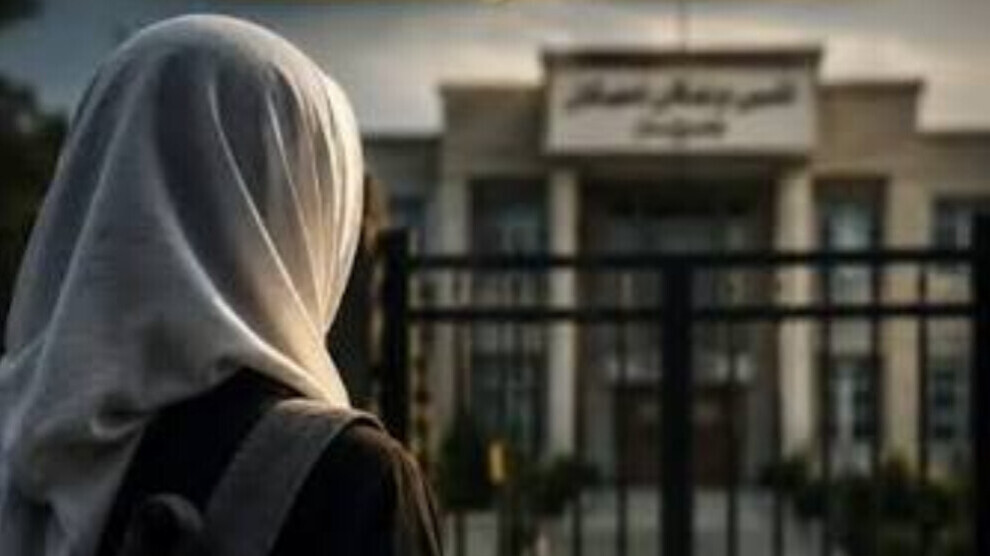
Kabul — The Taliban's control over Afghanistan is approaching its fifth year. During these years, girls have been denied the right to continue their education beyond the sixth grade. To survive, some schools—particularly private ones—have changed their status from "school" to "Dar al-Ulum" (religious seminaries), institutions where approximately twenty subjects are taught, the majority of which are religious studies.
Nevertheless, graduation from these seminaries does not open the door for girls to work outside the home, and even if they have financial means, they have no option but to establish religious schools.
Schools and universities for males are also suffering from a clear decline in the quality of education. Alongside the expansion of religious subject teaching, these institutions face an acute shortage of specialized teachers and professors. After the Taliban's decision to close universities to girls, a large number of male professors resigned in protest, while others left the country, like millions of Afghans. At the same time, female professors were completely banned from teaching, despite Afghanistan already suffering from a shortage of qualified academic staff.
According to a number of school and university students, "All that concerns the Taliban is our clothing, beards, and turbans, and this year our smartphones have become a new obsession for them. Teaching methods, the absence of professors during class hours, and the poor quality of education have never been a concern for the Taliban."
This year, the university entrance exam was also held without the participation of girls, and its results were announced a few days ago. Women's rights activists consider this measure by the Taliban a clear exclusion of women from the educational system, gender-based discrimination, and a flagrant violation of their right to education.
Faiqa Noorzi, one of the girls who was in seventh grade when the Taliban returned to power, lives in Kabul province. She spoke about her dreams and how she was deprived of participating in the university entrance exam.
Faiqa Noorzi said, with a smile mixing sorrow with hope on her lips: "I dreamed of becoming a pilot, and of being among the most famous pilots in the world. I made great efforts to achieve this dream, but the Taliban did not allow me to reach it."
She then looked silently around her, took a sip from the glass of water in front of her, before continuing: "I always think to myself: is there still, in this age full of technology and progress, anyone who prevents others from learning? Are all Islamic countries and Islam like this? Do the sons of the Taliban feel the same pain I feel, unable to reach their dreams and desires? These questions run through my mind nonstop, even stealing sleep from my eyes at night. The only thing that calms me sometimes is seeing that all the women of Afghanistan are trapped in the same fate as mine."
There was deep pain in Faiqa Noorzi's eyes—pain that was not unfamiliar, as every girl and woman in Afghanistan carries it on their shoulders every day. During the conversation, she suddenly stood up, left the room for a few seconds, then returned apologizing, saying: "Whenever I think about my future and the future of my two younger sisters, I feel my heart being squeezed. Although my family supports us, the pain never leaves me. He always told me that this dark night will one day, through women's struggle, turn into a bright morning."
She added: "On the day the university entrance exam was held, and also a few days ago when its results were announced, I felt as if the whole world was collapsing over my head. If the Taliban were not here, I would have been among the participants in the entrance exam, and I am absolutely certain that I would have scored one of the highest grades."
In conclusion, Faiqa Noorzi said: "Despite all the pain that squeezes my heart every day, I am confident that the conscious women in our society will change this reality. I believe that women will one day play a fundamental role in building Afghanistan's future, and it is our duty to start the change from this moment within our society."