
The “Women’s Time” Association Documents the Reality of Services in Kurdish and Demands More inclusive Policies
The “Women’s Time” Association in Istanbul continues its efforts to empower Kurdish women to access anti-violence services in the Kurdish language, amid the limited services provided.
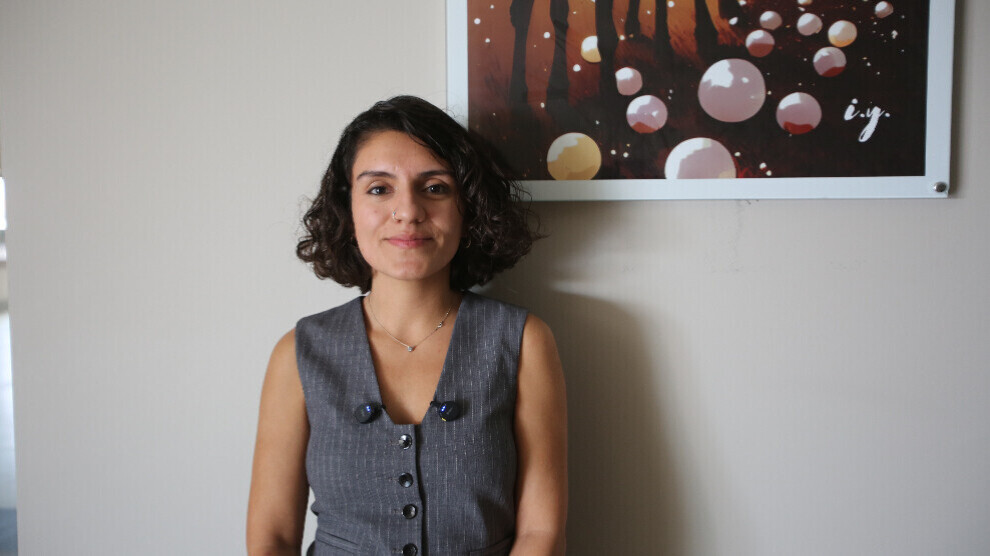
ARJIN DILEK ÜNCEL
AMED– Many studies indicate that Kurds constitute between 15 and 18 percent of the total population of Istanbul, with large numbers concentrated in areas such as Esenyurt, Bağcılar, Fatih, Zeytinburnu, Gaziosmanpaşa, and Esenler. A large part of the Kurdish presence in the city dates back to the migration waves that Turkey witnessed during the 1980s and 1990s, which were linked to the war and conflicts related to the Kurdish issue, alongside economic and social reasons that pushed thousands of families to leave their regions and settle in Istanbul.
But reaching the city was not the end of the suffering. The Kurds faced discrimination and racism that extended even to their right to use their language. In this context, Kurdish women found themselves in a more vulnerable position, as their suffering from gender-based violence intersected with linguistic and institutional discrimination, so that language in some cases became an obstacle to seeking help and obtaining protection.
For a woman exposed to violence, the ability to accurately narrate what she was subjected to, understand legal procedures, and communicate with the concerned authorities are not secondary matters, but may be decisive in her ability to exit the circle of violence and reach a safe place. When she cannot express her experience in her mother tongue or does not find someone who understands her, this barrier may increase the difficulty of accessing justice and protection.
The case of Fatma Altın Makas embodies one of the most tragic cases in this context. In 2020, she was raped by her husband's brother, and when she went to the police station to file a complaint, she was told that the absence of a Kurdish language interpreter prevented her statement from being taken. After that, she was killed. Her case became a painful example of the risks that can result from the absence of services capable of communicating with women in their mother tongue, especially in moments when they urgently need protection.
Hence, the "Women's Time" Association has continued its work in Istanbul for six years, placing the fight against violence against Kurdish women at the heart of its activity. Its efforts are not limited to confronting violence practiced by individuals, but extend to discussing the policies and practices that it believes contribute to the continuation of violence and discrimination, and working to enhance Kurdish women's access to services and protection in their mother tongue.
Access to Services Combating Violence Against Women in the Kurdish Language
The "Women's Time" Association has been working for a year to enhance the availability of municipal services in the field of combating violence against women in the mother tongue, especially in Kurdish, in an endeavor to respond to the needs of Kurdish women at the local level, and to place their demands within a broader framework of advocacy and policy change.
In this context, the Association published last August a monitoring report titled "Women's Access to Local Government Services for Combating Violence in the Mother Tongue," in which it addressed the extent of the availability of services in the mother tongue, especially Kurdish, within the anti-violence mechanisms in the Istanbul Metropolitan Municipality and the 39 district municipalities.
The report showed that the provision of public services related to combating violence in the mother tongue has not yet turned into an established institutional practice within municipalities, as the provision of these services depends to a large extent on individual initiatives and personal efforts of workers in them. Only three municipalities in Istanbul provide services in the Kurdish language within the field of combating violence against women.
Newroz Ünverdi, one of the founders of the "Women's Time" Association, confirmed that the Association will continue its efforts aimed at empowering Kurdish women to access anti-violence services and mechanisms in their mother tongue.
She said that the Association works with Kurdish women who were forced to migrate to Istanbul as a result of war and conflict conditions, explaining that combating violence constitutes a fundamental axis in its work, alongside implementing advocacy activities aimed at influencing policies related to combating violence and enhancing mechanisms supporting these efforts.
She explained that the Association worked over the past year to empower Kurdish women residing in Istanbul to access the anti-violence mechanisms provided by local governments in the Kurdish language, noting that the Association's team visited, during the report preparation period, 39 district municipalities, alongside the Istanbul Metropolitan Municipality, and held meetings with them to assess the reality of services provided in the Kurdish language.
She noted that these meetings contributed to preparing a report that monitors the number of municipalities that use the Kurdish language within anti-violence mechanisms, and the municipalities that provide support services in this language, as well as exploring ways to expand the scope of these services and ensure women's access to them in their mother tongue.
"We Will Present Our Report to Political Parties"
Newroz Ünverdi said that there are support services in municipalities, but these services do not reach women. "In this regard, we prepared a policy document that includes a number of policy proposals. As a result, we presented our document to five municipalities in Istanbul."
She added: "This work will not be limited to that; we want to visit the public centers of political parties to explain the importance of the right to the mother tongue for women. We are organizing work aimed at ensuring women's ability, while exiting the circle of violence and moving to safe places, to express themselves in their mother tongue, as well as ensuring they are understood."
She pointed out that they recently organized a workshop in Istanbul titled "From Women's Experiences to Building Peace: Justice, Memory, and the Democratic Future," during which they discussed the impact of wars on women's lives, alongside discussing how they envision peace.
She added: "We intend to continue these discussions in our upcoming work, and in all areas where women are present. Because these works are important in terms of developing advocacy efforts, the development of women's struggle, and also in terms of being part of the struggle for peace."
She noted that their goal is for women to be able to live in safer places, eliminate the destruction left by war and war crimes, and address psychological trauma. "We build our discourse based on the fact that women are the direct actor in the peace process. Each one of these works points to the active role of women in the peace process."