
After Years of Displacement… How Do Families in Khartoum Welcome Eid al-Fitr?
Women returning to Khartoum say life is regaining rhythm, with services and families home despite challenges like transport issues and intermittent electricity and water outages.
Aya Ibrahim
Sudan-A number of Sudanese families have expressed great joy at returning to their homes in the capital, Khartoum, to spend the Eid al-Fitr holiday after a displacement that lasted three years due to the ongoing conflict between the Sudanese army and the Rapid Support Forces since April 2023.
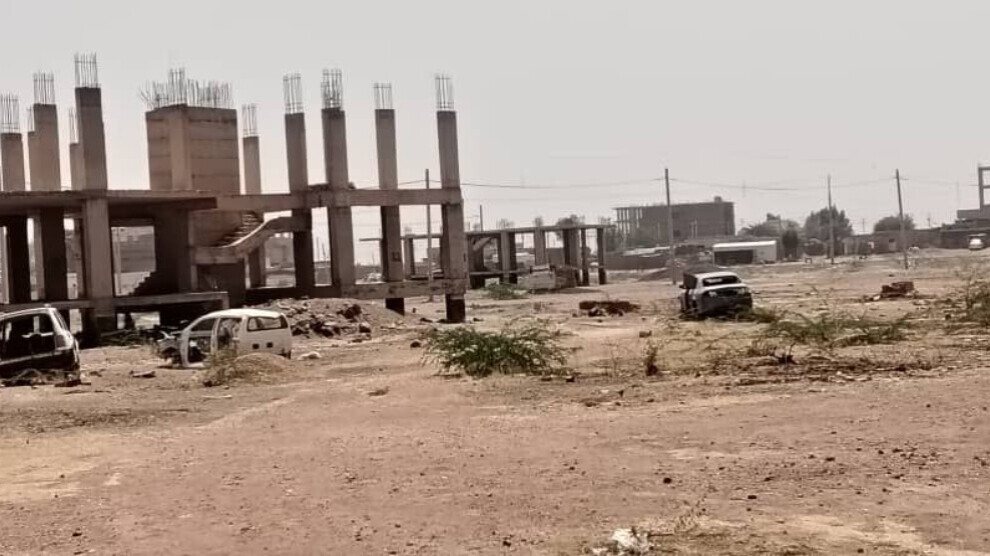
Our agency toured several areas in Khartoum that witnessed intense fighting between the army and the Rapid Support Forces. It documented widespread destruction of infrastructure, alongside the return of a large number of families to their homes after the army regained control of the capital. The agency also observed a gradual return to life in various areas despite ongoing challenges, most notably unstable electricity and water supply in some neighborhoods, along with government promises and efforts to urgently restore essential services.
With the arrival of Eid al-Fitr, many families have set out on the journey back to the capital from the regions they had previously fled to. Travel stations have been crowded with families eager to return and spend the holiday in their homes, with clear signs of joy visible on their faces as they prepare for the journey back. There are expectations that more families will continue returning as stability in Khartoum improves significantly.
Life Returns Despite the Effects of Conflict
Hanadi Mahjoub, a resident of the Jabra area in southern Khartoum, returned to her home several months ago. She noted that she initially faced difficulties related to transportation between areas, as well as electricity and water outages. However, she explained that conditions later improved after the restoration of electricity, water, and basic services in some areas.
Regarding her family’s preparations to celebrate Eid al-Fitr at home after years of displacement, she said that Eid traditions have not changed much, whether in buying children’s clothes or preparing baked goods. She expressed her happiness at spending the first Eid in her home after the conflict, despite it having been looted.
Hanadi called on all families to return to their homes and contribute to rebuilding Khartoum, مؤكدة أن “Khartoum will return better than before thanks to the determination and strength of those who return to it.”
Accumulation of Waste in the Streets
“Life has gradually begun to return to Khartoum after the situation was very difficult when we first came back to our home months ago. The streets were filled with looted items and services were unstable,” said Iman Imad, a mother of two daughters, who confirmed their preparations to celebrate Eid al-Fitr with markets reopening and a renewed sense of holiday joy inside their home in Khartoum.
She pointed to the stabilization of electricity and water, as well as the reopening of hospitals and schools. However, she highlighted some remaining challenges, including the accumulation of waste in the streets, which has led to the spread of mosquitoes, in addition to the difficulty of transportation and its rising costs between areas. “We hope the situation will improve and that everyone can start anew,” she added.
The return of families to Khartoum was not easy; rather, it was a dream realized through collective efforts after the capital was regained by the army. Employees have resumed work from within the capital, following the return of ministries after a period during which government activities had been moved to Port Sudan in the Red Sea State, which had served as a temporary administrative capital.
“The More Families Return, the Greater the Stability”
For her part, Ibtisam Mohammed Ali, a housewife who returned to Khartoum after being displaced to the Northern State, said: “The situation in Khartoum has stabilized to a large extent,” emphasizing that returning home contributes to psychological stability.
She encouraged families to return to their homes to help rebuild the capital, stating: “The more families return, the greater the level of stability,” expressing her great happiness at celebrating Eid al-Fitr this year in her home with her family.
Despite the ongoing challenges in several neighborhoods, testimonies from returning women confirm that the return of residents is a key step toward restoring stability and rebuilding the capital, and that Khartoum is capable of rising again through the determination of its people and their insistence on starting a new life.