
Newspapers Street: Female Journalists’ Return Revives Sudanese Journalism
After years of war, Sudanese female journalists return to Khartoum's "Newspapers Street," carrying memories and hopes of restoring media activity, reflecting determination to revive journalism's institutions.
AYA IBRAHIM
SUDAN_ "Newspapers Street," which includes dozens of media institutions and the headquarters of a number of Sudanese newspapers, is considered one of the most prominent sites that suffered severe damage due to the ongoing war between the Sudanese army and the Rapid Support Forces since 2023. The street, which used to buzz with life and journalistic activity, has turned into an area dominated by ruin, with newspaper papers scattered and weeds covering the walls of its buildings.
Before the outbreak of the war, Newspapers Street was a meeting place for journalists, activists, and readers, gathering under the shade of trees to exchange opinions and discuss public issues, while tea and coffee vendors offered their drinks, in a scene that combined professional activity and daily life. From this place, journalistic investigations that won awards were launched, along with humanitarian and professional initiatives that contributed to developing media work in Sudan, so that the street remains a witness to a phase rich in journalistic and social movement.
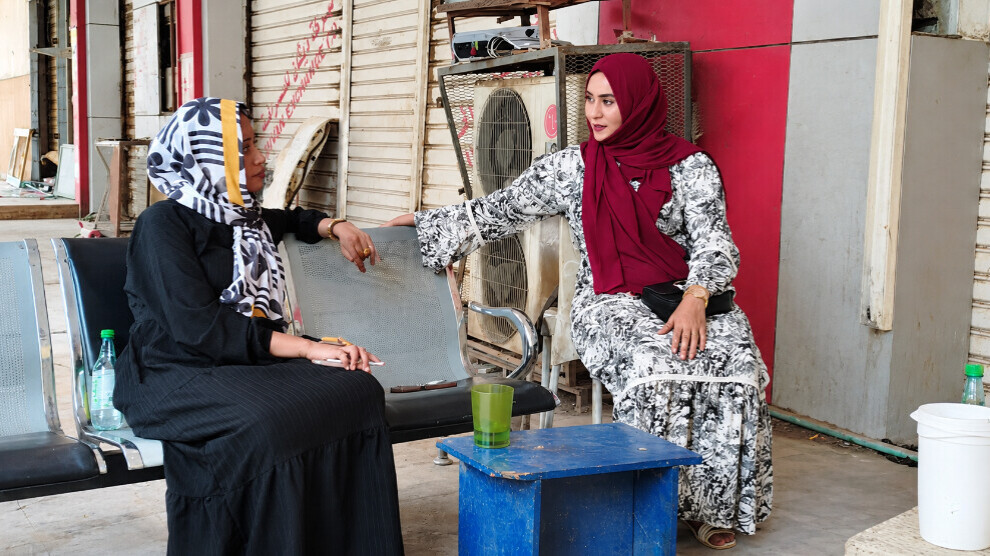
Despite the destruction left by the conflict, life has begun to stir again in the street and the surrounding areas, with the return of female journalists to recover their professional memories in a place linked to important stations in their careers. This return carries hopes for a better future, in which the conditions of female journalists improve and media institutions regain their vitality, to continue performing their role in the Sudanese journalistic scene.
Journalist Safaa Taj expressed her happiness at her return, accompanied by a number of her colleagues, to "Newspapers Street" after years of conflict, expressing her hope that the rest of the female journalists will join them in the coming period. She also looks forward to the return of print newspapers in conjunction with the return of female journalists to the street, especially in light of the circulating news about resuming their publication.
She confirms that life in Khartoum is heading toward improvement day after day, noting that female journalists were able, during their meetings in "Newspapers Street," to hold meetings and organize workshops in which they discussed the issues of journalists and ways to resume the publication of print newspapers.
She notes that funding represents one of the most prominent challenges facing these efforts, calling for the necessity of settling the conditions of female journalists, especially in light of the roles they undertook during the conflict.
The headquarters of a number of Sudanese print newspapers are located in the central area of old Khartoum, which gave the street containing them the name "Newspapers Street." It is surrounded by famous streets, which made it one of the areas severely damaged by the battles that continued for long months since the outbreak of the conflict.
A Step to Bring Life Back to the Street
For her part, journalist Ijlal Ismail notes that "Newspapers Street" is no longer as it was before, following her return and that of her colleagues to it after a journey of forced displacement imposed by the conditions of the conflict. But, on the other hand, she expresses optimism about the future, considering that the daily presence of a number of female journalists in the street represents a promising step that paves the way for the return of more of them in the coming period.
She explains that female journalists miss print newspapers, despite some of them continuing to work in electronic newspapers, stressing the importance of returning to the offices and resuming work from the headquarters of media institutions.
She said that "homelands are built with pens, not just with stones," expressing her hope that the coming phase will witness serious steps to resume the publication of print newspapers, whose absence she believes limits the presence of female journalists in the media scene.
With a tone full of optimism, journalist Huda Al-Najjar says that their return to "Newspapers Street," despite the suffering and challenges, represents a source of great happiness for them, noting her deep longing for the print newspapers that have long been associated with this street, wishing for their resumption as soon as possible.
The feelings of joy at the return are not limited to the female journalists alone, as Ibtisam Daoud, who has been working in tea selling on this street for 27 years, shares these feelings with them. She returned to it just like the female journalists, expressing her happiness at the return and wishing for the return of the others.
The return of Sudanese female journalists to "Newspapers Street," after years of conflict that the country witnessed, represents an important step carrying within it hope and optimism for many of them. It opens the door for the resumption of the activity of various media institutions, allowing a number of female journalists to return to practicing their profession again, after they lost their jobs since the outbreak of the conflict.