
Iraqi journalist: culture, competence build professional media, protect women journalists
Iraqi journalist Sawan Al-Jazrawi said culture, knowledge, and competence are the foundation of responsible media, stressing protecting female journalists from threats and harassment to they work freely.
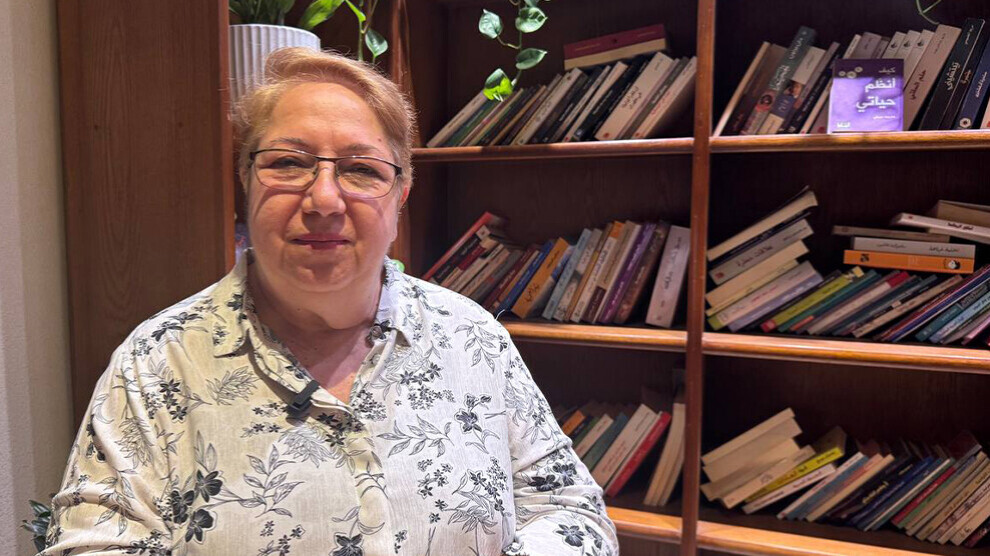
RAJAA HAMID RASHID
IRAQ-The Iraqi press has witnessed remarkable transformations across its various stages, moving from the restrictions of censorship and limited freedom of expression to a broader space of media pluralism, accompanied by professional challenges related to credibility, freedom of expression, and commitment to the ethics of journalistic work.
In this context, Iraqi journalist Sawsan Al-Jazrawi explained that her passion for writing, art, and literature began during her school years, and that her upbringing in a family environment interested in culture and reading contributed to strengthening her inclinations, leading to her choice to work in journalism and devote herself to it.
She noted that professions and various fields before 2003 were subject to government censorship and restrictions that defined the spaces of work and expression, and it was not easy to transcend them, despite the existence of a limited margin for expression within the permitted frameworks.
She added that women were present in the media field, but their role did not reach the hoped-for level compared to what women achieved in other countries, noting that society did not easily accept women's work in journalism, media, and art, which constituted a challenge to their professional presence.
Media Pluralism
Sawsan Al-Jazrawi confirmed that media pluralism allows for the diversity of ideas and the exchange of opinions, unlike one-directional journalism that limits freedom of expression. She recalled her experience at the Iraqi Media Network, explaining that she entered the Radio and Television Building, which later bore the name Iraqi Media Network, as a member of the Board of Trustees on 23 November 2004, before assuming the management of the Media Training Institute, previously known as the Radio Training Institute.
She explained that the Media Training Institute was among the prestigious institutions that produced prominent media competencies, and that preparing announcers required years of training and education. She noted that she took it over after it was destroyed during the 2003 bombardment, almost devoid of furniture, supplies, and documents, which forced her to start from scratch to rehabilitate it.
She considered that her management of it as the first female director was among her most prominent professional achievements, noting that she supervised about 60 training courses in engineering and media fields, with the participation of prominent professors, media professionals, and academics, and these courses contributed to laying the first building blocks for the institute's development.
Challenges of Reconstruction
Regarding the difficulties they faced, Sawsan Al-Jazrawi explained that rehabilitating the Media Training Institute faced challenges due to the lack of equipment and limited financial resources, confirming that cooperation with the Network's administration contributed to establishing a computer laboratory and restoring the radio laboratory.
She criticized the expansion in the use of the title "media professional" without possessing the necessary professional skills, stressing that media work requires knowledge, experience, professional progression, and mastery of writing news and reports and managing dialogues.
After more than 20 years in the media field, she believes that the media has not reached full freedom, considering that absolute freedom is not realized in reality, and that uncontrolled expression may turn into an attack or the dissemination of incorrect information, or be driven by personal disputes.
She added that the multiplicity of parties and the difference in their orientations and beliefs impose restrictions on media work, but she noted that there is room for dialogue despite these restrictions.
Threats to Female Journalists
Sawsan Al-Jazrawi confirmed that protecting female journalists from threats is a shared responsibility between the judiciary, unions, and media institutions, noting the weakness of the unions' role, and the escalation of harassment that pushes some female journalists to leave the profession. She stressed that targeting women because of their opinions and defense of their rights limits their participation in public discussion and law-making, confirming the necessity of providing the necessary protection for them.
She criticized the use of social media to defame female journalists and attack their reputations and honor, considering that these practices depart from the supposed role of these platforms in media, education, and conveying information, and that women are often the first target of them.
Freedom of Expression
She directed a message to young female journalists, in which she stressed the importance of culture, knowledge, and mastery of professional tools, confirming that culture represents a fundamental weapon for women in defending themselves and imposing their presence.
She said that a capable female journalist can prove her abilities without relying on others or submitting to compromises and concessions, calling for awareness and responsibility in behavior, appearance, and speech, based on the fact that a female journalist represents, in the eyes of the public, an image of Iraqi female media professionals.
At the end of her interview, Sawsan Al-Jazrawi called on journalistic unions and media institutions to embrace competencies, and to deal with women on the basis of their intellectual and professional capabilities, not on the basis of being a woman, confirming that looking at her as a human being possessing thought, intellect, and competence opens the field for the emergence of solid media figures and reaching them to advanced stages in media work.