
Every Day a New Battle... Palestinian Woman Struggles to Provide Food and Medicine for Her Children
After losing her husband before her eyes and being forced to flee with her four children, Nihad Abu Salah found herself alone in the face of hunger, disease, and displacement, while her children suffer from malnutrition.
NAGHAM KARAJA
Palestine — Thousands of Palestinian families in the Gaza Strip are living in harsh humanitarian conditions, where the repercussions of displacement and loss of the breadwinner intersect with food shortages, declining health services, and lack of security. While mothers try to protect their children from the dangers of war, the simplest daily needs—food, water, and medicine—become a new battle for survival.
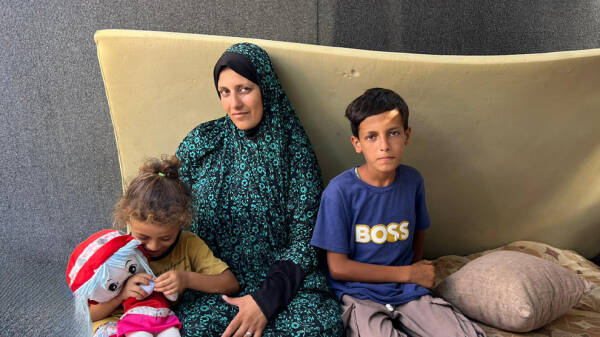
Nihad Abu Salah, 32, was not looking for anything but a way out for her four children. But the path of escape from the northern Gaza Strip passed over the bodies of those closest to her. Her husband and several family members were killed before her eyes as they were returning from burying relatives, while Israeli forces were besieging the area and firing at displaced people. In a moment when she had no choice but to flee, she carried her children and crossed over their bodies, moving forward under fire in search of a safe place.
There was no room for mourning or weeping. Drones were flying over the shelter center in Beit Hanoun, monitoring the movement of displaced people, and any pause could turn the escape into another death. "I saw my husband's body, his parents, and his brothers in front of me, but I could not stop or even look back. My children were with me, and the drones were surrounding the place. I feared they would fire at us if we stayed. I walked over the bodies, knowing I was leaving my husband behind, but I was trying to save my children."
A Bitter Memory That Remains
Nihad Abu Salah left with her children, but what she left behind did not leave them. The image of her husband lying on the ground remains etched in the memory of her four children, while the mother alone carries the burden of protecting them. "My children saw their father lying on the ground, and I could not protect them from that scene. Even after we left, fear remained with them, and they no longer feel safe. Every sound or raid brings them back to the moment they lost their father."
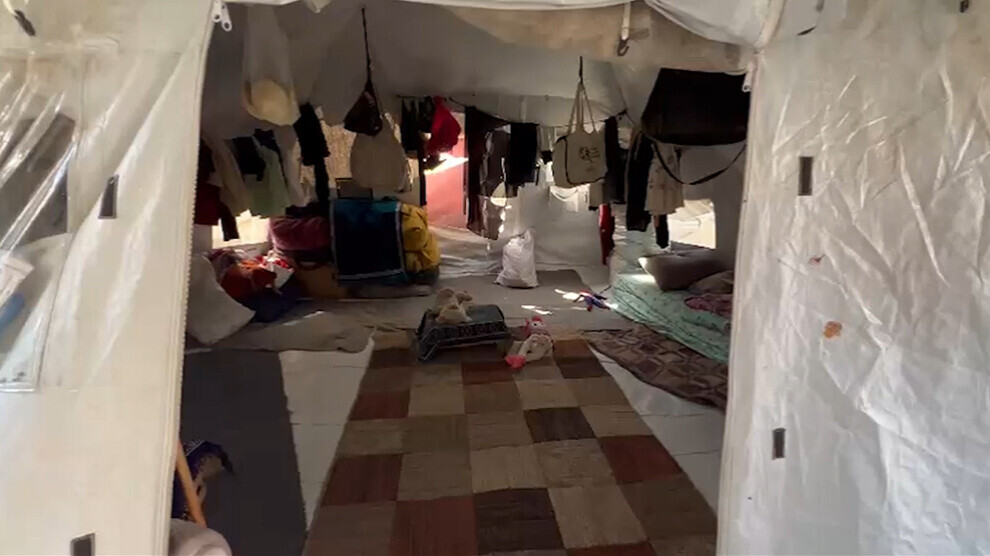
The family's move to the south of the Strip in search of safety marked the beginning of a new chapter of fear. The place where they were displaced was raided, and the children once again faced an armed scene that brought back the terror they had not been able to overcome. Thus, their loss was not limited to losing their father but extended to losing their sense of security, while they were forced to face new dangers before they had the chance to process their first trauma.
The displacement south was an attempt to save what remained of the family, but it did not put an end to their suffering. Nihad Abu Salah became solely responsible for four children, providing food, water, medicine, and protecting them in conditions that offer no minimum of stability. "I have no income to rely on. Sometimes I do not know how I will provide their next meal."
Her hardship reached the point where she had to sell her mobile phone to buy flour. "I sold my phone to buy flour for my children. I had no money, and I had to choose between keeping my phone and feeding my children—I chose food. A mother cannot see her children hungry and say she can do nothing."
Illness Exacerbates the Family's Suffering
Amid these circumstances, her 12‑year‑old son Muhammad faces a health crisis that increases the family's fragility. His mother says he suffers from a heart condition, and his health is deteriorating, while access to treatment and medical follow‑up has become limited due to the war and the decline in health services, in addition to her inability to afford private sector treatment.
She explained: "Muhammad needs treatment, and his health is deteriorating, but I cannot buy what he needs from the private sector. I took him to clinics, but I can no longer afford the care he needs. What pains me most is knowing my child is sick and I have no money to save him."
Four Children and Malnutrition
The problem does not stop with her son Muhammad's illness. She noted that all four of her children suffer from malnutrition, as providing sufficient and balanced food is difficult, while the aid reaching the family is no longer able to cover their needs.
She noted that the meal they get is the result of long waits in aid queues, while water has become a difficult daily task. Nihad Abu Salah stands in lines to get food and carries water jugs herself, after having to perform all the roles the family once shared. "Sometimes I feel like I am running all day after the simplest things they need, and yet I cannot provide them with a normal life."
Orphans Without Support
The children lost their father, but the absence of the breadwinner has not been met with stable support to ensure them even a minimum of stability. Nihad Abu Salah says she does not receive sponsorship for her orphaned children, while their needs grow day by day—food, medicine, water, and shelter.
She found herself facing the responsibility of four children at a time when they should be receiving care and security, while the family cannot afford the luxury of thinking about the future. Every day begins with the same question: How will she provide food? Where will the medicine come from? And where will they spend the night safely?
Ongoing Violation of Civilians
For her, the siege did not end when she left the north of the Strip; it simply changed form. "In the north, I feared they would kill us. In the south, I fear my children will die of illness and hunger. The place changed, but the fear did not. Every time I think we have survived, I find myself facing a new siege."
Despite everything she has lost, Nihad Abu Salah still clings to her four children, trying to provide what they have been deprived of: safety, treatment, food, and a life not ruled by fear. "My dream today is simple: for my son Muhammad to recover, for my children to regain their ability to sleep without terror, and for me to find them a safe place to settle."