
Lebanese female journalists at the heart of the attacks… Between field danger and gender discrimination
Lebanese female journalists covering attacks face gender discrimination, lack of protection, and questioning of professionalism. Despite risks, many continue working in the field, relying on courage and determination to convey truth from heart of events.
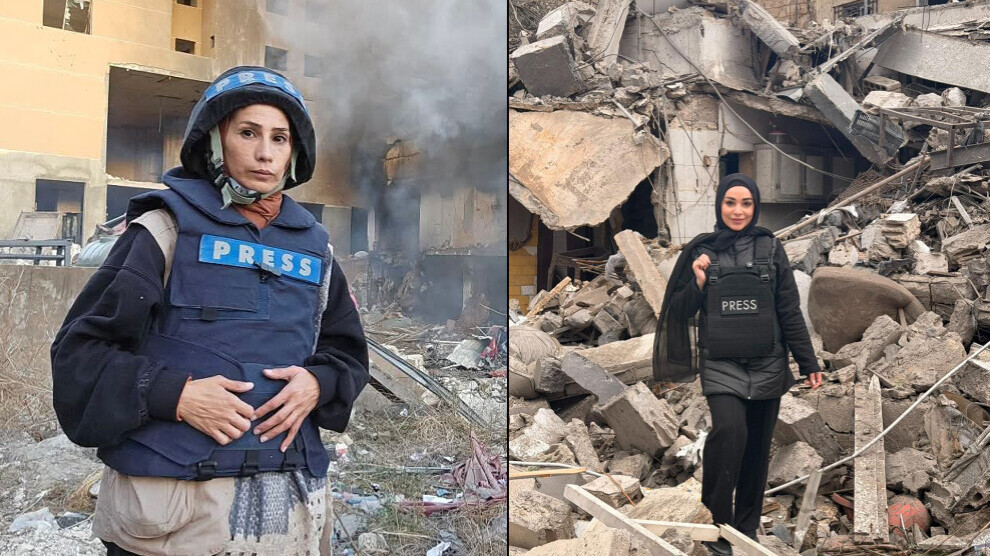
Fadia Jumaa
Lebanon _ Amid the ongoing attacks on Lebanon, challenges aren’t limited to the front lines of fire but extend to the conditions of journalistic work itself, where female journalists find themselves facing double risks:the danger of the field, and social and professional pressures that weaken their ability to work freely and safely.
Desoite their increasing presence in field converage, Lebanese female journalists still face recurring obstacles related to lack of protection and training, in addition to gender discrimination and questioning of their work, which makes their experience of covering wars more complex and harsher.
Gender discrimination and lack of protection
Fatima Al-Bassam, an independent journalist displaced from Beirut's southern suburbs, says that the challenges female journalists face during coverage, although not new and accompanied them in past attacks, have repeated and remained the same.
She adds that one of the most prominent challenges is gender discrimination, where they are treated as less competent and experienced, often being asked: "Why are you, as a girl, in the field instead of a young man?" This happened to her in the south and in Beirut.
She points out that sometimes they resorted to accompanying a young man for field protection. She also notes the absence of official coordination with relevant authorities, which pushes female journalists to rely on their personal acquaintances and relationships in the areas they cover, especially given people's fears. She explains that they have also faced mobilization against them in some areas, where they were subjected to serious stigmatization, most notably being accused of collaboration, even while holding a camera, placing them before continuous campaigns of doubt.
Fatima Al-Bassam notes that those working in this field lack adequate training to cover wars, nor do they have basic protective equipment such as helmets and vests, forcing them to borrow them from colleagues or organizations.
Testimony of a southern correspondent standing firm in the heart of fire
For her part, journalist Rana Jouni, who resides in the Nabatieh district, shares her own experience. She is among the very few female war correspondents who have remained steadfast in their areas. She says: "They would ask me how I am still standing, and my answer was always: I am the daughter of this south, and I will not leave my land while it is being subjected to a systematic campaign of destruction."
She adds that among the questions also asked is: "How do you cover the war as a woman in the field, doing the filming, documentation, and writing all alone?" She considers this a point of strength for her, as she does the work of an entire team in the darkest conditions.
She points out that one of the biggest challenges is movement. "It is like walking through a minefield amid non-stop targeting," in addition to frequent internet outages, which exposes her to greater risk in case of any emergency.
Rana Jouni says: "I left behind a child not yet three years old. Despite the pain I feel, it gives me strength to convey my message: to remain an example for the women of the south who face fire on the front lines with a camera and pen to document what happened, without real protection. The helmet, vest, and the word 'press' will not protect us after the fall of all international laws that were supposed to protect us."
The testimonies of Lebanese female journalists reflect a complex reality in which security risks intersect with social and professional challenges, revealing the urgent need for effective protection and specialized training that ensures they can play their role in conveying the truth, without paying a double price for being in the field… and being women at the same time.