
Arin Mirkan…From the Epic of Kobani to an Immortal Symbol of Women’s Resistance
On the anniversary of Arin Mirkan’s martyrdom, Kobani recalls the biography of a fighter whose sacridice turned into a symbol of resistance, while her name remains present in the city’s memory and its landmarks that document the heroism of its women.
NORSHAN ABDI
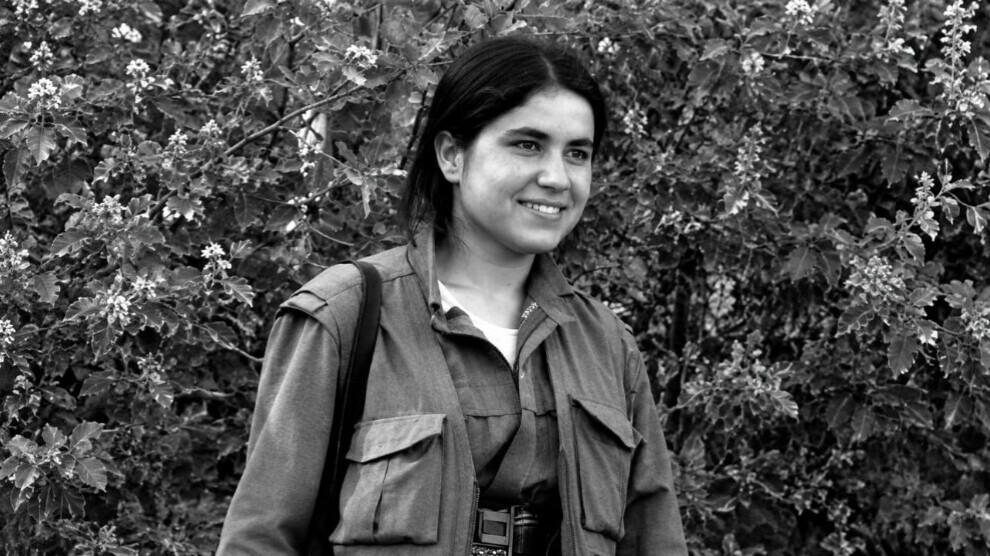
KOBANI_The fifth of October marks the anniversary of the martyrdom of the fighter and leader in the ranks of the Women's Protection Units, Arin Mirkan, who with her sacrificial operation formed a prominent turning point in the course of the Kobani resistance, and became one of the most prominent female leaders and symbols who wrote a remarkable presence in that battle.
On the fifteenth of September 2014, ISIS launched a wide attack on Kobani city in Rojava, starting from three axes, with the aim of controlling and occupying the city. However, its plans collided with fierce and historic resistance shown by the people of the Kurdish people from the four parts of Kurdistan, alongside the male and female fighters who defended the city with bravery.
The Kobani resistance continued for more than four months, in the face of ISIS, and ended with a historic victory for the resistance in late January 2015, turning Kobani into a symbol of resistance and resilience in the face of ISIS, while Arin Mirkan became one of the most prominent symbols of that resistance, for the courage, sacrifice, and determination she embodied in defending the city and its people.
Who Is Arin Mirkan?
Dilara Kinj, known as Arin Mirkan, was born in 1992 in the village of Mirkan in the Mobata district of Afrin. She carried the name "Arin" in tribute to a fighter in the Kurdish liberation movement, and grew up in a patriotic family, imbued with culture and principles linked to the Kurdish cause.
In 2007, Arin Mirkan joined the ranks of Kurdish female fighters. With the launch of the 19 July 2012 revolution, she participated in the revolution and contributed to founding the Women's Protection Units. With the beginning of ISIS's attacks on Kobani, she participated in the battles taking place east of the city and showed great resistance.
On the fifth of October 2014, on the twentieth day of the Kobani resistance, Arin Mirkan carried out a sacrificial operation on the Mishte Nur hill south of the city, and her operation contributed to thwarting an ISIS attack, making her a prominent symbol in the Kobani resistance.
"With Her Free Thought She Led the Battle of Kobani"
Regarding the impact of the sacrificial operation carried out by Arin Mirkan on the course of the Battle of Kobani, Aisha Afandi, a member of the Council of Martyrs' Families in Kobani city, said that the passage of 13 years since Arin's martyrdom does not cancel the impact of her sacrifice, as she offered her soul for the victory of the resistance.
She noted that Arin Mirkan walked the path of Rivan, Beritan, and dozens of female sacrificial fighters, confirming that a woman undertaking a sacrificial operation of this magnitude had a wide resonance, and that her will and leadership contributed to changing the course of the battle.
She added that this operation changed the course of the war in Kobani in 2014, and turned the resistance there into a symbol and hope for peoples struggling for freedom and the rights of the Kurdish people. "Arin had a fundamental role in the launch of the 19 July revolution, and Kurdish women became decision-makers and capable of leading the war."
Aisha Afandi confirmed that leader Arin Mirkan contributed, through her heroic epic, to entrenching the first of November as a world day of solidarity with Kobani, noting that the struggle of female fighters, foremost among them Arin, thwarted the plans that targeted Kobani.
Emerging from the Line of Sacrifice to the Dialogue Table
Aisha Afandi explained that the world believed that the Kurdish people had lost the ability to carry arms and defend their identity, but the struggle of the Kurds and their fighters proved the opposite, and showed their ability to move from the battlefield to the path of politics and peace.
She added that the Kurdish people are today passing through a new and sensitive phase represented in embarking on the political path, noting that the Kurdish cause has become present on dialogue tables in the world, considering that an important victory for the Kurdish cause.
She said that the existence of forces specialized in protecting women and the application of the co-presidency system in Rojava came as a result of women's struggle and their continuous resistance from the launch of the revolution until today.
At the end of her interview, Aisha Afandi noted that these gains represent progress for women, confirming the necessity of preserving them. "This experience will push us, as a Kurdish people, to continue defending our existence and identity, and also to raise our issues at the dialogue table and the political path in Syria."
The Free Woman Square as a Symbol of Arin Mirkan's Resistance
Years after the victory of the Kobani resistance, the city's neighborhoods and roads are still witness to the events of the battle and the memories of its heroes. Among its most prominent landmarks is the Free Woman Square, which became known among the city's residents and all of Rojava as the name of the fighter and sacrificial woman Arin Mirkan.
On 14 March 2016, the "Free Woman" statue was erected in the square to immortalize the role of Kurdish women in the Kobani resistance, and to embody the personality of Arin Mirkan. It was sculpted by artist Zirek Mirza over three months, and is 9 meters tall and weighs 8 tons.
The statue, with its wings and hand placed on the chest, symbolizes victory, freedom, and the oath that female fighters take in defense of their cause, remaining a landmark embodying the memory of the resistance and the sacrifices of Kobani's women.