
Congenital malformations in Gaza... the impact of war and materials resulting from shelling
Congenital malformations are increasing in Gaza after a war that lasted more than two years, and the deterioration of the health system exacerbates concerns about environmental and health factors affecting fetuses.
Nagham Karaja
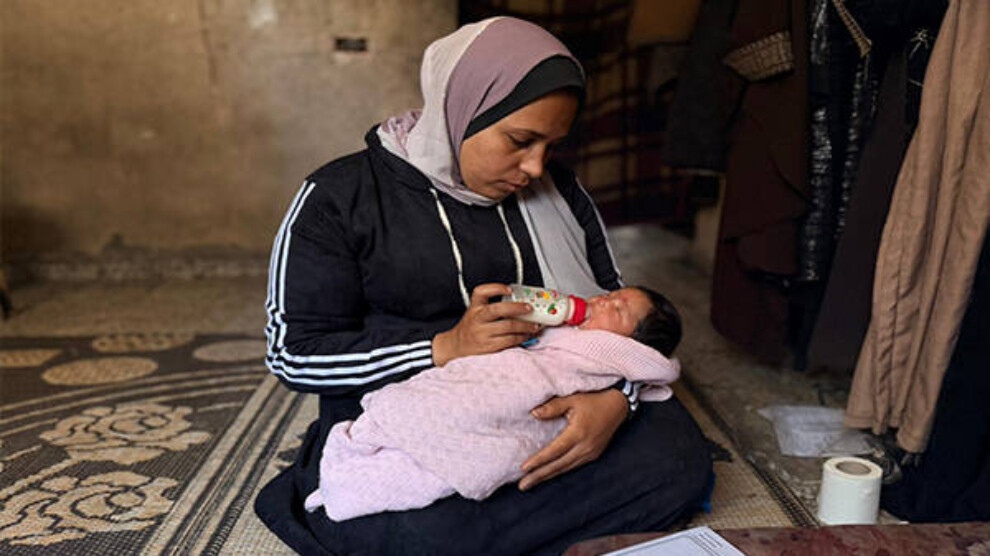
Gaza – In one of the war-weary neighborhoods of Gaza City, the infant Misk Al-Jaru was born
About a month ago, beginning her life with a complex medical struggle from the very first moment. Her birth was not a normal event in a home awaiting a new arrival; it was the start of a heavy journey of pain after it became clear that the baby suffers from multiple congenital malformations, including hip dislocation, deformities of the feet and hands, an injury to the brachial plexus in the shoulders, as well as bending and twisting of the limbs.
According to the family of the infant Misk Al-jaru, her health condition cannot be separated from the harsh circumstances her mother lived through during pregnancy, amid the near-complete absence of regular medical care, the deterioration of the health system in the Gaza Strip due to the ongoing war, and the acute shortage of capabilities,medicines, and follow-up care for pregnant women.
Warda Al‑Jaru, a mother in her twenties, says that she lived through an exceptional pregnancy full of fear and worry from the very beginning, in the absence of a safe place or stable healthcare. She recounts shocking details about her pregnancy: "I did not have the option of displacement, because there is no safe place at all. So I stayed in the northern Gaza Strip, living to the sound of shelling and destruction. I tried to preserve my life and the lives of my children as much as possible, but everything was out of control."
She adds, in a voice mixing pain with astonishment: "In mid‑2025, I learned that I was pregnant with twins, but there were no hospitals to properly follow my condition. I could not have regular check‑ups until late. Then they told me that one of the twins had died due to malformations, and that the other was still alive but her health was unstable."
The shock of a twin pregnancy on one hand and the loss of one fetus on the other was not the end of the suffering journey; an even harsher phase began as the pregnancy continued in extremely dangerous health conditions, amid the lack of precise medical care and the deterioration of the mother's psychological and physical state. She says she suffered from high blood pressure and symptoms of diabetes during the pregnancy.
Warda Al‑Jaru continues, looking at her baby who cries constantly: "I felt I was living on the edge of danger every day. There was no doctor monitoring my condition regularly, nor enough medicines. Even at the moment of birth, I knew I was entering a difficult experience, but I did not expect Misk to be in such pain."
Today, the infant Misk lives in pain from her first days. The family says she cries constantly and shows signs of acute discomfort due to the physical complications she suffers from. According to the family, doctors affirm that her condition requires advanced medical interventions and treatment outside the Gaza Strip – something that has become nearly impossible due to the closure of crossings and strict restrictions on travel and medical treatment.
The mother says in a broken voice: "My baby is in pain all the time. She barely sleeps, then returns to crying. I feel helpless in front of her. I tried to seek a medical referral for treatment abroad, but all doors were closed in my face. I don't know how a person can live watching their child suffer and being unable to save them."
Reports from international health organizations, including the World Health Organization, indicate that the health system in the Gaza Strip is facing widespread collapse as a result of the ongoing war, with an acute shortage of medicines and medical equipment, and severe damage to maternal and child health services. UN reports also warn of rising rates of complications during pregnancy and childbirth due to interrupted healthcare and difficulty accessing hospitals.
In a related context, medical and humanitarian concerns are raised about the increasing cases of congenital malformations in conflict zones. Some medical studies suggest that severe exposure to environmental pollution and toxic substances resulting from explosions and wars may be linked to an increased likelihood of complications during pregnancy, although determining the direct causes remains medically complex and requires in‑depth, long‑term studies.
International health bodies warn that unsafe environments, lack of medical care, and malnutrition during pregnancy are all factors that may increase risks to fetuses and newborns.
According to WHO data, the global rate of congenital malformations is estimated at 3 to 6% of total births, but this rate may rise in armed conflict zones due to multiple overlapping factors, most notably weak healthcare, exposure to pollutants, and lack of early pregnancy screenings – a reality that applies significantly to the deteriorating health situation in the Gaza Strip.
In the family's modest home, Warda Al‑Jaru has nothing but her lap to hold her baby and try to soothe her, despite her complete inability to provide appropriate treatment. She concludes in a tone mixing plea with fear for her daughter's future: "All I hope for today is that Misk be treated, that she get a real chance at treatment and life like other children, that she grow up without pain being her first label, and without being surrounded by people's stares or bullying words because of the malformations she suffers from. I just want her to live her childhood normally, to laugh, play, and grow up in peace, like any child who deserves life."
Then she pauses for a moment before adding in a low voice: "I fear tomorrow for her more than anything… I fear that she will grow up feeling she is different in a way that hurts her, rather than it being just part of her story."
Amid the rubble and waiting, the infant Misk Al‑Jaru remains a new witness to an extremely harsh human reality, where war intersects with the most fragile details of life, leaving open questions about the fate of children born in conflict without a fair chance to begin life properly.