
Lebanese Women Between Displacement and Response: When Suffering Turns into Relief Action.
In Sidon’s shelters, women lead—not just as displaced persons but as architects of relief, bearing pain and labor amid the complexities of war and displacement.
Fadia Jomaa
Lebanon — Amid tents set up by the displaced and overcrowded schools in Sidon, stories of displacement intersect with women-led initiatives driving relief work. Women transform from aid recipients into essential actors, activists confronting a difficult humanitarian reality while simultaneously revealing the vulnerability of women's conditions in displacement sites.
"Covering Part of the Needs According to Available Means"
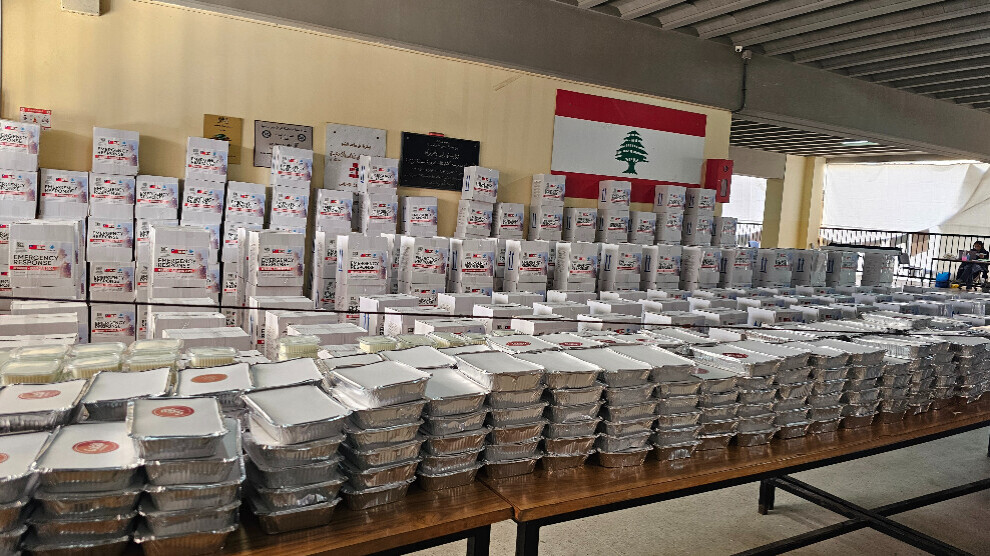
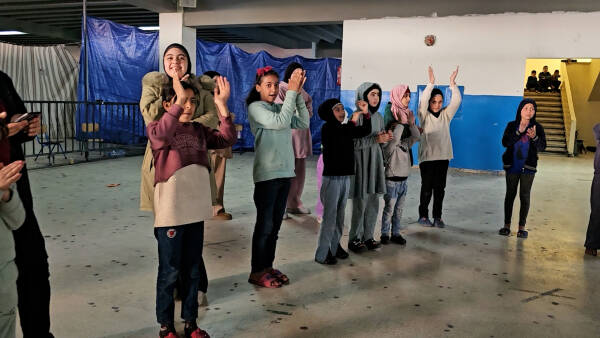
Jehan Qaisi, Executive Director of the URDA Association, said: "We work in various regions of Lebanon. Currently, we are in Sidon at the Lebanese Kuwaiti Public School, which has opened its doors as a shelter center for displaced people arriving from the south."
She added: "We work with a volunteer team around the clock, serving approximately 1,100 people in this center. We carry out our work with humanitarian motivation, considering the displaced as our families. Despite our own pain, we try to alleviate their suffering in cooperation with the Sidon Municipality and in coordination with the Ministry of Social Affairs and active institutions. We strive to cover part of the needs, but they are far greater than the available resources and our capacities."
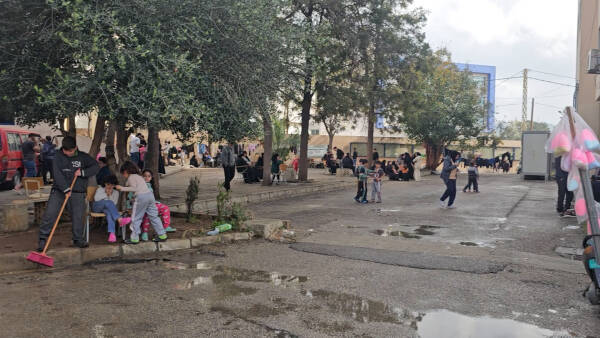
She noted that the most significant challenges facing their work are shelter and securing suitable places for arrivals: "We had to set up tarpaulins and tents, but we aspire to provide more humane spaces, especially given the presence of women, elderly people, and people with disabilities. These cases leave us with great sorrow, especially when we see families forced to sleep in cars or on the streets."
Jehan Qaisi appealed for opening more shelter centers in various Lebanese regions, as every family here carries a story of pain. "We have witnessed cases of breakdown and fear, particularly among women who need psychological support for themselves and their children. We work to organize conditions for women, the elderly, children, and people with disabilities, but the lack of privacy in centers remains a difficult challenge amid overcrowding and limited available spaces. Additionally, sanitary facilities are insufficient, and we strive as much as possible to preserve women's dignity in these harsh conditions."
"An Extremely Difficult Humanitarian Situation"
Lina Al-Alam, a member of the Health Committee in the Sidon Municipality and a social activist, said: "During the previous war, I was in charge of a shelter center. But today, I preferred to work through a private individual initiative I launched to meet people's needs directly and coordinate with municipalities, centers, and associations, serving as a link between them."
She noted that there are 24 shelter centers housing around 12,000 displaced people, in addition to more than 40,000 staying inside homes in the city.
Regarding official response and aid, she said: "It is scarce, and the greatest burden falls on individual initiatives and civil society associations. Most of these initiatives rely on women; they are inherently more responsive and sensitive, and they seek to help within their means, even if it involves simple initiatives."
In contrast, most shelter center heads are men, which sometimes leads to overlooking specific needs of women that go unnoticed or that women cannot easily express, making women's presence in decision-making positions urgent and necessary.
She added: "I also noticed that the number of displaced women exceeds that of men. These women need special care that goes beyond basic assistance like food and shelter, extending to psychological and social support. Therefore, we hope for special attention to these most vulnerable groups under these circumstances."
In light of this reality, women in Sidon remain the backbone of humanitarian response, despite the major challenges they face. However, doing justice to them begins with recognizing their specific needs, securing a minimum of dignity in shelter centers, and providing immediate response to meet their needs.